Amazing video: Drones used to catch rogue crocs in NQ
Crocodiles have resisted evolution, survived the loss of habitat and battled humans for centuries. Now, they also have drones to contend with.
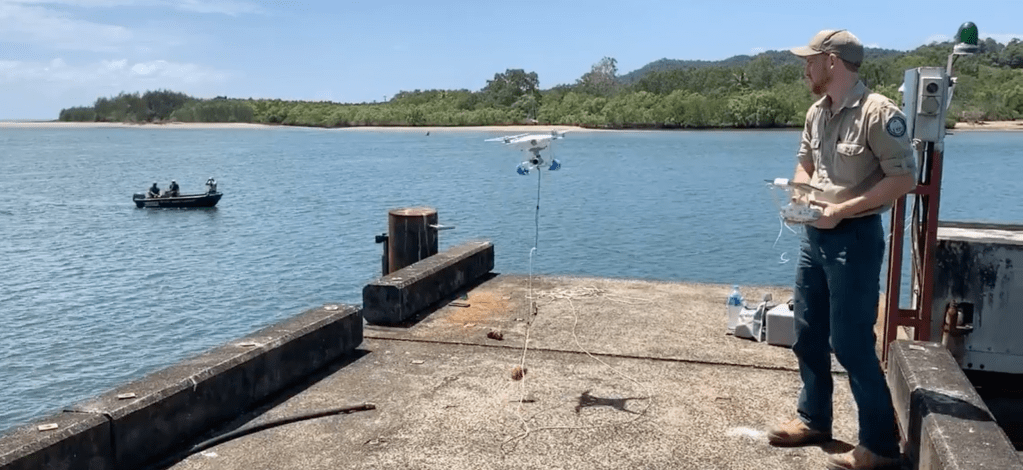
Wildlife officers in Queensland are now using drones fitted with baited snares to help catch problem crocodiles.
Harnessing the technology – to have the technology harness the crocs – may reduce the risk to officers, communities, and the animals themselves. It is akin to Crocodile Dundee getting around more swiftly with a robot sidekick.
Senior Wildlife Officer Dr Matt Brien said the Department of Environment and Science started work on the new method last year. By August, officers were able to capture a rogue crocodile in Innisfail’s Johnstone River in just 15 minutes.
“This direct capture method takes advantage of the crocodile’s instinctive predatory response to grab anything it sees moving at the water’s surface,” Brien said.


“Using a drone, wildlife officers skim a baited noose along the water’s surface near the target crocodile.
“When the crocodile grabs the moving bait and attempts to eat it, the noose locks onto the animal’s top jaw and the rope is released from the drone.
“The drone is flown back to its launch point and a float attached to rope allows wildlife officers on a boat to find the rope and retrieve the crocodile.”
Crocodiles have barely evolved and for decades neither has the method of capture – until now. The department needed animal ethics approval from the Department of Agriculture and Fisheries and will publish research on the technique in the peer-reviewed scientific journal Herpetological Review. They also have to abide by Civil Aviation Safety Authority regulations.
“Previously, the standard methods used to capture estuarine crocodiles were restricted to the use of baited traps, nooses, harpoons and stationary baited lines,” Brien said.
Stay informed, daily
“While those methods have been effective, the drone technique provides another option for wildlife officers to rapidly capture crocodiles, while minimising any harm or injury to the animal.
“Inspections of the top jaws of crocodiles captured during the research program showed the noose caused the animals no abrasions or bruising.
“This new capture method provides researchers and wildlife managers with an innovative, non-lethal, humane and efficient way of removing wary and hard to capture crocodiles from the wild.”
Want to see more stories from InDaily Qld in your Google search results?
- Click here to set InDaily Qld as a preferred source.
- Tick the box next to "InDaily Qld". That's it.



