Now you can visit the doctor without leaving your home
Australians will now be able to access bulk-billed telehealth consultations with their doctors and many other health professionals — meaning they won’t have to pay any out-of-pocket costs.
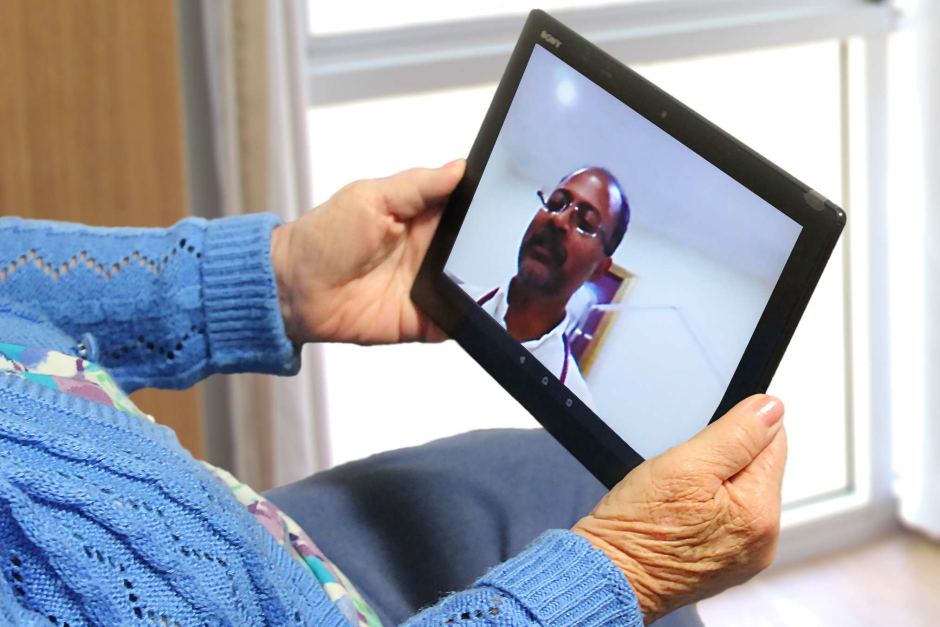
It’s part of a $1.1 billion government funding boost designed to protect against the widespread impact of the coronavirus pandemic, and has been heralded as a “life-saving” measure by some.
But which specialists can offer the service, is it for free, and are you still allowed to see your doctor face-to-face?
What even is telehealth?
Telehealth or telemedicine consultations are virtual appointments conducted over the phone or video conferencing services like FaceTime, Zoom or WhatsApp.
They allow a patient to dial in and speak to their doctor through a simple audio link, or interact with them through a screen.
Even before the coronavirus pandemic, the telehealth industry was steadily growing. Rural and regional Australians have been increasingly relying on the method to get much-needed care — with the benefits being accessibility (if you have the internet or a solid phone line), cost and the ability to wear pyjama pants during appointments.
What does this announcement mean for patients?
Firstly, they’ll be more protected, as they won’t have to sit in waiting rooms and expose themselves to a potential source of coronavirus.
Secondly, they’ll be able to see some health providers without any out-of-pocket costs (we’ll get to those specifics a bit later).
That’s because if the GPs and other eligible specialists wish to access the temporary Medicare item, they will be required to bulk-bill the service.
You might like


The patient will dial in to speak to their doctor, and if a script is required — it’ll be faxed, emailed or posted to them or their pharmacy.
What about for doctors?
Doctors will also be spared a great deal of risk — heralded as a win by all the major medical lobby groups.
Groups like the Australian Medical Association and the Royal Australian College of General Practitioners had been pushing for the change, saying it would limit the spread of the virus while keeping both health professionals and patients safe.
Critically, protective gear like masks, gloves and gowns will also be conserved, as they won’t have to wear it for the video consults.
It’s worth noting that doctors will be getting less money in their pockets from the telehealth consultations, as they’ll be forced to bulk-bill (meaning they won’t be able to charge any additional money). But they’ll get some incentives from the government to sweeten the deal slightly.
Firstly, they’ll be more protected, as they won’t have to sit in waiting rooms and expose themselves to a potential source of coronavirus.
Secondly, they’ll be able to see some health providers without any out-of-pocket costs (we’ll get to those specifics a bit later).
That’s because if the GPs and other eligible specialists wish to access the temporary Medicare item, they will be required to bulk-bill the service.
The patient will dial in to speak to their doctor, and if a script is required — it’ll be faxed, emailed or posted to them or their pharmacy.
What about for doctors?
Doctors will also be spared a great deal of risk — heralded as a win by all the major medical lobby groups.
Groups like the Australian Medical Association and the Royal Australian College of General Practitioners had been pushing for the change, saying it would limit the spread of the virus while keeping both health professionals and patients safe.
Critically, protective gear like masks, gloves and gowns will also be conserved, as they won’t have to wear it for the video consults.
Stay informed, daily
It’s worth noting that doctors will be getting less money in their pockets from the telehealth consultations, as they’ll be forced to bulk-bill (meaning they won’t be able to charge any additional money). But they’ll get some incentives from the government to sweeten the deal slightly.
In major cities, they’ll get $6.40 per consult, and for everywhere else they’ll get $9.65.
Those amounts will be doubled for consultations provided to concession card holders and people aged under 16.
Which specialists and patients are eligible for the service?
People can now access bulk-billed telehealth consultations for a range of appointments, including with the following practitioners:
- GPs
- Psychologists
- Midwives
- Nurses
- Psychiatrists
- Paediatricians, speech pathologists, physiotherapists and occupational therapists for services for children with developmental delays
- Aboriginal and Torres Strait Islander Health Practitioners
- Social workers and dieticians for eating disorders
For patients, you have to be located in Australia, eligible for Medicare and not an admitted patient to a hospital.
Do you have to use telehealth if you don’t want to?
The short answer is no.
In most practices, telehealth consults aren’t compulsory — but they’re definitely preferred.
There are some small clinics where the doctors have chronic conditions or are aged over 70, and they aren’t seeing any patients in their rooms — so telehealth is the only option there.
But if people don’t have access to phones or internet connections, most doctors will allow them to come in for face-to-face consultations, if they believe it’s safe to do so.
What the experts are saying about coronavirus:
It’s likely those practices will ask a series of questions aimed at determining if the patient has any symptoms.
There are also some cases where doctors will need to do a physical examination, for example if someone has a lump that needs to be felt, or a melanoma needs to be cut out.
In those instances, they’ll be asked to come into the clinic to be seen in-person.
– ABC / Stephanie Dalzell
Want to see more stories from InDaily Qld in your Google search results?
- Click here to set InDaily Qld as a preferred source.
- Tick the box next to "InDaily Qld". That's it.



