Forced to choose between our parents and our prosperity
Are we paying too high a price to contain COVID-19 fatalities? Right now, some advising the Government think so, writes Christine Jackman
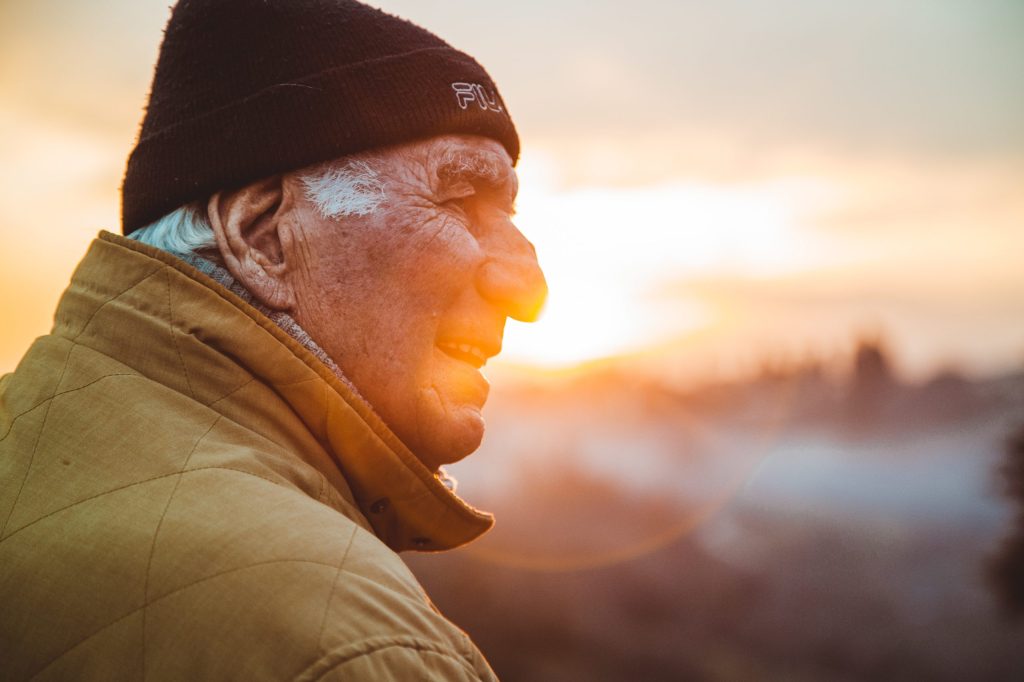
Should we allow more of Australia’s elderly to die, in order to save the health of the economy?
It is a brutal, ugly question. But make no mistake. It’s a question being posed and pondered daily at the very top levels of our government.
And so it should be. As we are constantly reminded, COVID-19 is an unprecedented health crisis; by definition, then, there is no track record or rule book for how it should be managed. We are all learning as we go – doctors, scientists, political leaders, bureaucrats and we, the public – and that means that all options must be considered, with sensitivity, particularly in light of the differences between countries and cultures.
So far, Australia’s state and federal leaders have chosen a “zero tolerance” approach to this new and virulent disease; they’ve acted fast and hard to stop its spread, by enforcing physical distancing and strict restrictions on non-essential movement.
There is no doubt this dramatic clampdown will slow the transmission of the virus, spare the carnage we’ve seen in other countries’ intensive care units, and potentially buy some time until a vaccine is developed.
But it has come at an enormous cost.
You might like


We have all seen images of the queues outside Centrelink, hundreds of shell-shocked faces and hunched shoulders, potentially representing thousands more families in strife. And surely every one of us now knows at least one small business owner who has had to shut their doors, or is grappling with the slow strangulation of a dream built on their years of hard work and investment?
In my own sphere, I know whole families now out of work; parents formerly in professional roles but operating in the gig economy, with no safety net, their children working in hospitality to help pay their way through uni. Seemingly in the blink of an eye, all those jobs have been erased. Now their savings are evaporating – and with no clear end in sight.
We’re told we won’t be safe to emerge from this lockdown lifestyle until a vaccine is developed – and realistically, that is more than a year away.
This is, apparently, the “new normal”, one in which the livelihoods of millions have been crushed to save the lives of others.
Can we bring ourselves to ask whether it is worthwhile? Can we afford not to?
Earlier this week, I sought out an experienced political strategist to ask whether Australians’ expectations of their leaders were changing to reflect the times. My source has decades of experience advising leaders in the hothouse of political ‘war rooms’, and has been contributing to the current COVID-19 discussions, so I was taken aback when his frustrations bubbled up so quickly.
Stay informed, daily
“I think we should start telling some fundamental truths,” he declared emphatically.
“Have a look at gross government expenditure by state and federal governments to date. So far, we’ve reached more than $310 billion. And for what? A disease that most people are barely affected by and recover from fully.
“How many deaths so far? We’re not at 50 yet. By my calculations, our governments have spent $6 billion per death.”
It’s dramatic maths, but arguably not the point. The more pertinent equation would be the one that showed this enormous cost in terms of government expenditure, measured instead against lives saved.
But that will always be an impossible number to calculate with any confidence. We’ll never know how many people may have contracted the disease and died, had our governments adopted the so-called “herd immunity” approach and simply let the virus roll through the community, until the weakest were culled and the rest had developed immunity.
But that is where my source added another pertinent point of comparison. Every year, this is exactly the approach we take when the flu season erupt, albeit aided by vaccines to cover some strains.
And consider this: in 2018, about 3100 Australians died of influenza in Australia. It is a permanent fixture in the top 20 causes of death here (in 2018, flu was at number 12).
“So we accept a death rate [for flu] that is more than 60 times what we’re seeing right now for COVID-19,” my source said. “To me, this says we’re dealing with a psychological epidemic at the moment, one where we’re caught up in the trauma being amplified by the media.”
He added that older people – those who are overwhelmingly more likely to die of COVID-19 – consistently show up in field research as those who are most accepting of that fate, partly because they report great concern about the future security of their children and grandchildren.
Still, I wondered aloud whether he would like to be in the shoes of any prime minister or premier who declares that it’s OK to let grandma or grandpa die for the sake of the economy.
Having heard the stories of many of the health specialists at the frontline of the COVID-19 crisis, I don’t think I would have the stomach or the heart to do so.
“But you’re not seeing the very real distress – the increase in poverty, in unemployment, potentially in suicides – that this [economic] shutdown will drive,” he chided.
He may be right. At the very least, we can’t afford to ignore that these awful choices exist and must be made. For now, the only things I’m certain of are that there are no simple solutions to the COVID-19 crisis – and that all of our leaders deserve more credit for the hard work they’re doing to find a way out of it.
Want to see more stories from InDaily Qld in your Google search results?
- Click here to set InDaily Qld as a preferred source.
- Tick the box next to "InDaily Qld". That's it.



