Baby steps on the road to recovery for outback tourism
The anticipated easing of travel restrictions, pending continued positive results on crushing the coronavirus curve, still won’t solve all of tourism’s ills across Queensland.
At this time of year, the onset of winter usually brings the holiday makers, grey nomads and business travellers flooding over the border for a much-needed dose of sunshine and fresh air.
In summer, Queensland is fraught with the risk of cyclones in the north, heavy rains and flooding and oppressive heat in the interior. But winter, it’s beautiful one day and…well, you know the rest.
But as nearly everyone on the planet now knows, this year is far from usual.
Even as the State Government provided a crack of light through the coronavirus gloom last week, announcing staged easing of travel restrictions and changes to social distancing guidelines, it still won’t be enough for Queensland’s tourism operators to mount anything like a full recovery.
From this week residents of the outback have been able to dine in restaurants, pubs and clubs with a maximum of 20 people and can drive up to 500km.
By June 12, travel anywhere in the Outback for outback residents will be allowed and restaurants, pubs and clubs can welcome 50 local guests at a time.
By the July 10, interstate and intrastate travel will be allowed and maximum number of people in a venue will be 100.
Of course, this all depends on Queensland continuing to contain the spread of coronavirus and the recorded contracting of COVID-19. In this climate, nothing is certain.
And even with people desperate to bust out of isolation and hit the road, the way back will strongly resemble the State’s bitumen network – patchy at best.
“Any tourism venture that relies on high volume, high-touch experiences like regional events, that require large numbers of people to gather in one place, are still going to struggle as we move forward,” says Griffith University’s Tourism Institute deputy director, Dr Sarah Gardiner.
You might like


“Tourism ventures that only need small numbers of people will do best. This means that we may even see operators of some of the larger attractions drastically shift their models to cater to the new environment, such as limiting the numbers of people they can accommodate at any one time.”

With airlines practically in mothballs and continuing limits on kilometres that can be covered by road – 150km if you live in a city and 500km if you live rural – regions that were once considered our tourist hotspots, like the tropical north, won’t see the same advantages as those areas closer to Brisbane, Gardiner says.
In this climate, she says, the Gold and Sunshine Coasts will fare well, as will rural areas that have well established tourism infrastructure in place, such as Stanthorpe, Toowoomba and the islands off Redland City, particularly North Stradbroke.
Hot competition
With no international tourists on the horizon and even interstate visitors banned from Queensland for the foreseeable future, tourism operators are entering a competitive environment unlike anything they’ve ever experienced, as they try to lure every Queenslander they can to venture out of their homes and into the State’s wider back yard.
At the end of last year, as the coronavirus clouds started to swirl in China with Queensland holidaymakers blissfully oblivious at the beach, the State recorded its highest number of domestic trips ever.
According to Tourism Queensland data, a whopping 117.4 million domestic trips were made to Queensland in the 12 months to December, an increase of 12 per cent on 2018.
All those trips amounted to $80.7 billion in expenditure, up by 12.4 per cent, admittedly trailing NSW, Victoria and South Australia, which led the country with a massive tourist spend increase of 26.9 per cent.
Queensland’s front-running regions for the year in terms of money earned from tourists were Brisbane, Sunshine Coast, Tropical North Queensland and the Outback, bolstered by a special promotion that year highlighting the Year of Outback Tourism.
Tourism operators in the state’s interior are realistic that they won’t see anything like the 1.1 million people who visited last year, spending some $745.1 million on accommodation, food, fuel, souvenirs and ticket prices.
“We’re just hoping we can all salvage something from what’s left and bring as many people as we can to our beautiful part of the world,” says Winton Shire’s Tourism and Events director John Elliot.
“At a time when people are being encouraged to still keep their distance from one another, we believe there’s never been a better time to come to the bush and experience our wide-open spaces.”
Opportunity knocks
Stay informed, daily
Some 1300km from Brisbane, Winton is out of the question for what is now the state’s biggest tourist market. Its closest “big city” is Mount Isa, a tick under 500km away and with about 20,000 people when the mines are running at full tilt.
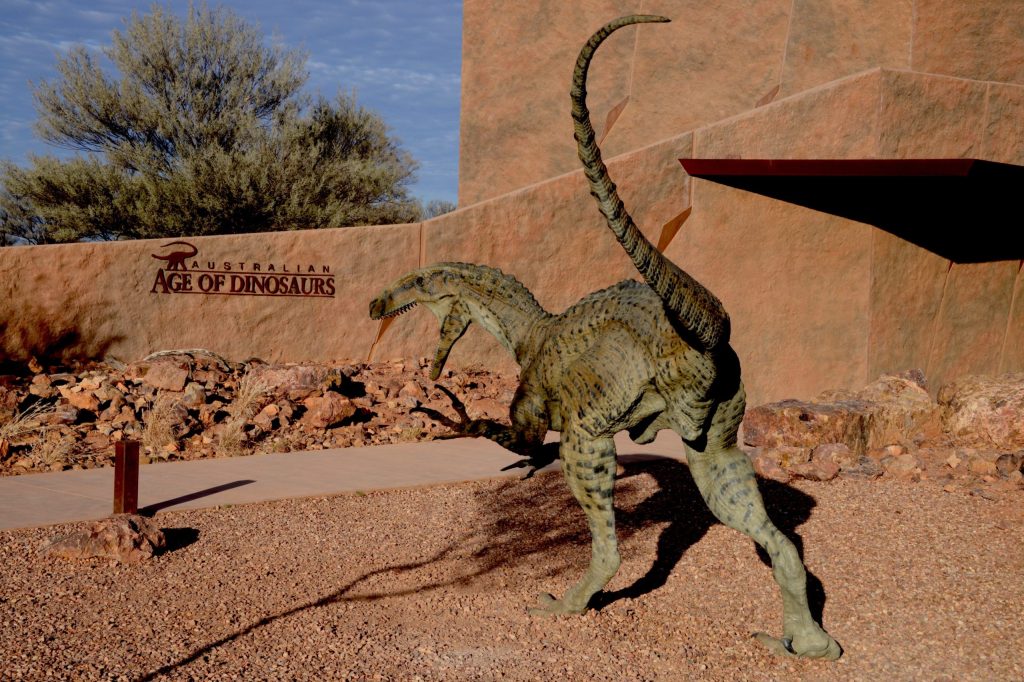
Despite the geographical challenges, Elliot is confident the region will still grab a significant portion of the “self-drive” market, attracted by the types of venues perfectly suited to smaller groups, such as the town’s Waltzing Matilda Centre as the origin of Banjo Paterson’s famous poem and its other main attractions connected to being Australia’s dinosaur capital.
Also, the home of the Vision Splendid Outback Film Festival, Winton is a favoured location of film and television crews the world over, with producers lining up to take up temporary residence once restrictions are fully lifted, Elliot says.
Even with some natural assets to work with, Winton is forming something of a tourism bloc with neighbouring Longreach, where the two regions can twin-promote other big-name attractions such as the Stockman’s Hall of Fame and the Qantas Founders Museum, where only weeks ago its CEO Tony Martin was forecasting a permanent closure.
Elliot says there’s now a “spring in the step” of local tourism operators and some business owners.
“There’s a definitely a more positive vibe around town since the Premier’s announcement of relaxed travel restrictions last Friday,” he said.
State Opposition tourism spokesman David Crisafulli says region-by-region marketing in tandem with a well-funded state-wide tourism campaign is urgently needed to assist the industry meet the new post-pandemic market.
“We are going to be in an absolute street fight to get a share of a smaller pool, albeit captive pool, of potential holidaymakers,” he says.
“I think Queensland definitely has a story to sell to the people who may once have travelled overseas for their holidays, but they need dollars to help them sell it.”
Tourism Minister Kate Jones says coronavirus should not be seen as a long-term obstacle for tourism growth, but an opportunity, particularly regions that have remained free of Covid-19.
“The millions of dollars we’ve invested in new tourism infrastructure through the Premier’s Year of Outback Tourism will put the outback in a good position to capitalise once travel bans are lifted – particularly given the widespread exposure about western Queensland having no COVID-19 cases,” Jones says.
“Currently we’re working on a comprehensive, state-wide marketing strategy to ensure we burst out of the gates as travel bans are lifted. The outback features prominently in these initiatives.”
But extra funding and initiatives should not only be limited to glossy promotional material and flashy advertising campaigns, argues the Remote Area and Development Planning Board (RAPAD), which comprises seven local government areas of the State’s central west.
The group is calling for a comprehensive stimulus package that will include other areas of ministerial responsibility, such as:
- Increased funding for community infrastructure programs such as the successful Works for Queensland program
- Increased funding for economic infrastructure, especially targeted at boosting investment in the regional road network
- A support package to assist outback tourism operators who – coming off the back of their offseason – will miss their critical peak season and are unlikely to generate any significant turnover until winter 2021
- Investment in promoting the Outback as a tourism destination when the pandemic passes to counter the State closing its borders
- Increased funding for skills development, financial counselling and other training programs
- Increased funding for economic development initiatives related to new business models associated with the digital economy and entrepreneurship.
“Our tourism sector needs financial assistance to return to full operation, even with unrestricted travel the reduced numbers in venues will hinder the profitability for some larger operators,” RAPAD chair and Longreach Mayor Tony Rayner said.
Like other sectors of the economy, coronavirus isn’t necessarily creating new problems, but more exposing gaps in services and infrastructure that haven’t been adequately addressed in the past.
If our regions play their tourism cards right, our communities just might get more bang for the buck invested, delivering the sorts of benefits that will make the whole State beautiful one day, perfect the next.
Want to see more stories from InDaily Qld in your Google search results?
- Click here to set InDaily Qld as a preferred source.
- Tick the box next to "InDaily Qld". That's it.
- Coronavirus,
- COVID-19,
- David Crisafulli,
- Domestic Tourism,
- Griffith University,
- kate jones,
- Longreach,
- Longreach Mayor Tony Rayner,
- Qantas Founders Museum,
- Remote Area and Development Planning Board,
- Sarah Gardiner,
- Stockman’s Hall of Fame,
- Vision Splendid Outback Film Festival,
- Waltzing Matilda Centre,
- Winton,
- Works for Queensland



