What are the odds that sport will be fine (if we all just gamble responsibly)?
From NRL coach of the year to two flies crawling up the wall, gambling has taken over our love of sport, and not necessarily for the better, writes Michael Blucher
A small reminder popped up in my electronic diary during the week – SOO 1, Adelaide.
Crikey. Won’t we miss it this year, at least in the traditional time slot. All the bullshit talk, the verbal jousting with the blue feathered foe from across the border.
How good is Origin? How good is Ruggabaleegue? (Shout out to the mercurial Peter V’landys).
These days, when I think Origin, I only think one thing. I think of the person most synonymous with the modern-day game.
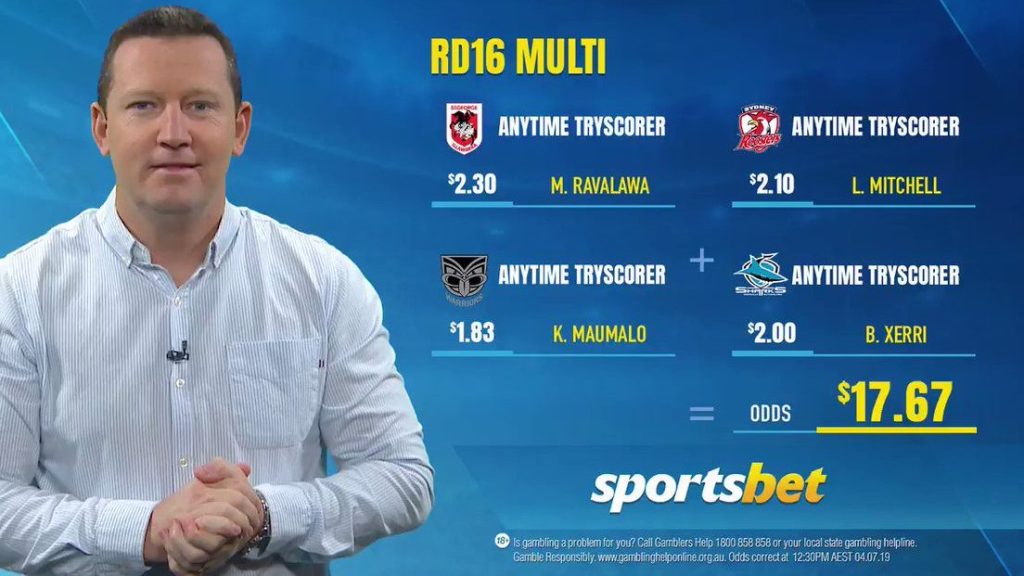
I’m speaking of course of Joel Caine. From Sportsbet. And the sage, compassionate advice Joel offers, every time he updates us on the odds during the game. “And remember folks, always gamble responsibly”.
How good is Joel?
I loved it last year when 10 minutes after full-time in Origin 3, he was filling us in on the head-to-head series odds for 2020. The trophy hadn’t even been presented – the players were still on the field.
You might like


“Now back to you Fatty, and remember … “. Well… I think you know the drill.
The gamble-isation of sport. Love it or hate – it doesn’t really matter. It’s here to stay. So learn to live with it.
Sports betting agencies these days are a huge source of revenue for practically all major professional sports, with a percentage of all bets waged flowing back to the game’s governing body.
For the benefit of the uninitiated, the formal sponsorship arrangements – Sportsbet’s’ “official” partnership with the NRL and AFL, or Bet 365 “support” of Australian Cricket – are aimed at giving that agency a bigger slice of the betting, and a stronger affinity with the fans of the sport. Access to databases also helps.
And then there are all the individual club deals. Somebody has Unibet, another mob has Neds. It’s never-ending.
The sporting bodies will tell that these partnerships help maintain the integrity of their game – you know, by being close to the agencies, they’re able to hold their athletes (and peripheral staff) to account. Make sure they do the right thing.
And woe betide anybody from “within” who has a bet. Even a team physio or a lower-level assistant coach – if they’re caught having a $10 all-up multi (as some have been – on matches not even involving their club) – they’re in a world of pain. Fined and banned.
Meanwhile, let’s keep those millions rolling in. Double standards everywhere.
Stay informed, daily
Where it all gets a bit silly, and very hard to police is in the ridiculously wide range of betting options the agencies offer – somewhere between 150 and 200 for each game.
And as a general rule, the more obscure the betting option, the more susceptible it is to manipulation. For instance, let’s have a market for how many no balls will be bowled in the third over of the match? Or will there be a left footed field goal snapped by a player wearing bright blue headgear?
But it doesn’t even stop there. We now have markets being framed on events where at least a handful of people already know the result, like the one the other day, which led to the arrest of the two blokes who bet on the winner of the Dally M coach of the year.
Now’s not the time or the place to scrutinise the wisdom of that little manoeuvre but you can guarantee, if two knew, four knew and if four knew, another 400 would soon find out. As an aside, it’s Interesting there’s been no follow up in the Daily Tele, Sydney’s Rugby League Bible.
As much as sports betting is about form, it’s more about information. The form has already been factored into the framing of the market. The betting edge comes from the sideline chatter and the locker room whispers, out of the mouths of those who know what’s going on.
What galls me is how much the betting agencies squeal like stuck pigs when something juicy gets out, and the odds are momentarily tipped in the punters’ favour. Like a late withdrawal, or a positional switch, or a change in the batting order.
The sports have got to do more. They’ve got to protect our interests. The integrity of the game is at stake.
Puuullleeeease.
Whatever happened to “buyer beware”?
If the agencies, in the rush to differentiate themselves from their competition, are willing to frame frivolous novelty markets, don’t expect the public to sit back compliantly, and not try to swing the odds in their favour.
Look at it this way. The better the information, and the more insight the punter has, the more responsibly they’ll be gambling.
And Joel’s got to be pleased about that.
Want to see more stories from InDaily Qld in your Google search results?
- Click here to set InDaily Qld as a preferred source.
- Tick the box next to "InDaily Qld". That's it.



