Why union leader says march of the robots a good thing for industry
The march of technology into the workplace seems unstoppable but a senior Queensland Labor Party figure and the head of the manufacturing union said it could be a great opportunity for Australia.
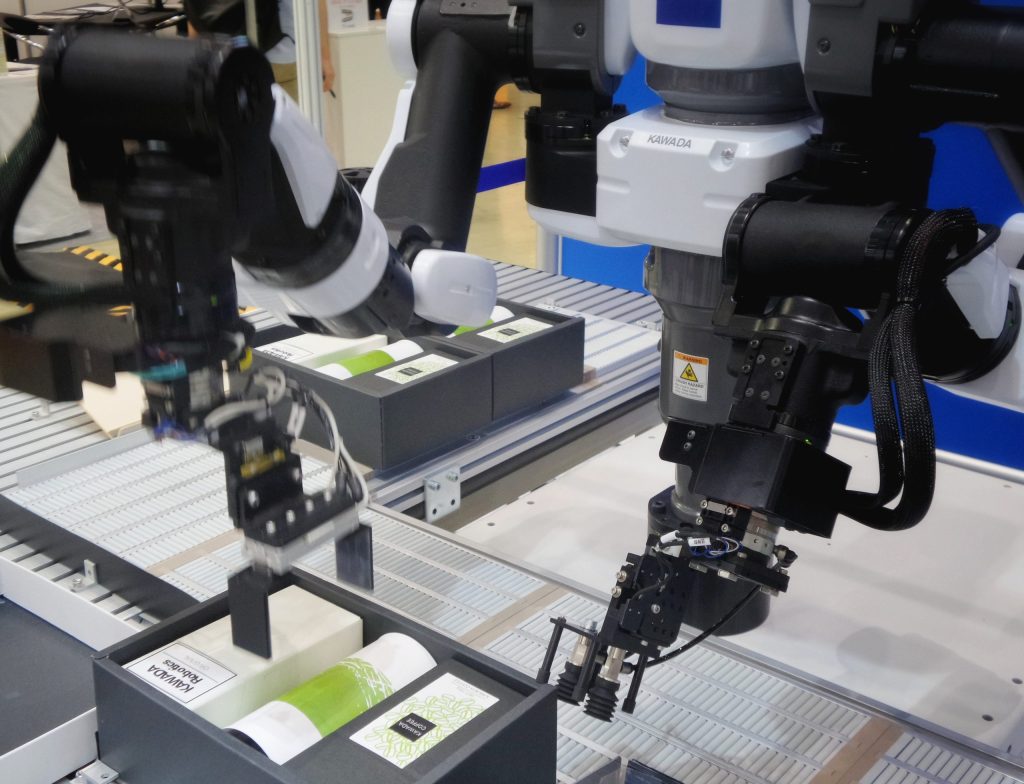
AMWU national president Andrew Dettmer said the mining sector was an area where technology, digitisation and robotics was a threat.
The industry’s two biggest players, Rio Tinto and BHP, both invested heavily in automation and BHP just announced a $100 million investment in automated trucks for its Queensland coal fields. Both have automation centres in the Western Australia iron ore projects.
“They have some pretty advanced technologies but they work in silos, they don’t co-operate. They work in silos,” Dettmer said.
That meant that technology marched in just one direction and benefitted only a small part of the economy.
“Clustering is the way you get a community of ideas,” he said.
He said Australia also needed to bring back manufacturing from overseas and could do it without imposing tariffs. Other countries, such as Germany, had managed it despite higher labour costs than Asia.
You might like


“If you have the skilled workers, a supply chain and materials we could create and develop companies. The cost of labour is almost immaterial,” Dettmer said.
He pointed to some of the countries with the biggest manufacturing base per capita and most of them were not in Asia and had similar labour costs to Australia.
The Brookings Institution in 2018 found the top-ranked nations in overall manufacturing environment were the United Kingdom and Switzerland followed by the United States, Japan, and Canada.
“We found these nations performed well due to their policies, cost considerations, workforce investments, and infrastructure,” Brookings said.
China leads the world in terms of manufacturing output, valued at $US2 trillion ($2.88 trillion).
Australia did not make the Brookings top 20 countries.
Stay informed, daily
In contrast, since the 1970s the Australian manufacturing sector has fallen from 30 per cent of the economy to just 6 per cent, Dettmer said.
“There are many who believe who don’t have a viable sector below 6 per cent.
“We will always have manufacturing in Australia, but it’s a matter of whether it’s a vital part of the economy.
“We have a skilled workforce, we can provide a stable environment for production and services.
“One of the attractions of the digital environment is the possibility of a return to artisanal production, where workers or teams of workers are responsible for the carrying out of all the functions needed to form a complete component or item, such as a car.”
“We’re not quite there yet in terms of this collaboration – and we can learn a lot from the German model,” he said.
“And for that to take place, unions, employers and governments have to create and develop a new way of working together so that the thoughts and ideas of all engaged can be brought to bear,” Dettmer said.
“Part of the problem we have … in the US and Europe the level of cooperation is created through government policy and that just doesn’t happen here.
“We are not that far behind and I think if we were given a boost to skills, given a boost to manufacturing capacity and R&D we not that far behind but that’s at this time.”
He said unless Australia took advantage of the COVID-19 crisis we could be “wallowing in the shallows rather than surfing the wave of recovery”.
Want to see more stories from InDaily Qld in your Google search results?
- Click here to set InDaily Qld as a preferred source.
- Tick the box next to "InDaily Qld". That's it.



