Michelle Grattan: Australia holds its breath as Victoria struggles with the virus
Scott Morrison says of the war against COVID-19: “On some days the virus wins. On other days we beat it”. This week, the virus was counting its victories most days.
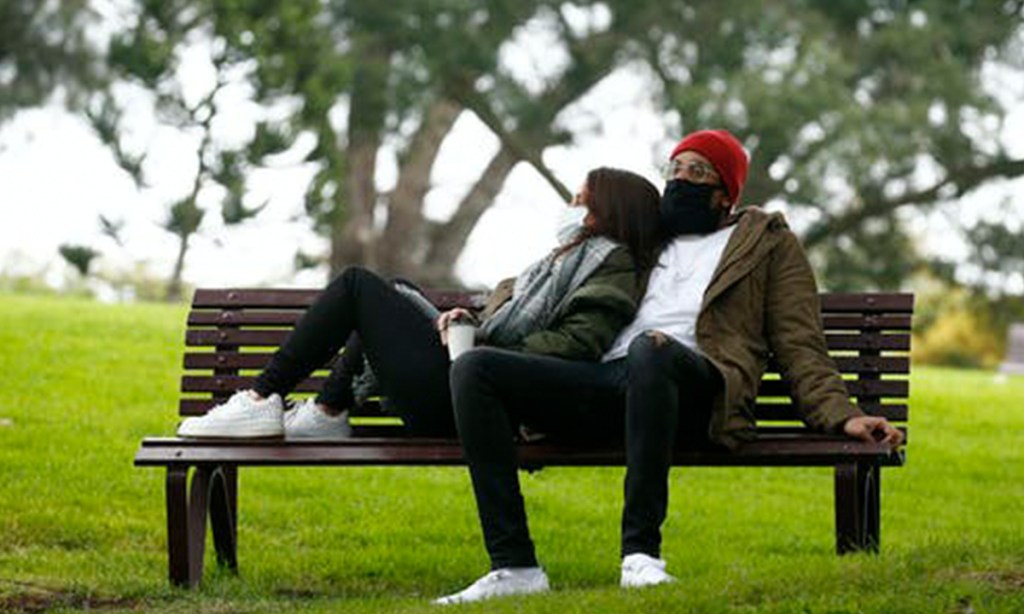
In these bleak times, it’s well to remind ourselves that in broad national terms, as many countries struggle with second waves, Australia is still doing relatively well.
Nevertheless, we are seeing the virus wield its scythe against the frail elderly in Victorian nursing homes, and its axe against the national economy.
In the early stage of the COVID crisis, the community and the politicians were shaken by vision of snaking queues of the newly-unemployed outside Centrelink.
Now the shock is coming from the voices of traumatised, sometimes angry, Melbourne families whose relatives, residents in aged care, have died or are fighting for their lives.
They’ve testified to how unprepared some facilities were. This lack of foresight magnified the vulnerability of both residents and staff in what were always to be high risk situations.
These witnesses’ stories have forced greater accountability from the federal and Victorian governments. Multiple distressing first-hand reports from credible citizens are particularly confronting.
For the Federal Government, which regulates aged care, there has been nowhere to hide.
For instance, Scott Morrison on Thursday admitted there was “far too much anecdotal evidence that we’ve been receiving of PPE [personal protective equipment] – despite the training, despite the PPE being there – not being used the way it should.”
You might like


With teams now being sent into facilities to check PPE use, Morrison warned failure to comply with PPE requirements would “lead to marking down” of accreditation. A warning that should have been loudly delivered much earlier.
Victoria’s Thursday record figure of 723 new COVID cases – taking its total active cases to well over 5,000, and coming with further restrictions in regional areas – plunged that state into a new dark place. One federal official described it as a “hinge day”. Morrison flagged discussion of tougher measures for the state.
There is serious worry about COVID’s impact on the health workforce in Victoria. Attention has been on the high number of nursing home staff who’ve contracted the virus, but its spread among hospital staff is also concerning. Many workers at major hospitals, including St Vincent’s, The Alfred, and The Royal Melbourne, have reportedly fallen victim.
While workforce difficulties in nursing homes were predictable, the weakness in big hospitals is more surprising.
The Victorian Government’s quarantine missteps and tracing inadequacies let the virus loose, and continuing failures in contact tracing are creating problems for its containment.
Other states have more robust protections but they’re all jumpy.
NSW, dealing with a limited but potentially explosive number of cases, remains on tenterhooks, despite Morrison’s confidence that state has the situation under control and Premier Gladys Berejiklian’s desire not to flatten economic activity. Gladys was “constantly anxious,” the PM noted, in a massive understatement.
Queensland Premier Annastacia Palaszczuk, facing an election, is slamming shut her border to people from greater Sydney, on the grounds of “more cases of community transmission spreading across a wider area” of the NSW capital.
Political leaders’ nerves are stretched taut, arguably even more so than early on. They’re exhausted, and less patient with each other. Federal-Victorian angst broke out this week over aged care, as did sniping between Canberra and Perth about Western Australia’s refusal to open its border.
Morrison, who only recently declared everyone a Melburnian, now insists there’s not a national COVID “second wave”, just a “Victorian wave”.
Stay informed, daily
But he acknowledges Victoria’s disaster not only directly drags down the national economy (of which the state is nearly a quarter), but also delivers a much wider hit by affecting behaviour elsewhere.
The Victorian wave was even showing up “on things like table bookings at restaurants and in states that aren’t affected by COVID in the same way that Victoria [is],” he said.
A friend just returned from Queensland backs up this point, having heard stories of how Victorian bad news is hurting trade in Brisbane shops.
Victoria has derailed Morrison’s hope, indeed expectation, that economic recovery would be centre stage by now. In his mind, we’d be going about our business with the virus contained, a few periodic outbreaks efficiently handled.
Instead we see how COVID, once it breaks out, can dash away.
Already it has rendered last week’s revised budget numbers out of date. Treasury Secretary Steven Kennedy told the Senate’s COVID committee on Thursday the Victorian situation had deteriorated since the Treasury did its figures (which took account of the six-week lockdown).
“Further constraints, be they through movement or through the extension of the six-week measures that the Victorian government announced, will mean growth will be lower and employment will be lower and unemployment will be higher,” Kennedy said.
“Beyond that, of course, people can lose a bit of confidence and have concerns about what they are seeing unfolding, even in other parts of the country.” The community’s confidence in how the virus was being managed would “matter enormously for economic activity”, Kennedy added.
Morrison’s mantra is of dual health and economic crises, but in the public’s mind the health one will command priority.
This goes back to the sustainability of the Morrison “aggressive suppression” strategy. The PM continues to reject an elimination strategy although he does now talk about a goal of zero community transmission – which on the New Zealand interpretation is elimination. Six of the eight jurisdictions are at or close to this position.
Acting Chief Medical Officer Paul Kelly points out the obvious – the virus “moves when people move”. Even if the situation in Victoria is brought under control – a considerable “if” – Morrison’s scenario of the community operating confidently with the virus just popping up here and there sounds more doable than it is likely to prove.
One of the weapons this virus deploys is its ability to spook people out.
This article is republished from The Conversation under a Creative Commons license.
Want to see more stories from InDaily Qld in your Google search results?
- Click here to set InDaily Qld as a preferred source.
- Tick the box next to "InDaily Qld". That's it.



