A classy reminder of why we should never stop playing the long game
In these days of 10-second sound bites and 24-hour news cycles, sports journalism recently moved a step further away from the best of times, writes Michael Blucher
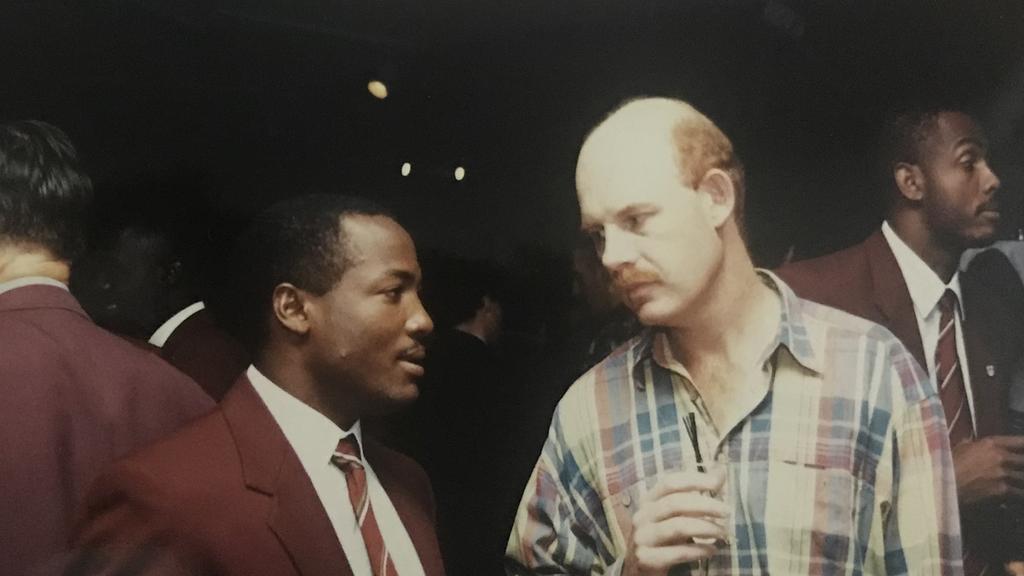
Jim Tucker, one of the giants of Queensland sports journalism, stepped quietly out of the press room for the last time recently, leaving us with an opportunity to reflect on the current relationship between the media and our nation’s sports stars.
It’s fair to say, it’s not what it once was.
Much has changed over the years, very little of it for the better.
Decades ago, when Tucker tapped out his first match report on a clunky typewriter, there was an underlying kinship between reporter and athlete, or at the very least a begrudging respect.
Journalists knew sportsmen well, particularly the “big names” who featured in state and national teams, and were the focal point of media attention.
Acquaintances were usually made early, when the likes of Pat Rafter or Matthew Hayden or Tim Horan or Adam Scott were just promising juniors, still years away from establishing themselves on the world sporting stage.
Through this early contact, rapport was established and trust built, so if and when stardom arrived, there was a comfortable familiarity between the two parties. They travelled to the same places, stayed at the same hotels, and shared evening beers in the downstairs bar.
You might like


On Jim Tucker’s first trip away with the Queensland Rugby team to Fiji and New Zealand, he even roomed with one of the rookie players. Decades on, they’re still good mates.
Getting in “on the ground level” laid the foundation for a strong, trusting and open working relationship, which in team sport, was often handed onto the next generation.
“Who’s the baldy red-haired bloke with the notebook,” a rugby rookie might ask a senior player.
“That’s Jim Tucker. He’s a reporter. But he’s fine. Tell him anything you like. You can trust him.”
The senior stamp of approval was all that was required. Jim was good to go with the next wave of talent.
As sports betting was gaining a foothold in Australia, the players even trusted the wily rugby reporter with their semi-amateur earnings.
In a Super 12 final in Durban, South Africa in 1994, long before rules around gambling on sport were established, the Queensland team plunged $10,000 on themselves to beat Natal at fleshy odds. Jim Tucker placed the bet on their behalf.
Imagine that happening today?!
Stay informed, daily
None of this close proximity and familiarity stopped Tucker from doing his job, effectively and impartially.
When a harsh match report appeared in a newspaper, it was because there’d been a substandard performance. He called it for what it was. Rubbish. But it wasn’t delivered as a personal attack, it was just a reporter’s interpretation of what he’d seen.
And if a player who was a little more sensitive burred up, somebody else in the team would offer context. “He’s writing shit? Yeah, well he wouldn’t have to be writing shit if we weren’t playing shit.”
Again… imagine that happening now…
Wind the clock forward to today and the sports media landscape bears no resemblance to what it once was.
With the 24 hours news cycle spinning faster and faster, there’s no time, inclination or even opportunity for journalists to get to know and understand the people whose performance and character they’re critiquing, weekly if not daily.
In one sense, they’re just fodder, fodder who are usually earning big money and need to be held to account.
That’s not a slight on the morals or professional ethics of the modern day reporters – there are still plenty of very good ones. What it points to instead is the impersonal and perfunctory environment in which they’re plying their trade and the time pressure they’re under. There’s little scope to play “the long game”.
Most of their reporting is conducted at carefully choreographed press conferences, or by sifting through social media sites, to see what sports stars are saying directly to their adoring public.
And if some nuff-nuff with 13 Twitter followers takes an axe to an athlete over something they’ve said or done, that’s news too. That’s perfect. Chop ‘em down.
It all adds up to a pretty unsavoury, pretty unsatisfactory environment, with very few winners.
Where does it all end up? I’m stuffed if I know, but I fear it’s only going to get worse before it gets better.
A week or so ago, two of Australia’s favourite rugby sons, Daniel Herbert and Tim Horan took Tucker to lunch to celebrate his career, and acknowledge his support of the game they played and loved.
As the lunch gathering reminisced about the world tours, the safaris in South Africa, the fun and frivolity and comparative freedom of yester-year, Horan I suspect spoke for many retired athletes.
“Gee Jimmy, we got the best of it, didn’t we?! “I wouldn’t want to be playing today!”
Want to see more stories from InDaily Qld in your Google search results?
- Click here to set InDaily Qld as a preferred source.
- Tick the box next to "InDaily Qld". That's it.



