Can tourism survive if most of our visitors arrive in cars, instead of planes?
Banned from heading overseas, and in most cases interstate, Australians flock to tourist hotspots in their own backyards. But will they be able to replace the high-spending, longer-staying international travellers?
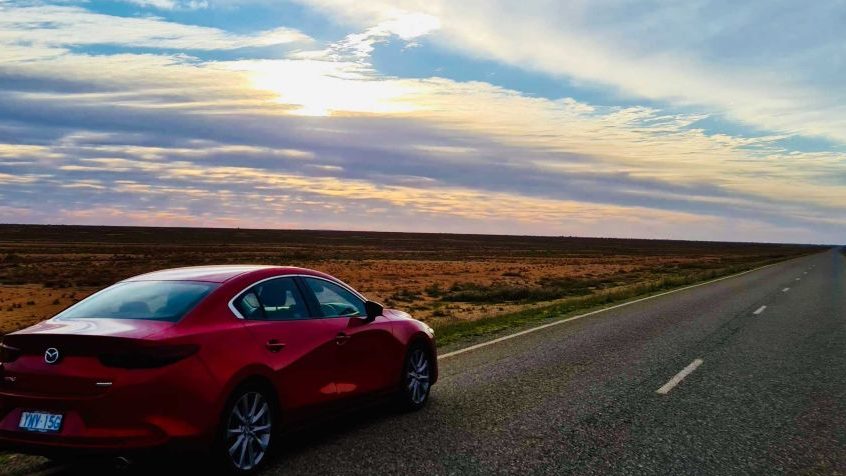
Australians forced to scrap overseas holidays have ditched the azure waters of the Amalfi Coast for the ancient canyons of the Pilbara, abandoning autobahns for outback highways.
Trapped on home soil — and many in their own states — people are flocking to explore their own backyards, creating a spike in domestic tourism.
The surge in interest has seen flash cars zipping from Brisbane into western Queensland, an area typically visited by grey nomads in campervans and international tourists.
“We’ve got Porches, Mustangs, Ferraris … I even saw a Rolls Royce out here about six weeks ago,” chief executive of the Outback Queensland Tourism Association, Denise Brown said.
“We’re seeing a lot of young families — in flash cars as well. So it just shows you they’ve got pent-up demand, and are ready to spend money. A lot of them say they were meant to be in Portugal, Paris or London or Bali.”

Brown said the “enormous spike”, which had left most hotels nearly full, had also been fuelled by travellers from north Queensland and the Sunshine and Gold Coasts.
Domestic travel in WA isn’t cheap, but discounted flights have helped many West Australians explore a slice of the state that’s sometimes too expensive to see.
Perth resident Hannah Docherty, 25, had booked a Europe trip in July, but instead embarked on a road trip to Exmouth and Karijini — the state’s second largest National park — in the Pilbara.
“I’d already booked the leave for Europe — obviously that was cancelled,” Docherty said.
You might like


“So I was super keen to get away, and, obviously after lockdown, I was so desperate to get out of the city and explore a bit of the state while we had the opportunity.
“It was incredible… everyone’s doing the same thing, I think. I guess, I just never got round to it because we were travelling internationally.”
Can domestic tourism fill the void?
International tourists injected a whopping $30 billion into the Australian economy last year, according to Regional Australia Institute chief economist Kim Houghton.
“We know that we have about 11 million Aussies going overseas each year, so if some of those are redirected towards domestic tourism, there’s certainly a possibility to fill the gap,” Houghton said.
But he thinks the recent interest is more of a “spike” than a long-term trend.
“I’m certainly not suggesting everywhere is booming. That’s not the case at all,” Houghton said.
“But it is if you are in one of those hotspot [tourist] areas, particularly in WA … I think Queensland will probably move second.”
Recent data from WA Tourism showed locals weren’t coming close to filling the gap on their own.
But it’s hoped interstate visitors might in future.
SGS Economics and Planning’s Terry Rawnsley described the current situation as a “sugar hit” for tourism operators, and said businesses should capitalise on the sudden interest.
“Some domestic tourists just aren’t that aware of what Australia has to offer,” Rawnsley said.
“And it’s about getting in and really marketing to those people and saying, ‘If you want this experience, [overseas], then come to my part of the country in Australia and do all the things you would have done overseas’.”
He said places like Queensland’s Sunshine Coast, WA’s Margaret River — and when restrictions eased — Victoria’s Alpine region and Surf Coast would be able to attract short-term visitors from the cities on weekends.
Stay informed, daily
But, Rawnsley said, those regions with an offering further away, and more directly focussed on international travellers, faced a much tougher outlook.
“For instance, Kangaroo Island, which is a bit further away and doesn’t have a domestic base to draw off, will find it difficult going forward,” he said. “And also from what we’re seeing, domestic tourists are a bit more price-sensitive. There’s not those people willing to spend premium rates for a premium holiday.”
Businesses on “life support”
In Tasmania, Greg Price has been offering bus tours for backpackers for more than a decade.
In a good year, he’d have 2000 international guests heading out on trips, but he hasn’t run a tour since March.
“Our tours are very much designed for people who haven’t been in Australia very much,” Price said.
“So you know, national parks, wildlife and some of those things that Australians might take a bit for granted.”
He said his business was on “life support” through Jobkeeper and that it couldn’t be revived unless international borders reopened.
Price said in comparison to domestic visitors, overseas travellers spread their money far and wide through consumption of goods such as food and beverages.
“International guests tend to stay for a lot longer,” he said.
“So they come to Tasmania and they’re thinking about staying for seven to 10 days, whereas locals or even interstate visitors, they’re just thinking a weekend or a long weekend. “And international visitors spend the most, followed by interstate visitors — and then intrastate visitors don’t spend as much per day. So it’s difficult to replace those high-spending, longer-staying international visitors with the domestic ones.”
The award-winning entrepreneur is worried the tourism industry will suffer more down the track as well-trained employees look elsewhere for more secure employment.
“The biggest problem is that [the] industry’s going to start losing its best people because, I guess, you can’t blame them,” he said.
“Just last week, one of my last staffers handed in his notice, and he’s going to work somewhere else, and cited uncertainty in tourism.
“And even transport and tourism operators will look at that, because if you’ve invested all this money in your business and it’s not doing anything, then eventually you have to take that out and do something else.”
Economist Terry Rawnsley said the winding down of JobKeeper was a “real danger time” for tourism businesses heavily dependent on international arrivals.
The changes that passed earlier this month, will see the fortnightly payment for full-time employees decrease from $1,500 to $1,200 on September 28.
“JobKeeper has kept them solvent for the last six months, stepping it down over the next few months is going to create some real challenges,” Rawnsley said.
“And it’s going to be a tough conversation for those businesses with their staff and with their banks, about how much longer can they get along with limited demand, and some of them just wont make it, they won’t be viable.”
– ABC / national regional and rural reporters Lucy Barbour and Clint Jasper
Want to see more stories from InDaily Qld in your Google search results?
- Click here to set InDaily Qld as a preferred source.
- Tick the box next to "InDaily Qld". That's it.



