Despite weekend soaking and La Nina hopes, water argument still at boiling point
The much anticipated La Nina weather system may have stirred this week, bringing rain to parched interior desert country, but it’s little solace for farmers needing water certainty to run a business.
Long range weather forecasters remain confident their gauges and models are correctly predicting a more than above average chance of a wet summer.
Even if the heavens fail to deliver the much-hoped-for-drenching, a worst-case result will still be nothing like the tinder-dry conditions that saw eastern Australia combust into deadly bushfires last year.
That’s good news for people living near to bushfire zones and primary producers rejoicing in heavy falls that arrived over the weekend, promising more to come and restoring some faith in the science of meteorologists.
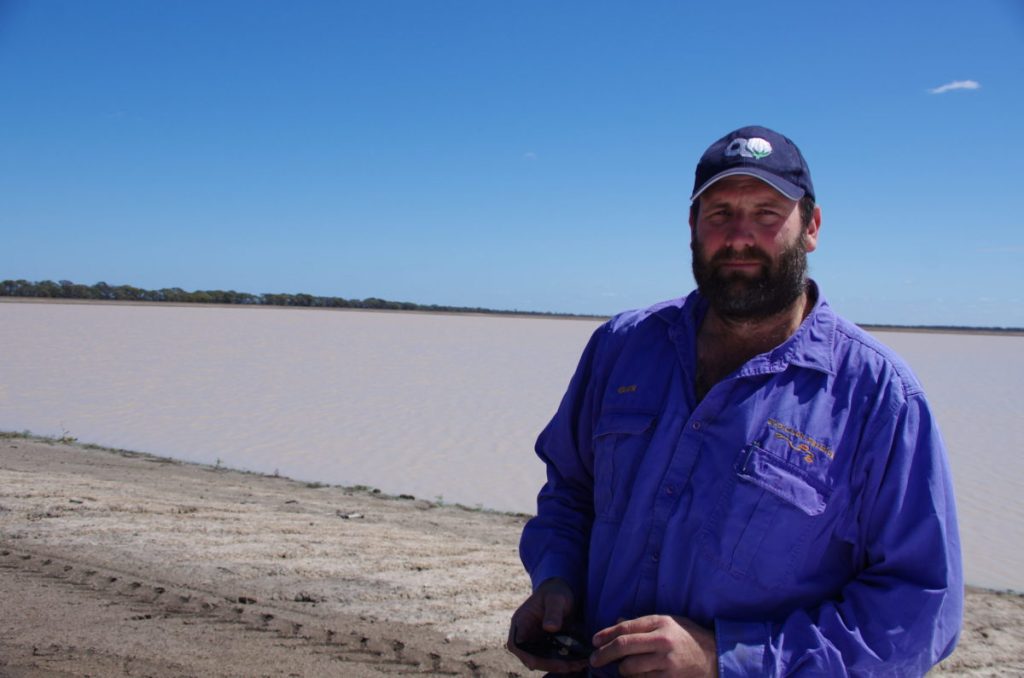
Cotton grower Glen Smith is not convinced, nor excited. His blunt assessment of the current season comes down to one word.
“It’s simply shithouse,” he told InQueensland at his large-scale operation near Goondiwindi in the state’s southwest.
“There just hasn’t been enough rain consistently over enough years to allow us the opportunity to maximise the capacity of our country.
“Gone are the days when farmers like me would take a punt on the season by planting on minimal moisture and hoping the rain would follow. It’s just too risky and a sure-fire way to go broke.”
Nervous time
Smith has every reason to be cautious, reflecting the wider apprehension felt by farmers in a state still overwhelmingly languishing in drought.
If the rain was falling and the rivers flowing, and Smith had secure access to his full water entitlement, his operation would have 4000 hectares under cotton in summer, followed by a further 6000 hectares under wheat and chickpeas in winter.
When he harvests the winter crop next month, it will be half his normal yield. When the cotton crop is planted soon after, it will cover just 20 per cent of the available cultivation.
You might like


That’s 20 per cent more than last year when the cotton paddocks laid bare across summer. Smith and his family have gone without any income for two years.
“Lucky the 2016-17 crop was a good one, because it’s carried us through,” he said.
“For us it’s a bit like coronavirus arrived here three years ago, that’s the way we’ve been operating, with disruption and plans on hold.
“Our best hope is to break even this year.”
Cotton defended
Detractors will argue that cotton grown on what might be classified as marginal country at the northern headwaters of the Murray Darling system is folly and inviting failure, but Smith will have none of it.
Cotton, he says, is still a water-efficient crop when measured against its return, and all water used for irrigation is tightly managed and documented.
He draws his water from a mixture of entitlements that includes license to take water from the region’s headwater dams; licenses to take high environmental flows from the region’s rivers, the Gwydir, Macintyre and Dumaresq and flood plain harvesting, again reliant on ample rain.
At its most basic level, you can only take as much water as the environment allows and your bank balance can afford.
In the case of cotton, it takes about eight megalitres to produce about one hectare of the crop through to harvest. That means if Smith has 1000 megalitres at his disposal, he will divide that by eight to calculate his planting area.
“Water is our limiting factor. We have plenty of land, but water availability will always dictate how much we can plant,” Smith says.
“Our systems are managed very carefully – no water here goes missing, but it’s a challenge when two of the last three years have been the lowest river flow years on record.
“Goondiwindi almost ran out of drinking water last year and that’s almost unheard of.”
His property, Koarlo, trading as Evolution Farming, is supported by millions of dollars in infrastructure investment – massive on-farm dams, drainage systems, roadways for large machinery and land contouring – that would rival most major civic construction projects.
It’s the result of years of planning, borrowing from the banks and paying down the debt off the back of good harvests to expand again.
Smith said this approach also supported the surrounding community.
Stay informed, daily
“You need to consistently produce a crop to maintain viability, machinery, staff and work for other contractors,” he said.
“If that level of productivity falls you lose staff and then you lose families out of the area. Then you lose the school bus, key infrastructure around town, like medical and education and then businesses start to close.
“In small communities like ours you can’t afford that. Once they’re gone, they’re hard to get back. It’s critically important that we keep going.”
Water proofing
Goondiwindi mayor Lawrence Springborg, who once had a natural resources shadow portfolio during his years in State Parliament, told InQueensland that water security was key to his region’s progress.
“We have some tourism, some hospitality, but we are overwhelmingly an agriculture community,” Springborg said.
“We just want to build on our strengths. We don’t want to be something that we’re not.
“So, we’re very active in making sure that people here have some resource certainty. We’ve put in new bores at Texas, Yelarbon and Goondiwindi so that in the future we’re not at risk of running out of water.
“These are things councils can do, but we have to stop changing the rules when it comes to water resource management.
“People can’t invest in their businesses with confidence if the rules keep changing.”
Aspiring Queensland premier Deb Frecklington has tapped into the unease over water access in her election bid.
One of the earliest policies released by the LNP was a promise to implement the recommendations of the Queensland Competition Authority on adopting a regulated asset-based approach for financing asset renewals.
Frecklington is arguing the move will force SunWater to slash the price of water for 5000 regional customers by almost 20 per cent, with the price cut effective from July 1 next year.
“Only the LNP will deliver cheaper water for farmers,” she told the Rural Press Club on Monday.
“Because we know that cheaper water will lead to more productivity and more regional jobs.”
Frecklington also reiterated her party’s commitment toward building the ambitious Bradfield Water Scheme and exploring more opportunities to construct dams.
She also took a shot at Labor’s drought relief measures, claiming a returned Palaszczuk government would cut $50 million from fodder and freight subsidies.
Agriculture Minister David Furner blasted her claim as a lie.
“Deb Frecklington knows that this just isn’t true,” Furner said.
“Drought funding is budgeted on an annual basis because weather and climate conditions can change.
“The previous LNP budgeted for drought support in exactly the same way, so it seems unlikely that Campbell Newman’s former assistant treasurer has forgotten how it works.”
Want to see more stories from InDaily Qld in your Google search results?
- Click here to set InDaily Qld as a preferred source.
- Tick the box next to "InDaily Qld". That's it.



