Measuring the risks faced by vaccine volunteers
Researchers are considering using “human challenge studies” to accelerate COVID-19 vaccine research and development. This would involve giving an experimental vaccine to healthy volunteers, then deliberately exposing them to the virus to see whether they’re protected from infection.
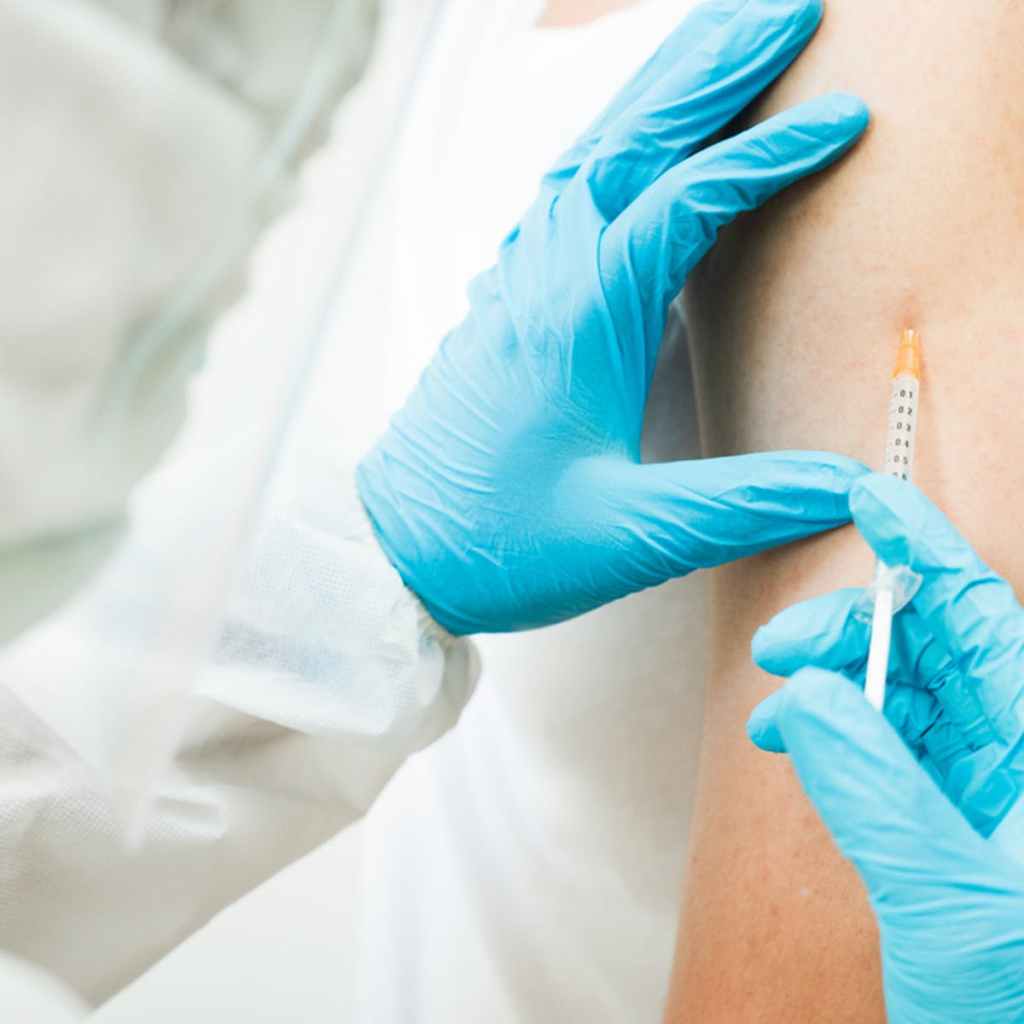
Challenge studies can also allow scientists to monitor the progress of infectious diseases from the moment they begin, and to study infection and immunity more closely than other types of research.
These studies can answer scientific questions in a short time. They recruit small numbers of participants — up to around 100 volunteers per study — usually young, healthy adults.
However, deliberate infection with SARS-CoV-2, the virus that causes COVID-19, involves risks to volunteers.
How do these studies differ from standard, larger studies?
Standard “field” trials for some COVID-19 vaccine candidates have already begun. Each aims to recruit at least 10,000 people. Usually, half or two-thirds receive the experimental vaccine and the rest might receive a placebo or a vaccine against another disease.
Participants then go about their daily lives. Scientists observe whether those who received the COVID-19 vaccine are less frequently infected with the virus than the other group, allowing them to determine how effective the vaccine is.

Human challenge studies involve fewer participants than standard field trials. Shutterstock
In large epidemics, field trials can quickly reveal whether a vaccine works. But proof may be delayed when there’s less community transmission, for example due to local public health measures.
If current field trials identify a highly effective vaccine, there might be less need for human challenge trials. However, if the first vaccines fail, or turn out to be only moderately effective, challenge studies could be used to select the next most promising candidates for future field trials.
You might like


Challenge studies need extra preparation
First, scientists need to prepare a strain of SARS-CoV-2 in the laboratory to administer to volunteers. The strain needs to be similar to the virus circulating in the community.
There’s also a need for special research facilities with health-care support and capacity to isolate participants.
Volunteers may have to remain in these facilities for 2–3 weeks to be closely monitored, and so they are not released into the community while they may be infectious.
Past experience and recent developments
While COVID-19 challenge trials are now making news, scientists have previously conducted these kinds of experiments with many different types of microorganisms.
Such studies have been used to develop vaccines against malaria, typhoid and cholera. They have also provided unique insights into immunity to influenza and “common cold” coronaviruses.
One research centre in London has announced a plan to conduct challenge studies with SARS-CoV-2. Another centre in the United States is also preparing a strain of the virus.
Ethical and scientific questions
The World Health Organisation (WHO) convened two advisory groups, in which we were involved, to consider COVID-19 human challenge studies. One focused on ethics, the other on scientific and technical aspects.
The ethics group identified eight criteria proposed challenge studies would need to meet before going ahead.
These included the need for researchers to consult and engage with the general public before, during, and after the trials. There would also need to be careful independent expert review, and demonstration that expected benefits are likely to outweigh risks.
Stay informed, daily
Relevant risks might be especially hard to predict for SARS-CoV-2, partly because it’s a new pathogen.
While young, healthy people generally fare better with COVID-19 than older adults with pre-existing conditions, there are exceptions. For example, a multisystem inflammatory syndrome has been reported in rare cases among previously healthy adults after they contracted COVID-19.
Members of WHO’s science group agreed on a number of technical requirements for COVID-19 challenge studies to maximise volunteers’ safety and prevent wider spread of infection.
These included recruiting only healthy young adults, conducting the studies under strict biosafety procedures (for example, isolating participants), giving the virus via the nose to mimic natural infection, and carefully increasing the dose of the virus.

Only young adults without underlying health conditions could volunteer for these studies. (Photo: Shutterstock)
However, the experts were split on other issues, such as whether:
- challenge studies would actually accelerate vaccine approval
- results in young healthy adults would demonstrate whether or not a vaccine works for older people
- challenge trials should begin before a proven and highly effective treatment for COVID-19 becomes available.
What next?
To design an ethically acceptable challenge study, it’s important to minimise the risks to study volunteers, research staff, and the wider community.
In the future, there may be additional ways scientists can reduce the risks. They may be able to better identify those at lowest risk of severe infection, develop a weakened strain of the virus, or have a highly effective treatment on hand to use if needed.
In the meantime, scientists could obtain results relevant to COVID-19 by conducting less risky challenge studies with other viruses.
For example, challenge studies with “common cold” coronaviruses, which are being considered in Australia, could teach us about the types of immune responses that protect us against coronavirus diseases.
Research eventuating in safe and effective vaccines for COVID-19 could save many lives. However, whether the benefits of challenge studies in the current pandemic outweigh the risks depends on many factors.
We must carefully consider proposals for these studies in light of the current state of science and vaccine development, and update our evaluations as new data emerge.
This article is republished from The Conversation under a Creative Commons license.
Want to see more stories from InDaily Qld in your Google search results?
- Click here to set InDaily Qld as a preferred source.
- Tick the box next to "InDaily Qld". That's it.



