Hook, line and stinker: Industry says new Qld fishing rules on the nose
A national marketing campaign has been launched to motivate higher seafood consumption, just as the Queensland Government upends fishing regulations and some commercial anglers fear for an industry wipe-out. Brad Cooper reports
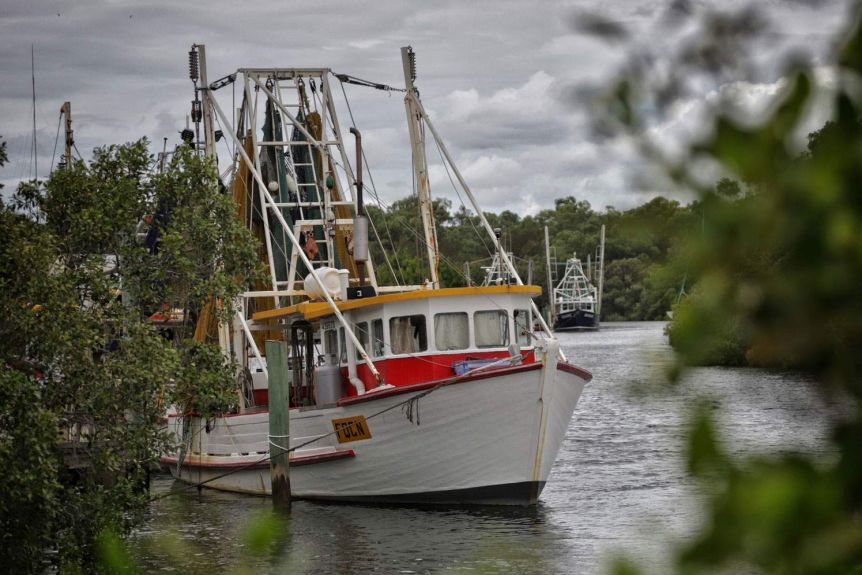
As Queenslanders prepare their Christmas shopping orders that traditionally involve larger volumes of fresh seafood, commercial fishers wonder how many of them will be left this time next year in the wake of new state government regulations aimed at protecting wild-caught stocks.
Amid the tumult of the pandemic, Donald Trump, local and state government elections and a widening diplomatic rift with China, simmering tensions over the Palaszczuk Government’s seafood harvesting plans have possibly sat well below the waterline of public attention for most of 2020.
For those not in the loop, here’s a quick recap on the major developments causing a potential boilover on the water.
On September 30, Queensland Agriculture and Fisheries Minister Mark Furner announced a new raft of regulatory and operational measures aimed at protecting wild seafood species and keeping the commercial industry afloat.
The overhaul, according to Furner, would “cut red tape, protect export jobs and set Queensland on the path to more profitable and sustainable fisheries”.
At stake, he said, were nearly 1400 fishing businesses and more than 4000 regional jobs, not to mention compliance with Commonwealth environment and world trade protocols.
The plan has received endorsement from Queensland Seafood Marketers Association president Marshall Betzel, who said overall strategic reform was something that industry needed to define its future.
North Queensland commercial fisher Nathan Rynn also backed the changes, believing they would protect his exports of high-value fish bladder, shark fin and fish roe shipments.
“This is a win-win for everyone and worth millions to the Queensland economy each year, as well as the jobs created,” he said in September.
But according to Queensland Seafood Industry Association (QSIA) chair Allan Bobbermen, the reform agenda is the work of an “incompetent government” responsible for “some of the worst fisheries legislation in living memory”.
His statement on October 3, followed a media release his organisation issued three days earlier, when his CEO Eric Perez blasted an “anti-industry and biased” State Government for bringing together “the worst elements of fisheries management” as part of a “sham fisheries management reform process”.
Readers can find several QSIA-issued statements on the topic via this link.
You might like


There is a general theme among each QSIA statement that the Palaszczuk Labor Government makes decisions relating to primary production and natural resource management based on deep Green ideology rather than scientific fact.
The argument is nothing new.
It has been a frequent line of thought from several farming advocacy groups for decades, predating Palaszczuk’s time at the helm.
Green wash
The argument goes that city-centric Labor ministers and their departments are held captive to the agendas of shadowy conservation and animal rights groups, partly because they have a natural alignment on the left side of the political spectrum, but mostly due to fear of a Green-leaning voter backlash should they take a pro-farming, pro-industry stance.
As evidenced by the most recent State election results, those fears may be well-founded, as the Green voter base continues to eat Labor’s lunch.
But the assertions of primary producer groups, a category of which the QSIA certainly belongs, may also be rooted in some fact, rather than occupying fringe conspiracy.
At a Federal Senate inquiry convened in Brisbane earlier this year to probe the science underpinning the State Government’s new reef regulations, World Wildlife Fund’s head of oceans, Richard Leck, told the inquiry WWF Australia had been actively involved in the development and implementation of key Australian and Queensland Government Great Barrier Reef social policy and management programs for many years.
He said these included the Reef 2050 Long-Term Sustainability Plan, the Reef 2050 Water Quality Improvement Plan, various Great Barrier Reef Marine Park Authority initiatives, including a 2017 blueprint for resilience, as well as major Great Barrier Reef focused science programs.
“We also actively support agricultural practice change programs in the Great Barrier Reef catchment—namely, Project Catalyst with sugarcane growers and Project Pioneer with grazing managers,” he said.
“WWF is a long-term member of the reef advisory committee which advises both the Queensland and Australian environment ministers about the management of the Great Barrier Reef.”
Queensland Senator Susan McDonald, who had helped establish the inquiry, noted that agricultural bodies had all remarked that they had been unable to influence the State Government’s new reef legislation or have any amendments made to the same extent.
Property Rights Australia president Joanne Rea, explained to InQueensland, that Leck’s testimony illustrates the level of influence that unelected and unaccountable environmental groups wield over government policy outside the parliamentary process where ideas are meant to be transparently contested.
She labels the process “fundamentally undemocratic”.
“Agriculture does not have this much influence on all of these various boards and yet they are the people most affected by legislation,” she said.
A highly placed spokesman within the Department of Agriculture and Fisheries has told InQueensland that the fisheries overhaul was informed by a diverse stakeholder reference group of industry personnel, scientists and environmental advocates.
“I’m not aware of anyone particular group that has that level of influence to that extent over key government decision-making,” the spokesman said.
So, what is the State Government proposing in regard to fisheries?
Stay informed, daily
The centrepiece of the restructure involves dividing fisheries for a vast array of species into management regions where commercial catch limits via prescribed quotas will be set for each registered commercial fisher.
Smaller fishery zones make them easier to monitor and manage, especially when government officers will be charged with “pulling the levers” on catch limits should they assess stocks to be below the sustainable threshold.
Catch limits can be enforced in one of two ways – competitive catch limits and quota.
Competitive limits mean an overall number is set for a particular species within a specific fishery zone.
Then it’s literally “first in, best dressed” for each fisher who contests the total limit. Once exhausted, the authorities close harvesting of that particular species.
Quota involves allocating a share of the total limit to each fisher. It takes the competition out of the equation.
Based on historical catch volumes lodged by each registered fisher, the management authorities work out an approximate unit or portion of the total catch limit and allocate this to each operator.
For example, if the total catch limit for snapper in one of the zones is 1000 tonnes and you are allocated a 10 per cent share, you will be entitled to catch 100 tonnes at any time in the season, usually defined as a calendar year.
If the total is 2000 tonnes based on assessed availability, your 10pc share remains the same, entitling you to 200 tonnes.
According to government sources providing background to InQueensland, the preference will be to move away from the competitive process and opt for the quota system.
Evidence suggests it’s difficult for fishing businesses to plan when there’s a “free-for-all” battle for available fish stocks being waged on the water.
Associate Professor Ian Tibbetts, chair of the Sustainable Fisheries Expert Panel – who reviewed the harvest strategies – said the harvest strategies outlined pre-agreed rules for managing the harvest of all sectors and adjusting catch limits to ensure sustainable harvest over time.
“For the majority of the species in these fisheries, initial catch limits will be similar to the current level of catch being taken by commercial fishers and will therefore continue to support jobs in the industry,” he said.
The State Government is calling the next 12 months a phase-in period, when all commercial seafood species will be rolled into the new strategy, with teething problems fine-tuned.
The milestone for full operation is September next year.
Smaller players under threat
Richard Hamilton, a QSIA member and immediate past president of the Gold Coast Fisherman’s Cooperative at Southport, is convinced the new system will squeeze out the smaller scale operators.
He specialises in harvesting spanner crab off the Gold Coast, a species that came under the new management plan earlier this year.
“My quota was immediately cut by 50 per cent because the government said that spanner crab stocks were in decline,” he said.
“That put me out of work for four months. The only thing that saved me, ironically was COVID, because all the big players, who focus on exports, had their overseas markets closed.
“That allowed smaller guys like us who focus only on the domestic market to take up some of the quota they couldn’t take up.”
But he argues that had it not been for the pandemic, he would have been a sitting duck on the water, susceptible to offers from bigger operators keen to snap up additional licences.
“And that’s how we lose control of our industry, and it will happen very quickly if we’re not careful,” he said.
“You go to any region in the world where similar programs have been implemented and it’s the little bloke who no longer has a job, where only the big survive.”
Want to see more stories from InDaily Qld in your Google search results?
- Click here to set InDaily Qld as a preferred source.
- Tick the box next to "InDaily Qld". That's it.



