One in three young Aussies are unemployed or need more hours
This year was one “beyond imagining” for young people seeking work and while the country is slowing getting back to normal, employment “scarring” is likely to effect their employment for decades.
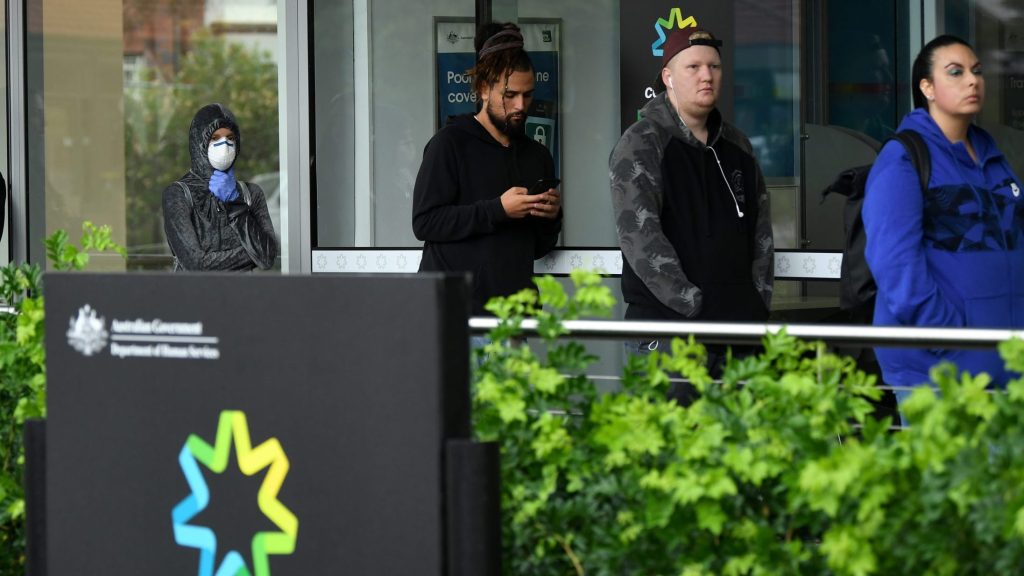
One in three young people are unemployed or underemployed at the end of what an advocate calls “a year beyond imagining” for those trying to join the workforce.
New research details the devastating impact of the COVID-19 economic recession on people aged 15 to 24.
Youth unemployment hit a 23-year high of 16.4 per cent in June.
Even at 15.6 per cent in October, that’s still higher than the peak of our last downturn, the global financial crisis of 2008-09.
Compounding the problem, the rate of under-employment (people needing more hours) has overtaken the jobless rate, and most new jobs being created are in part-time, casual or insecure work such as gig work.
“This year, youth unemployment has really spiralled out of control,” said Conny Lenneberg, executive director of the Brotherhood of St Laurence.
“Young people are really struggling. What they’re finding is that they knew it was tough before this crisis, and now they’re finding it’s hopeless.”
The anti-poverty organisation’s annual Youth Employment Monitor spells out how young people faced the double whammy of less-secure work while working in industries most affected by lockdown and social distancing restrictions like hospitality, retail, gyms, entertainment and tourism.
Between February and May, the start of the coronavirus crisis, the number of young people with full-time jobs fell by 10.1 per cent.
That’s three times the rate (a fall of 3.3 per cent) for people aged over 25.
Chloe works in retail and administration in Rosebud, a tourism-powered town on the outer edge of Melbourne.
You might like


She avoided the health impact of COVID-19 but the economic hit came immediately.
“It was extremely hard,” the 19-year-old recalled. “I got stood down from all the work I was doing so … no-one was hiring … and trying to find support financial wise was really hard.”
After finishing school two years ago, Chloe had built up regular rosters of work. But it fell apart as Melbourne endured a long lockdown — shutting all non-essential retail — to stop the spread of the virus.
“How shut? Extremely shut,” she said.
“To the point that you didn’t realise how much you missed family until you had to see them cry on the (video-call) because you couldn’t see them in person.”
A real recovery?
Economics professor from the University of Melbourne Jeff Borland said while Australia’s labour market had recovered stronger than expected, diving into age group data presented a different story.
“When you look at the whole labour market, we’ve had a pretty strong recovery in hours worked,” he said.
But underneath, “there’s this divergence by age, and young people are a long way behind where they were in March.”
That’s led to under-employment, where workers can’t get sufficient hours to earn enough money to survive.
The Brotherhood’s Lenneberg said the problem is particularly acute due to the casualised nature of so much employment for young people.
“They really don’t have certainty from week-to-week about how many hours they’ll get and therefore how much money they’ll earn,” she said.
“But their needs, whether it’s paying rent or paying utilities bills or just meeting the food expenses, aren’t variable in the way that their work is.”
More than 18 per cent of young people are underemployed.
“It suggests young people who have finished their education and are trying to transition to work are the ones being squeezed,” Mr Borland said.
“Something had to give and it’s the young people trying to get into work who are adversely affected.”
Stay informed, daily
Scarred future
The frightening long-term impact of this is a phenomenon called scarring.
“You cut your finger and there’s a mark there a couple of months later — it’s the same with the labour market. If you’re a young person trying to get into work today you’re going to have a more difficult time than if there was no recession but it’s not like next year that will go away,” Melbourne University’s Borland said.
“The fact you’ve had a harder time in the labour market today casts a long shadow. It means if you graduate during a recession, that affects your labour market outcomes and it can last for up to a decade.”
Being unemployed can have long-term consequences on things like motivation, skills and connections. It also means a slow climb up the ladder of employment and earnings.
The best thing to prevent long-term scarring, according to Borland, is for the Federal Government to create more jobs. Programs like mentoring, which the Victorian Government introduced in its latest budget, was another tactic to keep young people connected to the labour market if they weren’t employed, he said.
“The worst thing that can happen is for a person out of work to do nothing — that is the recipe for long-term unemployment.”
The Brotherhood’s Ms Lenneberg agrees and is pushing for the continuation of income support like the coronavirus supplement that has topped up welfare payments, and for “deliberate policies” to support young people to obtain education, training and jobs.
Unemployment and underemployment means young people are “treading water,” she said.
“They want a horizon that will take them to work that they can enjoy and that they can have confidence will lead them to future economic security.”
Brighter future hopes
It’s been a long, hard year for Chloe.
“There were days I didn’t want to get out of bed, because I was like, ‘I normally get up to go to work’. But I was getting up to go to the kitchen, to go to the couch,” she said.
“It starts dwelling on you.”
But after a winter spent trapped inside and unable to socialise, Victorians are now out and spending money.
For Chloe, that means work.
In the past week, the hours at her two jobs have increased, meaning she’s now working between 38-48-hours a week, a big increase from even a few weeks ago.
“I feel a lot happier, knowing that my alarm’s going to go off at six in the morning,” she said. “Normally I’m like ‘Ugh’, but now it’s just the best — to hear the alarm in the morning. It’s the best sound I hear.
“I love it.”
– ABC / business reporters Daniel Ziffer and Rachel Clayton
Want to see more stories from InDaily Qld in your Google search results?
- Click here to set InDaily Qld as a preferred source.
- Tick the box next to "InDaily Qld". That's it.