Terrifying corporate Australia by calling out their bad behaviour
From AMP sexual harassment to Rio Tino destruction of Juukan Gorge, Louise Davidson tells corporate Australia’s main men why their actions are falling well short of investor expectations, writes Nassim Khadem
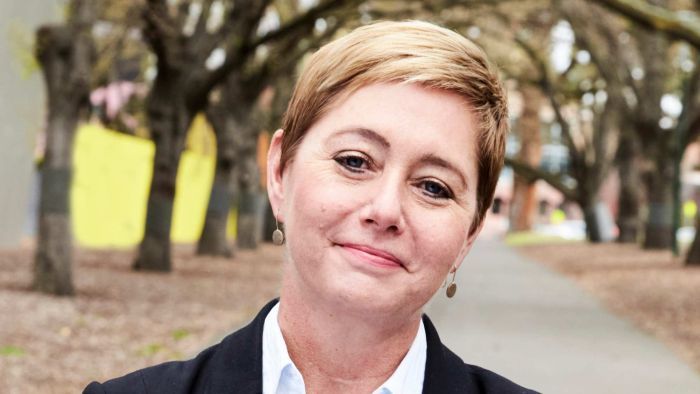
When news emerged that Boe Pahari was promoted to run AMP’s largest and most profitable division, AMP Capital, after a former female employee had settled a sexual harassment claim with the financial services giant, investors reacted.
The complainant, Julia Szlakowski, left the company with her career shattered, while Pahari copped a financial penalty but was initially promoted as AMP found the complaint to be “lower-level breaches” of its code of conduct.
For investors like the Australian Council of Superannuation Investors (ACSI) — whose asset-owner members oversee more than $1 trillion in assets and who regularly send warnings on issues including executive pay, gender diversity and climate change to boards of ASX300 companies — the promotion wasn’t just a moral dilemma but a financial risk.
“The [AMP] board really did not accept that the [Boe Pahari] promotion was inappropriate,” ACSI chief executive Louise Davidson said.
Davidson met with AMP’s then-chairman David Murray soon after Szlakowski’s complaint surfaced.
“Their [the AMP board’s] view was that he [Pahari] had done his time that he had been penalised,” she said.
“But there was a question in my mind whether they really thought the complaint was serious.”
Appointed as the investor group’s chief executive in April 2015, Davidson has more than 20 years’ experience in the financial services and superannuation industry.
She joined ACSI from Cbus, where she managed their Environmental, Social and Corporate Governance (ESG) investments.
But these days she’s been spending much of her time explaining to corporate Australia’s main men why their actions aren’t in sync with investor expectations.
From this AMP case, to the Westpac money laundering saga to Rio Tinto’s destruction of the 46,000-year-old Juukan Gorge caves in Western Australia’s Pilbara region, Davidson has been declaring the companies “have lost their social licence to operate”.
She’s been key among investor groups agitating for greater accountability by company directors.
And while she’s not the only shareholder revolting and demanding greater accountability, her calls have helped result in the resignation of leading men across corporate Australia.
Social activists or corporate champions?
Davidson says ACSI often gets described as “social activists”, but the intent is not to act against companies.
She says it is to engage and help them become more successful and profitable.
“We don’t want companies to spend time rebuilding their reputation — we don’t want them to lose it in the first place,” she said.
The reputational loss often results in CEOs and chairman walking out the door.
In November last year Westpac chief executive Brian Hartzer departed alongside then chairman Lindsay Maxsted after the bank was sued by the financial intelligence agency AUSTRAC for allegedly committing 23 million breaches of anti-money laundering laws.
In August this year, following Szlakowski’s complaint and Pahari’s promotion, AMP’s then chairman David Murray exited alongside co-director and former Treasury boss John Fraser.
An in September, post destruction of the Juukan Gorge cave, Rio Tinto’s then-chief executive Jean-Sebastien Jacques resigned along with head of iron ore Chris Salisbury and head of corporate relations Simone Niven.
“I would rather that companies have a clearer understanding of the expectations of accountability,” Davidson said.
You might like


“This was one of the problems with AMP and Rio Tinto — not understanding the expectations that investors and broader stakeholders have about their accountability.
“They are in charge. They have to be accountable for what’s happening. And if they can’t see that they probably aren’t the right people to be running the company.”
Sexual harassment complaints surface, ‘women leave, men stay’
But the path to accountability is often a long one.
AMP had said at the time of Szlakowski’s complaint that Pahari received counselling over the remarks and that an investigation led by an external expert found that many of the claims were not substantiated.
Pahari had also apologised to Szakowski’s saying: “I genuinely regret that my comments made a colleague feel uncomfortable. It was never my intention.”
Davidson said following her conversation with Murray, her impression was that the board felt that Szlakowski’s complaint was based on a series of incidents and that each of them taken on its own “was not a big deal”.
“They treated it as separate incidents,” she said.
“But you can’t separate the incidents between Pahari and the woman [Julia Szlakowski]. It’s about an issue that occurred over several [occasions].”
She says if sexual harassment cases keep surfacing “you can have as many gender equality policies as you like and they’re meaningless”.
“The thing that annoys me about these cases — and it just continues to persist — is this circumstance where the men who do it get promoted, or it doesn’t harm their employment,” Davidson said.
“And the women — the victims — leave. Their employment is over.”
The investor pressure for AMP to reverse its decision to promote Pahari was so strong that in the end he was demoted from the position (although he still remains in a job with the company), and Murray and Fraser resigned.
AMP still has ‘a lot of work to do’ to improve
AMP’s chief executive later publicly apologised to Szlakowski when he appeared before a federal parliamentary inquiry.
Davidson said AMP shifted its attitude when “it became clear to them that they’d lost investor support because they’d staked their reputation on supporting Bahari”.
Allan Gray Funds Management boss, Simon Mawhinney, was another key investor that spoke out about the case, telling The Business earlier this year: “We tried to protect our investment, not exercise a moral judgement.”
Davidson said it was only then that AMP’s board concluded that their position on Bahari was “untenable”.
“We had a frank conversation … and there were other investors having frank conversations,” she said.
ACSI is still in regular conversations with AMP’s current board.
“It’s not over, there’s still a lot of work for AMP to do,” Davidson said.
“The conversation with the new chair [Debra Hazelton] is about what they’re doing to reform the culture and what steps they will take to ensure these [incidents] don’t happen again.”
But it’s not just a conversation that’s taking place with AMP. ACSI is talking to directors across the ASX300 about how to redefine how companies investigate and treat sexual harassment complaints.
There’s currently a big discussion about whether it’s time to end non-disclosure agreements or NDAs.
Davidson said NDAs make it too easy for the women to get silenced and for serial offenders to go on to reoffend.
“With an NDA, if someone uses you as a reference you can’t tell them [about the sexual harassment incident leading to the victim leaving the company] — how is that OK?,” she asks.
AMP and Rio Tinto lost their ‘social licence to operate’
It’s not just sexual harassment that’s dominated much of ACSI’s attention this past year.
Davidson says ACSI reacts when there are “corporate misdeeds”.
“And let’s just say it’s been a busy year,” she added.
Outraged investors including ACSI, forced the board of Rio Tinto to sack its chief executive Jean-Sebastien Jacques along with two of the senior executives partially responsible for the destruction of the historic Juukan Gorge caves Aboriginal site.
A parliamentary inquiry this month recommended the mining giant pay compensation to traditional owners for destroying the sacred caves after WA senator Pat Dodson has accused Rio Tinto of “incremental genocide” over its behaviour.
Davidson says to his credit Rio Tinto chairman Simon Thompson made himself available to investors who were demanding to know what went so wrong.
She says initially there was “a lack of understanding of the impact” and that could have something to do with the directors, including Thompson, being in London. Rio Tinto is dual-listed on the Australian and London stock exchanges.
“There were a lot of very frank conversations,” Davidson said.
“I just don’t think the magnitude of the loss was apparent to them initially. The company thought a financial penalty was going to be appropriate. And many investors — not just ACSI — made it clear that was not a commonly held view.”
Davidson said international investors have been really interested in the case and want to know lessons can be learned.
In late October, before the report was handed down, Adam Matthews, director of ethics and engagement for the Church of England Pensions Board, wrote a letter co-signed with ACSI’s executive manager, governance and engagement, Ed John.
Stay informed, daily
The letter was sent on behalf of 64 investors and their representatives in the mining sector, who together represent more than $US10.2 trillion ($13.5 trillion) in assets under management.
It noted the “recent tragic and irreversible destruction of First Nations sites of cultural and archaeological significance” had called into question “the social licence of a company to operate”.
Davdison says both AMP and Rio have lost their social licence to operate and need to gain back the trust of all stakeholders.
How the ‘protest vote’ sends a signal to directors
For many years exorbitant executive pay has been the key focus of shareholder angst, but now it’s moved to other issues including gender diversity.
ACSI has expressed its discontent at boards with no women or just one woman, by voting against the company’s male directors for the past 18 months.
“Companies don’t want to see their rem [renumeration] report voted down,” Davidson said, noting that since the introduction of the remuneration vote, companies were more willing to engage with investors.
Under the law, if more than 25 per cent of shareholders vote against the executive salary packages at a company’s annual general meeting two years running, they can spill the board and throw out the directors.
She says in her early days at ACSI, more than five years ago, “I had to write to every company with one woman on the board and had to sign 100 letters. Now it’s only about 30.”
“And there’s only one [ASX200] company with no woman on their board,” she added.
The latest gender diversity stats put the number of women on ASX200 boards at 32.5 per cent and on ASX300 boards at 30.2 per cent.
At the start of 2020, there were 28 zero-women companies across the ASX300, six of them in the ASX200, and a further 33 one-woman boards in the ASX200.
Of the six ASX200 boards without any female directors, only Silver Lake Resources remained by the end of the year.
ACSI recommended members vote against Silver Lake Resources chairman David Quinlivan, who received a 16 per cent vote against him at a recent AGM.
The other five companies whose bosses faced protest votes earlier in the year were Centuria Industrial REIT, New Hope Corporation, NRW Holdings, Pro Medicus and TPG Telecom.
ACSI has also made recommendations to vote against directors at a number of ASX300 companies with no women on their boards. It’s also targeting boards with just one woman.
“It’s not enough of a vote to vote the director off [the board] but people don’t like getting a vote against them,” Davidson said, adding that afterwards the company often approaches ACSI for further discussions.
“Over time we’ve seen a lot of change because they know they are going to be voted against.”
ACSI could soon campaign for diversity quotas
ACSI is now looking for listed companies to set a new target for the gender make-up of ASX300 boards: 40 per cent men, 40 per cent women, 20 per cent either.
“We’ve asked companies to tell us how they’re going to get to that [target] by 2025, and if they don’t, we will start campaigning for quotas,” Davidson said.
ACSI itself is also working to increase diversity among its own organisation, although many of their super fund members still have a long way to go in improving their numbers.
Beyond this, Davidson also hopes that companies will start to look at matters like cultural diversity on their boards, paying attention to how they measure non-financial performance metrics like culture.
Davidson says much of the ASX list “integrity” as a corporate value in their promotional and investor material, noting that these “nice statements” are often just “window dressing”.
“But how do we measure it and what are the consequences when there isn’t integrity?” she asks, adding there needs to be stronger repercussions such as termination of employment.
Asked whether chairmen react differently to her because she’s a woman, Ms Davidson says: “We’ve had classic conversations at times.”
She also gives the example of a Zoom call earlier this year in which one of her female staff members was doing the call with a shot of her kitchen in the background.
“One the chairman commented, ‘nice to see you close to the kitchen’,” she said.
“I wouldn’t name and shame, but Jesus … There’s some people who are really old school.”
She said she was recently listening to the 2020 ARIA Awards tribute to Helen Reddy’s classic song, I Am Woman and realised there was still a long way to go to achieve genuine equality.
“I grew up with that as a feminist anthem,” she said.
“I listened to it [the song] the other day and thought, ‘why is this still so relevant?’ It’s depressing, especially when you have three daughters.”
Davidson says after five and a half years at ACSI she’s started to notice incremental change among chairmen, and hopes that generational change will further shift attitudes.
“For quite a long time it was common for directors/chairmen to say ‘I have a daughter who could run BHP if she wanted to. But she doesn’t want to’. We don’t get that [comment from chairmen] anymore,” she said.
Companies need to be more accountable
Gender diversity will move onto ACSI’s 2021 agenda of issues they campaign and vote on.
The other big issues carrying through to the new year are climate change and modern slavery.
Davidson says there’s already been a big shift in the way companies perceive and manage both issues, but especially on climate change given the wider political landscape has shifted.
She notes with Joe Biden’s election win “the US is on board”, and Japan and South Korea have all made commitments towards net zero emissions by 2050.
“There’s also growing momentum in Europe to have a non-binding vote on how well companies are managing climate change at AGMs,” Davidson added.
She says Australia may go down that route as a “last resort” but her hope is that companies will voluntarily move.
“In the end if things are not changing, sometimes you do have to use blunter instrument,” she said.
– ABC / business reporter Nassim Khadem
Want to see more stories from InDaily Qld in your Google search results?
- Click here to set InDaily Qld as a preferred source.
- Tick the box next to "InDaily Qld". That's it.



