Son-of-a-gun: The blessing and the curse of being born to a sporting great
Tennis prodigy Cruz Hewitt is following in the footsteps of his Wimbledon-winning dad. But being genetically blessed can have its pitfalls, writes Michael Blucher.
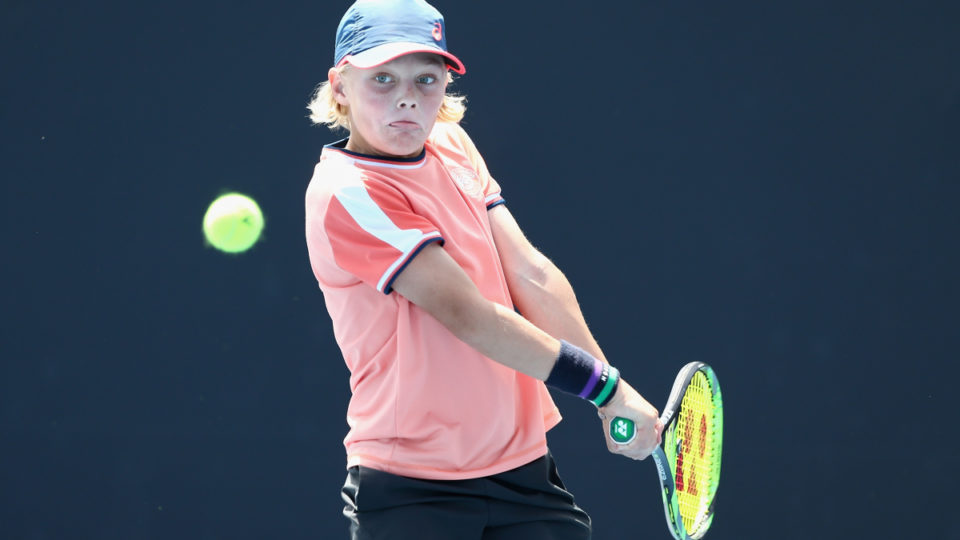
So, there’s another little Lleyton on the court, carving out aces, chasing down lob shots, and firing double-backhand winners down the line.
No real reason we should be surprised, Cruz Hewitt, winning the Australian junior under 12 clay court championship in Canberra. Not with those genes. And let’s face it, with a name like Cruz, he was either going to be an absolute superstar or have the crap beaten out of him – I’m relieved to see it’s trending the way of the former. #Cruz-control.
Genealogy is fascinating isn’t it. If you haven’t seen 11-year-old Charlie Woods swing a golf club, do yourself a favour and have a look on YouTube.
He’s has all the mannerisms of his famous father, right down to the twirl of the club, as it soars into orbit. Yep – nature not nurture.
That said, the “sons of” the one-time superstars have a mixed lot in life – the benefit of the genes, but the weight of the expectations … the inevitable comparisons made between one generation and the next.
It’s perfect media fodder, served on a platter.
At the outset, the offspring tend to be over-hyped, purely on account of their surname. But if they fall short of the lofty family standards, they’re quickly diminished, even dismissed.
The giants of any sport, of course,m cast huge shadows, making it next to impossible for their kids to showcase themselves in a favourable light.
Playing a different sport helps – the respective achievements of one generation to the next are harder if not impossible to align.
You might like



Elvis Smylie, son of former Australian tennis great Liz and her husband Peter, is playing professional golf.
Unlike poor Cruz, that gives him a little clear air, and helps him avoid stepping on his mum’s blue suede tennis shoes. (Come on… I know it’s what you were thinking…)
Prince Lincoln, son of King Wally, took a completely divergent path by becoming an actor. Hardly room for any comparisons there, though Blues supporters would probably attest the King was always acting when he stayed on the ground after getting smashed in a late tackle.
Over the years, countless other young athletes have trodden the same path as their famous parents, their close proximity to the action at an impossibly young age all but guaranteeing some level of interest in the sport.
Cricket, swimming, golf, tennis, thoroughbred racing, boxing, basketball, and of course the four major football codes are sprinkled with intergenerational success stories.
A few not only replicate past achievements, but raise the family bar – AFL’s Gary Ablett Jnr is one who springs to mind. No mean feat there, in light of the “old man’s” extraordinary record.
Plenty of others fly the family flag with distinction, by way of random example NRL pair Josh and Brett Morris, perpetuating the legacy of their father, Steve – AKA “Slippery”.
Wayne and Mitchell Pearce another good example. The Langs, the Sattlers, the Clearys. Uber rookie Sam Walker looks like he’ll cover the on-field deeds of his dad, Ben.
In cricket – the Marsh boys, Shaun and Mitch, have carried on the run chase started by their dad, long time Test opening batsman Geoff. The Lehmanns, the McDermotts to a slightly lesser extent.
In AFL, there’s Tim and Jobe Watson, the Clokes, the Fletchers, the Kennedys. Rugby great Michael Lynagh now has two professional rugby playing sons, Louis and Tom, the latter recently contracted by the Queensland Reds. Close by, Sam and Angus Scott Young.
Stay informed, daily
We’ve also got ringside succession in Tim and Kosta Tszyu. Acclaimed jockey Mick Dittman has handed over the reins to his son, Luke.
There’s also strong succession among the horse trainers – Colin and David Hayes, and Bart and Anthony Cummings, the latter responsible for one of my favourite all time quotes ”Dad taught me everything I know, but not everything he knows!” How could you not love Bart?
Yes, the list is extensive, but I dare not continue, knowing full well I’ll overlook somebody who’s important to somebody else – probably a rabid Collingwood supporter.
What’s not as clear, or nearly as visible, is the number of “sons-of” who briefly enter the professional sporting arena and then retreat, at least in part due to the pressure of those aforementioned expectations.
Austin Waugh, son of cricket legend Steve, is a prime example – he was an underage superstar, and “in the system” at a senior level, well on his way to making his own mark. He had the same duck waddle walk as his dad. His shirt even came untucked when he ran between wickets, just like Steve. Then a horror season saw Austin him quit the game altogether. He no longer even plays grade cricket. Sad.
There’s a theory in team sports, that selection panels contribute to these implosions by in the first instance, picking (and promoting) kids on the strength of their surname. No finger pointing there.
If you’ve got four juniors to choose from – one of them with the surname Waugh… which one are you going to go with? Imagine being on a selection panel that overlooked the son of a former great, and despite the early rejection, they eventually turn out to be a superstar. You’d be stoned to death.
At the other extreme, there’s superstar parents who deliberately steer their kids away from elite sport on the strength of their own uncomfortable experience – the unfathomable pressure they felt competing at the highest level.
A few years back, while researching and writing a book about the complexities of modern-day professional sport, I canvassed the views of countless retired athletes, at times with specific reference to the sporting aspirations of their children.
I remember asking a multiple gold medal-winning Olympic swimmer if she’d like to see her children pursue a career in the pool.
She looked at me like I had two heads. “Are you kidding? I love my children,” she said, without a hint of a smile. All those medals, and she never enjoyed competing.
Of course, the group we’ve yet to cover is the pushy parents looking to fulfil their own unmet sporting dreams, through the achievement of their “gifted” off-spring.
This category is perhaps 200,000 times the size of any discussed so far. In one sense, they’re well-meaning enough, in another, dangerous, dangerous individuals. To be avoided at all costs.
Without a word of a lie, there’s at least one NRL club “psyche testing” the parents of the kids before offering them a contract. Not the superstars of course but the fringe dwellers. Club officials want to understand the totality of what they are “buying”, and the weight of the excess family baggage.
A life in professional sport – be careful what you wish for, particularly in the current climate.
I’ll leave the final word to cricketing great Greg Chappell, who in the very early stages of his career, was burdened by the reputation of his older brother Ian, and grandfather, Victor Richardson. That didn’t last forever.
Chappell, while heading up the Australian Cricket Centre of Excellence, was once asked about the chances of any young athlete “making it” in their chosen professional sport.
The hall-of-famer chose his words carefully. “Put it this way,” he said. “Given the choice between making it and not making it, I’d pick not making it every time. Because most don’t.”
So, with regard to little Cruz, son of little Lleyton, let’s cut him a little slack.
Want to see more stories from InDaily Qld in your Google search results?
- Click here to set InDaily Qld as a preferred source.
- Tick the box next to "InDaily Qld". That's it.



