Tanks for the memories: Local manufacturer still thriving after nearly 100 years
COVID-19 reminded policy makers what Everhard Industries already knew – local manufacturing is a vital part of the economy but it takes hard work to keep thriving, writes Robert Macdonald
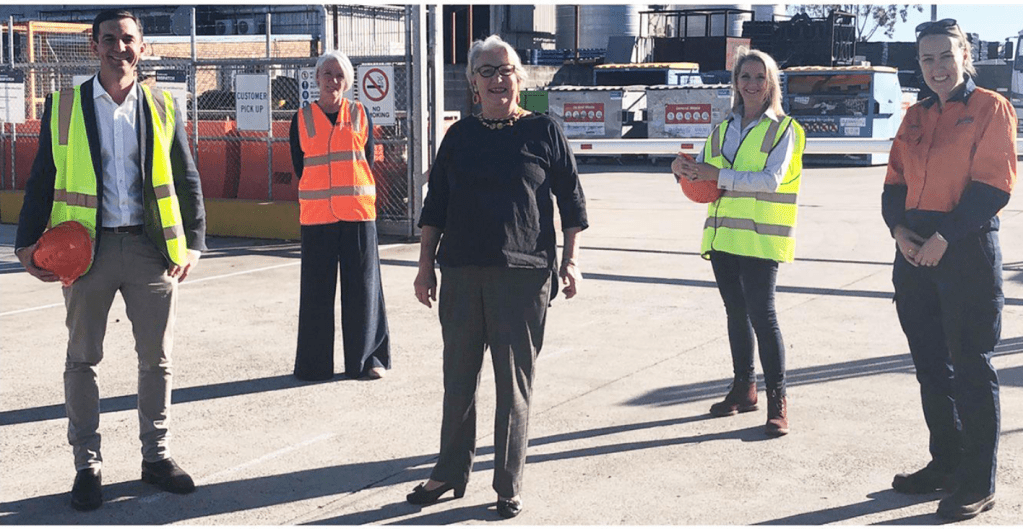
Sue Boyce, chair of Brisbane-based Everhard Industries, is delighted the Australian Government has rediscovered manufacturing as a national necessity.
“Twenty years ago, to be a manufacturer was to be very boring and tedious, so last century”, she says.
COVID-19 and the sudden disruption to international supply chains reminded policy makers around the country of the strategic need to have a strong local manufacturing sector.
“People are now realising that manufacturing covers everything from vaccines to septic tanks, which is what we do,” Boyce says.
Treasurer Josh Frydenberg announced a $1.5 billion Modern Manufacturing Strategy in last October’s Federal budget and support for Queensland manufacturing featured in Treasurer Cameron Dick’s State Budget delivered in December.
“The important thing now,” Boyce, a former LNP senator and journalist, says, “is to try to keep manufacturing on the agenda and not end up going through the sort of cycle we’ve been through in the past.”
“Services and exports of services are a brilliant way to grow the Australian economy but don’t forget manufacturing along the way.”
Boyce’s great-uncle, Alfred Davis, co-founded Everhard in 1926 with a bold new idea – making laundry tubs out of pre-cast concrete instead of wood.
You might like


It was a great success. The company, soon joined by Boyce’s grandfather, turned out 300,000 pre-cast concrete tubs over the next 60 years, leakproof and indestructible.
You can still find them in in suburban backyards around Queensland, repurposed as planter boxes.
Everhard continue to make laundry sinks – these days from stainless steel – and septic and wastewater tanks and stormwater drainage systems; “everything water,” as it says in its advertising.
It also exports its innovative water drainage system to the United States and elsewhere and supplies Bunnings and the other big plumbing retailers.
And it’s still very much family owned. Boyce’s three children, Gina, Bede and Joanna – the fourth generation – are also in the business, now based on a large site in Geebung where it employs about 140 staff.
Everhard, like so many other Australian manufacturers, knows the challenges of surviving in a globalised economy.
“I remember in the early 90s doing a brochure that said, everything we sell, we make ourselves, right down to the plug in the tub,” Boyce says.
“But we would have gone out the door backwards if we’d continued to do that because in a lot of cases, the Chinese could have a product in our warehouse with our name on the carton cheaper than we could get the parts of the machine here.”
Everhard still makes about 60 per cent of its products locally and has invested heavily in advanced manufacturing, product development and robotics to stay competitive.
It is also one of Australia’s largest users of recycled plastics, using more than 300 tonnes of recycled polymer a month.
Stay informed, daily
Although Boyce welcomes the renewed interest in local manufacturing and says, “it’s really encouraging that people are saying ‘buy Australian first’”, she says the company has often found it hard to access various government support programs.
“We’ve always found it extremely difficult to find a category that we fitted in terms of funding. We were either too big or too small, or we just simply didn’t have the resources to do the work required to get the funding,” she says.
Boyce’s daughter and deputy chair of Everhard, Gina Rowe, believes one way governments could help emerging manufacturers is by offering them supply contracts rather than just grants.
Everhard knows the value of government work. For 40 years from the 1940s one of its mainstays was providing concrete pits to the then-government owned predecessor to Telstra.
Rowe also believes it’s important to get out the message that manufacturing can also offer all sorts of career prospects.
“Kids, girls too, need to be able to see there are lots of opportunities for different career directions and it’s not all dirty work,” Rowe says.
Gina’s brother Bede, who also did his electrical apprenticeship at Everhard and is now a director, agrees.
“People seem to have this image of Australian manufacturing being sort of like a hard labour camp, where in actual fact, it’s not.
“We’re getting better and better at being on the leading edge of things.”
As for the future?
“We definitely want to get past 100 years and stay in Australian manufacturing,” Rowe says.
“And it would be awesome if we could actually take back some of the manufacturing that’s been offshored,” her brother adds.
Given Australia’s new-found appreciation of the need for a robust local manufacturing base and Everhard’s success at finding new ways to solve age-old problems of water management, that could well be on the cards.
Want to see more stories from InDaily Qld in your Google search results?
- Click here to set InDaily Qld as a preferred source.
- Tick the box next to "InDaily Qld". That's it.



