Truth about SEQ growth plan: Vision aplenty but no money to achieve it
South-east Queensland’s civic and business leaders are increasingly vocal in their criticism of the major blueprint meant to guide the region’s growth over the next 20 years, saying it is worthless without firm commitments to build the roads, railways and other infrastructure needed to make it a reality.
Ipswich Mayor Teresa Harding and respected urban planner Laurel Johnson zeroed in on the South-East Queensland Regional Plan’s flaws at a function run by business lobby the Suburban Alliance on Friday morning.
Harding called for commitment to better public transport and a sustainable policy on waste management as priorities for Ipswich, citing a rail link between Ipswich and Springfield as a priority.
Johnson, a member of the state government’s housing supply expert panel, said the “decoupling” of the SEQ Regional Plan from related commitments to infrastructure investment was a major problem for the region.
She said the sense of urgency that drove the first regional plan 16 years ago was all about avoiding the so-called “200km city” of rampant coastline development from Noosa to the Tweed.
The original aim was to push some of the region’s future development to the west, with commitments to provide the transport links, schools and town centres to make it happen.
You might like


“There was a decoupling of that commitment…, so what we’ve got is all this ambition and vision for growth to push west with no transparent commitment to infrastructure provision by the state,” she said.
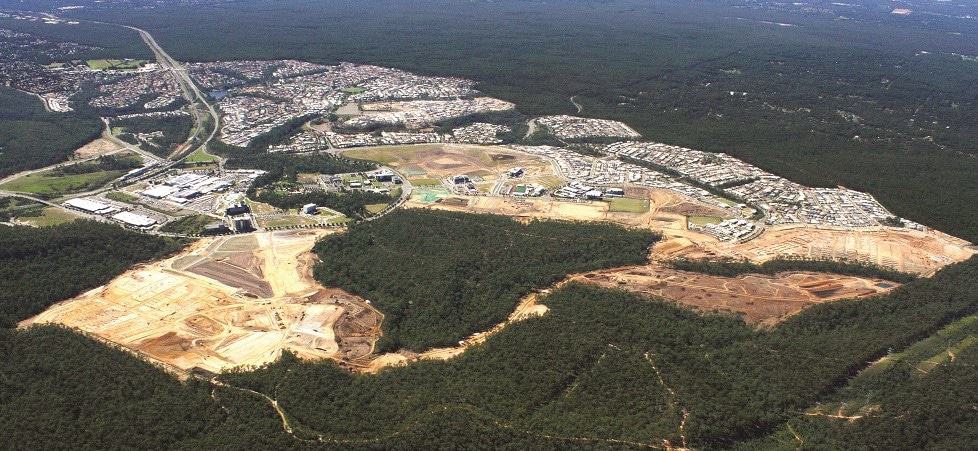
Harding said Ipswich was the state’s fastest growing city as part of a shift to “peri-urban” areas away from Brisbane, with new residents expected to push its growth rate to 7 per cent per year over the next 20 years.
Current growth is running at around 100 new residents a week.
“The suburbs in our eastern corridor between Ipswich and Springfield continue to lead the growth,” she said.
Stay informed, daily
“The Ripley to Springfield corridor is projected to accommodate 30 per cent of all south-east Queensland’s dwelling supply over the next two decades.”
However, she said Ipswich faced major challenges around waste, community services and transport.
Health and education services were not keeping up with demand, she said.
Growth was “clearly outstripping the delivery of reliable and efficient public transport”.
“By 2041, 93 per cent of residents in the western corridor will continue to rely on private vehicles as a primary more of transport unless significant invest is forthcoming,” she said.
“What we do need is a regional plan, supported by a long-term and collaborative plan for infrastructure delivery to math the government levers to future growth.”
The city was also responsible for taking in 42 percent of the state’s waste, of which most was commercial and industrial waste, she said.
The spread of housing close to an expanding waste industry in Ipswich was creating an “unsustainable and unacceptable situation for our residents”.
“We are in a situation in our community where the state government could be forcing us to take in a waste to energy thermal incinerator within 700 metres of where people live,” she said.
“How would you like to have that kind of facility right next to you?”
Want to see more stories from InDaily Qld in your Google search results?
- Click here to set InDaily Qld as a preferred source.
- Tick the box next to "InDaily Qld". That's it.



