The Brisbane plan: How 2032 Games can boost state, save the Olympics
Brisbane could save the Olympics and provide a crucial blueprint for the global sporting movement’s survival, according to a new report.
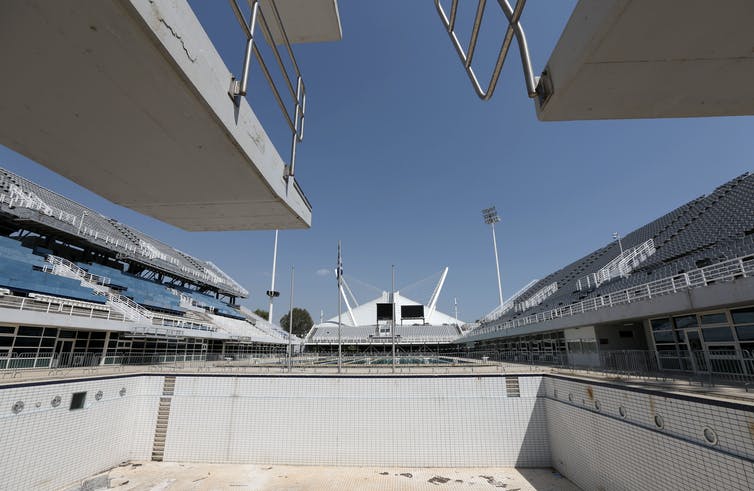
Brisbane is currently the only bidder for the 2032 Games, a fact attributed to the heavy financial burden for previous host cities. Tokyo’s upcoming Games have been estimated to cost $US15.4 billion and Rio’s 2016 event cost $US13.1 billion.
The IOC claims Sydney’s 2000 event generated at least $6 billion in economic uplift but there are doubts about whether there was a lasting impact.
Brisbane’s bid is projected to cost $4.5 billion and have a projected economic and social benefit of $17.61 billion for Australia overall and $8.1 billion for Queensland.
The report from the academics – Griffith’s Leonie Lockstone-Binney, UQ’s Judith Mair and Curtin University’s Kirsten Holmes – said for many past host cities, the games have not been a boon, but a drag.
It said that the 2032 Brisbane Games had the opportunity to showcase a new and improved model of Olympic hosting.
You might like


“The new “Brisbane model” for Olympic hosting could be one the IOC and future host cities will praise and seek to replicate,’’ the report said.
But the report also said legacy planning should also come under the remit of a distinct body from the Olympic organising committee so that the benefits were not lost.
“Additionally, the Olympic organising committees typically disband soon after the Games and the staff move on to other (often international) events. The legacy body and its budget need to continue to deliver long after the event concludes,’’ the report said.
It also warned that none of the benefits would occur without significant advance planning.
Stay informed, daily
“Intangible legacy planning, such as promoting sports to the public and volunteer participation, needs specific attention and should begin as soon as hosting rights are awarded,’’ the report said.
The authors said there would be savings in having fewer new venues, a smaller athletes’ village and less Olympics-specific infrastructure overall. Temporary, flexible venues will be allowed for the first time, and venues could be shared by multiple sports. Athletes would also fly in just for their competitions and leave when they are over.
“This new approach has been key to making Brisbane’s bid affordable,’’ the authors of the report said.
“This is potentially a great opportunity for Brisbane, Queensland and Australia. It will also be a catalyst to speed up long-term planning agendas for the fast-growing southeast Queensland region.
“Unlike host cities in the past, these Olympics will not be the sole reason for new development projects. Instead, they will be the catalyst for bringing forward current infrastructure and urban development plans.
“Around $400 million in road network improvements and $23 million in transport upgrades, for example, will be fast-tracked thanks to the successful Olympics bid.’’
In their report which was published in The Conversation today, they said the Brisbane Games would also be the first to represent a regionally spread-out hub-and-spoke model where events would be held beyond Brisbane and would also have three proposed athlete villages.
“An early feasibility study suggested the hub-and-spoke model would allow for a 45-minute travel region, with every venue within 45 minutes of Brisbane. The current projected costs for the SEQ portion of the rail link are A$5.3 billion (US$4 billion), although the proposal will need some rethinking as it has been rejected by Infrastructure Australia as being too.”
Want to see more stories from InDaily Qld in your Google search results?
- Click here to set InDaily Qld as a preferred source.
- Tick the box next to "InDaily Qld". That's it.



