Brain drain: International students more than cash cows and cheap labour
The Federal Government is developing a new strategy to rescue Australia’s collapsing international education sector. It’s hearing some harsh truths along the way writes Robert MacDonald
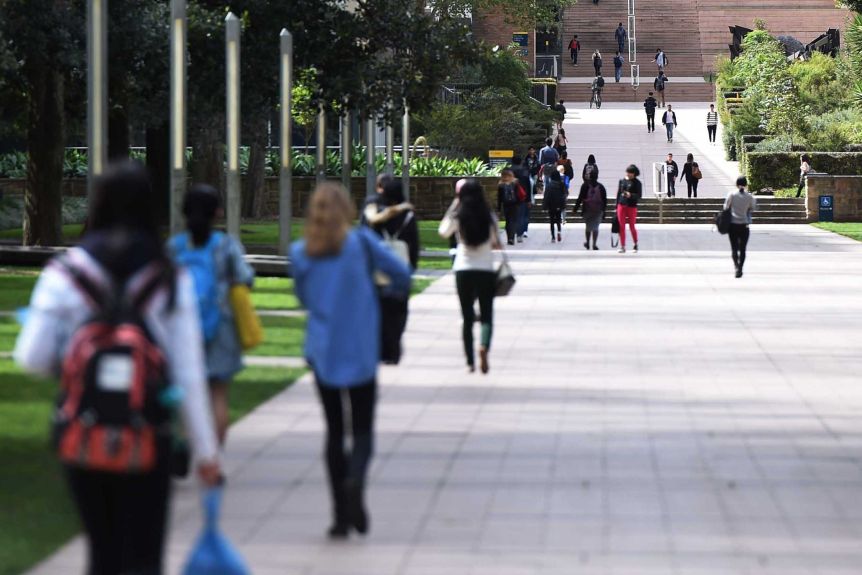
Stop treating foreign students as cash cows and a source of cheap labour.
That’s the clear message the Federal Government has received as it tries to reboot Australia’s once-booming international education sector.
Pre-COVID-19, international education was worth more than $40 billion a year to Australia – a figure that could halve by the end of next year if borders stay closed, some estimates say.
The Government has responded to the crisis in the way governments so often do – it’s developing a plan – the Australian Strategy for International Education 2021-2030.
It already has a 10-year strategy for the international education sector, launched in 2016 and due to run until 2025. But COVID-19 has made it obsolete.
This new strategy, the Government says, will “respond to the changing environment” and “guide the recovery of the sector”.
It issued a consultation paper in March, which attracted more than 100 submissions, including several from state governments, but not from Queensland, which was making more than $5 billion a year from international education, pre-pandemic.
Some of the submissions, which the Government is currently reviewing, are critical of past practices and policies.
You might like


“In many ways, the events of 2020 shone a light on the strategy (or lack thereof) that has characterised international education in Australia over the past three decades and raised a fundamental question: why is Australia in this business,” QUT says in its submission.
“The events of 2020 have highlighted areas of weakness and risk in the Australian international education sector.
“Overreliance on fee-paying-overseas-student revenue to cross-finance institutional budgets, when combined with the poor management of source-country concentration and a lack of clear policy settings (other than to make as much income as possible), has exposed the sector to external shocks that many had not prepared for.”
This chase for dollars has hurt Australia’s reputation, QUT argues.
“Naivety around the presentational damage that rapacious models of high-volume, low-quality third party provision has had on some aspects of the Australian brand has led to denial of the quality and management issues that have characterised this element of the sector.”
English Australia – the peak body of the English language-teaching sector, which has seen enrolments fall by two-thirds in the past 18 months – is just as blunt.
“Focusing on the financial benefits reinforces the negative perception of students being ‘cash cows’,” its submission says.
“We need to stop foregrounding the financial benefit that international education brings and start promoting all the other benefits.”
Melbourne University’s Graduate Students Association says we also need to protect international students from exploitation in their part-time jobs – typically in hospitality, retail, cleaning services, healthcare, aged care and delivery driving.
“The new strategy should prioritise the improvement of employment conditions for international students living and working in Australia,” its submission says.
Stay informed, daily
“International student workers in these industries frequently experience poor working conditions alongside underpaid wages and superannuation.”
It cites recent research saying that nationally, half of international students are paid below the minimum wage.
But what next?
The most urgent issue, various submissions say, is certainty on when international students can return to Australia.
“The longer border restrictions remain in place without this clarity, the more ongoing damage is being done to the sector,” Griffith University says in its submission.
“Ongoing uncertainty around when international students can return to Australia is encouraging both current and prospective international students to look to change their study destination to those that are open, particularly Canada and the UK.”
Griffith warns that “the loss of providers of international education services, professional knowledge and expertise, is weakening the infrastructure of the sector and will adversely affect its ability to rebuild its position as a leading study destination”.
The country’s top research universities – the Group of Eight (Go8) – warn in their submission we face an even more existential problem than loss of income.
Australia, it says, “cannot rely on growing our own”, when it comes to finding the brilliant minds we’ll need to drive the knowledge- and technology-based economy of the future.
“The reality is that we do not – and will not – have sufficient domestic capability to fulfil these needs,” it says.
“This means that our goal of sovereign capability and resilience will not be achieved if we cannot draw on a global talent pool.”
The Go8 suggests that Australia’s strategic goal over the next decade should not be an attempt to return to a pre-COVID status quo, “regardless of whether that is even feasible”.
“Rather, it should be to ensure that our nation can access the necessary flow of talent to support the kind of prosperous, engaged and sovereign nation that will be a pre-requisite for success in the coming years and decades.
“To fail to do this is to condemn Australia to increasing disengagement and irrelevance on the world stage.”
The Government’s new international education strategy is due any day now – the original target was mid-2021.
We’ll find out then if the Government has finally solved the underlying tension that has beset Australia’s international education sector for years – quantity versus quality.
Want to see more stories from InDaily Qld in your Google search results?
- Click here to set InDaily Qld as a preferred source.
- Tick the box next to "InDaily Qld". That's it.



