What lies beneath: Dormant volcanoes may be keeping explosive secrets
New research on “rocky road” lava samples has unearthed findings that could lead to improved early warning systems for hot spot volcanoes, including the long-dormant Glass House Mountains or Wollumbin, Mount Warning, just over the Queensland border.
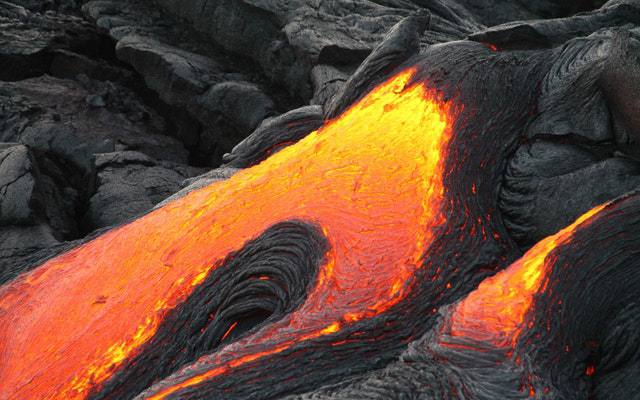
The University of Queensland-led study revealed that some pure magma in cooled lava samples from hot spot volcanoes did not come from as deep below the earth’s crust as had been thought.
Instead, it was potentially closer to the surface and tipping point of eruption, according to UQ volcanologist Dr Teresa Ubide.
She said it had been believed the cooled lava from hot spot volcanoes was pristine magma from the melting mantle, tens of kilometres under the earth’s surface.
“This isn’t quite the case – we’ve been misled, geologically deceived,” Ubide said.
“For decades, we have considered hot spot volcanoes to be messengers from the earth’s mantle, offering us a glimpse into what’s happening deep under our feet.
You might like


“But these volcanoes are extremely complex inside and filter a very different melt to the surface than what we’ve been expecting.
“This is due to the volcano’s intricate plumbing system that forces many minerals in the magma to crystallise.”
Ubide said the scientists found the cooled lava was like a rocky road sample. Scientists had previously been analysing the nuts and marshmallows which were the crystallised minerals, but should have been concentrating on the chocolate, she said.
The findings, published in Geology journal, were an important new piece of the jigsaw to better understand how ocean island volcanoes worked and when they could erupt, Ubide said.
Stay informed, daily
She said hot spot volcanoes became highly eruptible when magma reached the base of the earth’s crust, several kilometres below the volcano.
“The close monitoring of volcanoes can indicate when magma reaches the base of the crust, where this filtering processes reaches the tipping point that leads to eruption.
“Our results support the notion that detection of magma at the crust-mantle boundary could indicate an upcoming eruption.
“This new information takes us one step closer to improving the monitoring of volcanic unrest, which aims to protect lives, infrastructure and crops.”
Hot spot volcanoes include the Canary Islands in the Atlantic and Hawaii in the Pacific.
The international team of researchers analysed new rock samples from the island of El Hierro, in Spain’s Canary Islands, just south-west of Morocco.
“Our study is of the oceanic hot spots and we will bring this study to other volcanoes. We will be checking to see how our results apply to the volcanoes like the ones we have in Australia,” Ubide said.
She said hot spot volcanoes could pop up anywhere.
“South-east Queenslanders would be very familiar with the Glass House Mountains or the large Tweed shield volcano, which includes Wollumbin (Mount Warning) in New South Wales,” she said.
“There are even dormant volcanoes in South Australia that could erupt with little warning that would benefit from better geological markers for early detection.”
Want to see more stories from InDaily Qld in your Google search results?
- Click here to set InDaily Qld as a preferred source.
- Tick the box next to "InDaily Qld". That's it.



