Labor wins business applause for outbidding Morrison on emissions
Federal Labor will go to the next election with a policy to cut greenhouse gas emissions by 43 per cent by 2030, substantially more than both Federal and the Queensland governments.
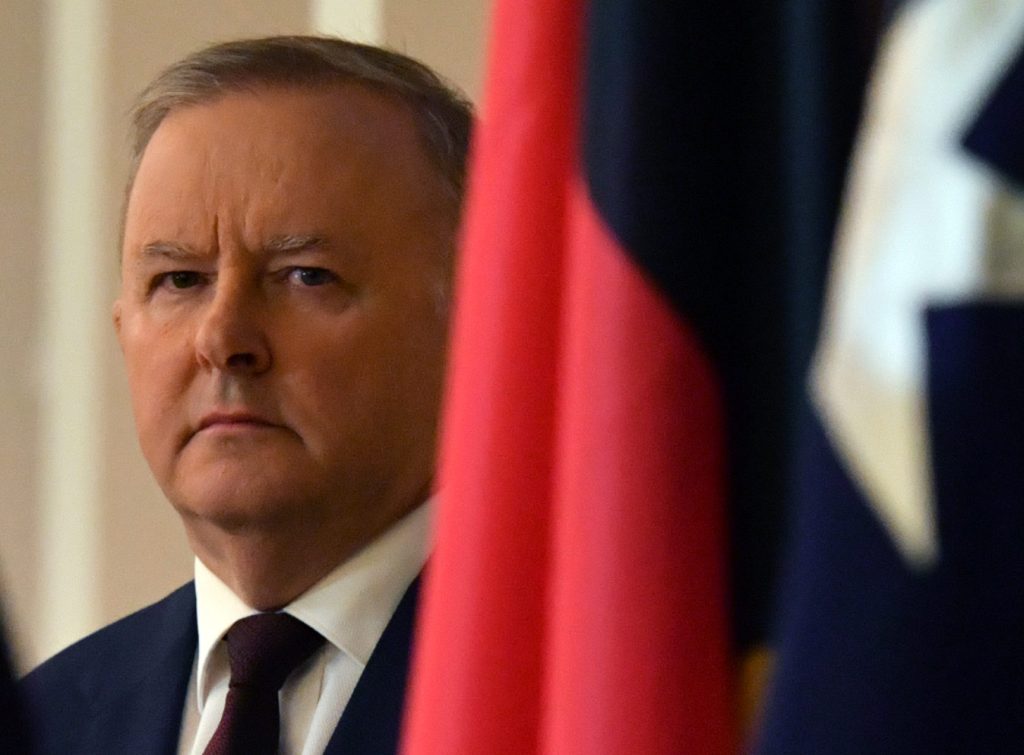
The level is slightly less than the one it took to the last election but has been welcomed by some businesses and major business groups as as heading down the right path.
Opposition Leader Anthony Albanese said Labor’s plan would create 604,000 jobs, five out of six of them in the regions.
It was also expected to cut household power bills by $275 a year by 2025.
“What we have done here and we are announcing today is good policy consistent with net zero (emissions) by 2050,” he told told reporters in Canberra on Friday.
How it will play out in central Queensland will be key because it was in that region that Labor lost heavily at the last election.
But this time around, Labor has won the backing of key business groups.
“The more ambitious emissions reductions proposed by the Federal Opposition, and already adopted by most States, can be delivered with sensible policy reforms, greater collaboration, and a close focus on industry competitiveness,” Innes Willox, chief executive of national employer association Ai Group, said today.
“A 43 per cent cut by 2030 would be consistent with our trading partners and the directions industry has called for,” he said.
“No matter who forms Australia’s next Federal Government, the call for greater ambition will need to be answered and the challenges of achieving it will need to be navigated.”
You might like


The Business Council of Australia said Labor’s “sensible and workable plan” to meet Australia’s net zero emissions commitment is a welcome step towards meeting this challenge, Business Council chief executive Jennifer Westacott said.
“Australia’s net zero commitment is bipartisan, that means for the first time in a decade we have a chance at real progress on this path.
“Both sides of politics recognise that delivering the modern, high wage economy Australians want means making this transition by investing in new technology, new industries and new jobs.”
Chamber of Commerce and Industry chief commercial officer Alex Zafiriadis said the policy was a reminder for Queensland businesses that sustainability and carbon neutrality needed to be at the forefront of what they did every day, and of the opportunities in the long-term to be more competitive and resilient.
“The increasing pressure for Australian economies and businesses to work sustainably and towards carbon neutrality can no longer be dismissed,” he said.
“Queensland businesses that haven’t considered how they are using water, waste and energy, haven’t measured their emissions and haven’t considered how they can work more sustainably or carbon neutral will be left behind.
He said every-day shoppers were already spending their cash at businesses that could prove they were sustainable.
“The shift in business focus will mean it’s essential for Queensland businesses to prove how they are actively reducing their emissions and working towards carbon neutrality to be considered for procurement and tenders, for example in the lead-up to the Olympics.”
Jason Sharam, chief executive of Mackay-based mining and solar energy sector firm Linked Services Group, said there would be some nervousness about jobs by some people, but a lot of businesses would see the opportunities that would arise from it.
He said the emissions promise by Albanese was “very significant”, but he said many of the major mining companies were already heading down the renewables path.
“43 per cent is going to drive up investment (in renewables),” he said.
Speaking ahead of the Labor policy launch, Prime Minister Scott Morrison claimed it would force up electricity prices and put people out of jobs.
Stay informed, daily
“I don’t agree that is the right policy for Australia. I don’t think that policy keeps the balance right,” he said from Cooma in NSW.
The coalition government has a 2030 target of a 26-to-28 per cent emissions cut on 2005 levels.
But the government is projecting a cut of between 30 and 35 per cent.
Sirromet Wines’ winemaker Mike Hayes said Labor’s policy set the bar too low and it needed to be 75 per cent by 2030 and 100 per cent by 2035 at the latest.
“It (Labor’s policy) is a band aid on an amputated leg. It’s just not good enough,” he said.
“I started reading about climate change in 1980 and if they bring in net zero by 2050 then it would mean we have had one person’s lifetime for them to change. In 200 years they will look back and say what sort of dickheads did we have running the country back then?
“It’s not good enough, it’s not sustainable enough.”
He said the Granite Belt was already seeing the implications from climate change and farmers were being forced to adapt.
But he said the political leadership had let down the Australian electorate.
“I’ve been in the industry for 43 years and we have seen massive changes (in climate),” he said.
“We have the wind and the sun, we should be leading the world on this.”
Farmers for Climate chief executive Fiona Davis said strong action on climate would drive investment, jobs and opportunities.
“Farmers cannot afford to miss out on the opportunities strong climate policy would deliver to regional Australia,” she said.
“We can’t afford to waste this opportunity as the world moves toward a cleaner economy.
“Farmers can benefit from new sources of income such as carbon credits, even during drought. Australia has some of the best renewable resources in the world and regional Australia stands to benefit from jobs, industry and investment.”
-with AAP
Want to see more stories from InDaily Qld in your Google search results?
- Click here to set InDaily Qld as a preferred source.
- Tick the box next to "InDaily Qld". That's it.



