Booster blitz: Time frame for third vaccine dose brought forward
Australians will be eligible for a third dose of a COVID-19 vaccine earlier after the nation’s immunisation body recommended a shorter time frame.
The Australian Technical Advisory Group on Immunisation has recommended Covid-19 booster shots be brought forward in two stages from January 4, when the interval between doses will fall to four months.
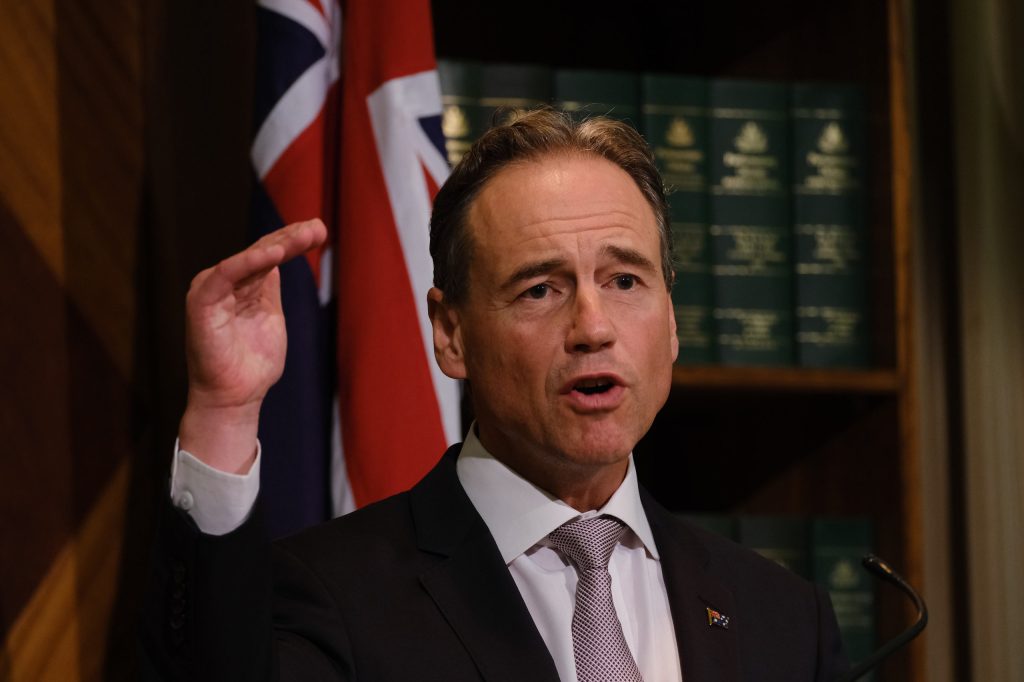
Health Minister Greg Hunt announced that from next Tuesday boosters will be brought forward to four months after the second dose, down from five months currently.
Then from Monday, January 31, people who have had two doses can get their booster after three months.
Around 7.5 million Australians will be eligible for their booster shot come January 4 and this will then jump to 16 million at the end of the month once the timeframe is dropped to three months.
States and territories will be able to move ahead of schedule and offer boosters under the shortened eligibility criteria if they are in a position to do so.
Some vulnerable and immunocompromised people will also be able to receive their fourth dose if the new timeframes make them eligible.
You might like


Mr Hunt said priority would be given to Australia’s most vulnerable people and the ones who have waited the longest between doses.
“We know that it’s not an immediate thing when the vaccine starts to wear off,” Hunt said.
“It’s a time based thing and so we will prioritise the ones that are most at risk.”
Chief Medical Officer Paul Kelly wouldn’t speculate on whether the three month timeframe meant Australians would need to line up for four Covid-19 jabs each year.
Prof Kelly said the first two jabs remained the most integral component of the country’s vaccination coverage but it was important to receive a booster shot once you became eligible.
“We know that unfortunately two doses does not change that ability to become infected,” he said.
Stay informed, daily
“(Protection) wanes over time. It remains in place for severe infection, but it’s diminished for Omicron compared with Delta.”
Hunt added that the booster also reduced virus transmission.
“Protection is very strong against severe illness, but what we’ll see is a much stronger protection against transmission,” he said.
It comes as states and territories are slowly reintroducing restrictions and updating how they trace and isolate positive cases as infections soar across the country.
Compulsory mask-wearing is now in place across almost every state and territory after NSW Premier Dominic Perrottet backflipped on his anti-mandate position on Thursday.
NSW will also reintroduce QR codes in all settings from December 27, when hospitality venues will return to the one person per two-square metre rule.
It comes as the state recorded 5612 infections and one death on Friday.
Victoria also reintroduced a mask mandate, ahead of the state reporting 2095 cases and eight deaths on Friday.
Western Australia Premier Mark McGowan also announced new mask rules when a backpacker tested positive on Thursday after being infectious in the community for a number of days.
High risk, large public events in WA will be cancelled and dancing has been banned except at weddings.
“I know this is not the news we wanted to hear two days before Christmas, but unfortunately this is the reality of COVID-19,” Mr McGowan said.
Want to see more stories from InDailyQLD in your Google search results?
- Click here to set InDailyQLD as a preferred source.
- Tick the box next to "InDailyQLD". That's it.