Risky business: New data tells a grim tale for those who still refuse to get the jab
An unvaccinated person who contracts Covid-19 is 24 times more likely to end up fighting for their life in intensive care than someone who has had all three jabs, Queensland Health data shows.
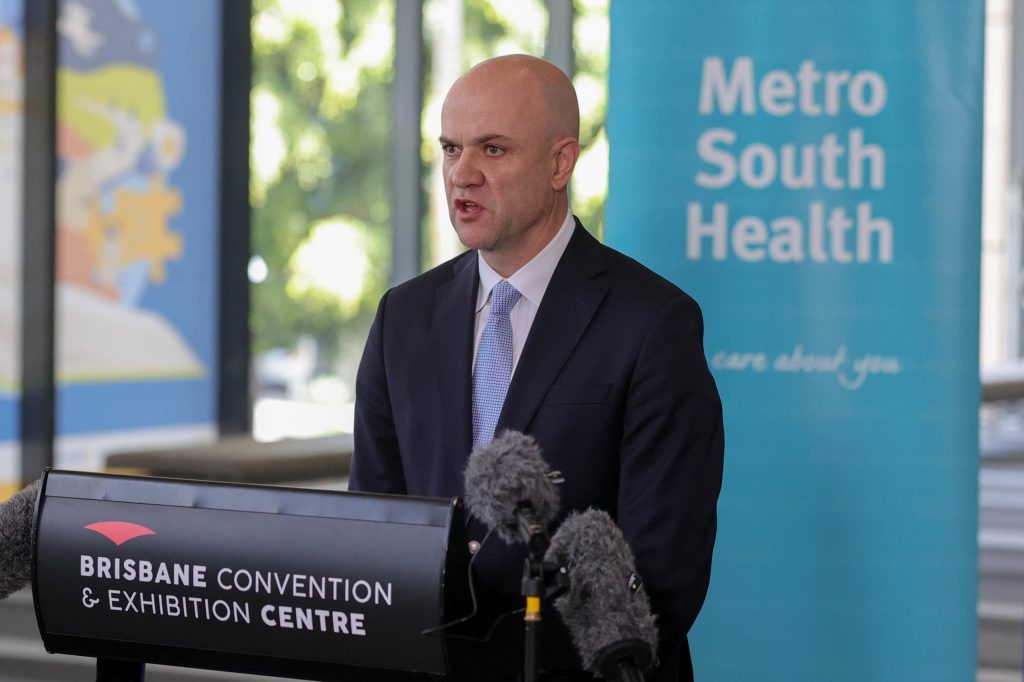
In a renewed push to convince Queenslanders of the value of vaccinations, Chief Health Officer John Gerrard said the statistics showed people who refused to get jabbed were taking a huge risk.
“If you are unvaccinated in Queenland you are 24 times more likely to end up in an intensive care unit than someone who has been triple vaccinated,” he said.
He was speaking after revealing a significant jump in the number of people admitted to hospital due to Covid-19. Hospitalisations rose to 702 over the past 24 hours, up from 670 at the weekend.
There were 15,122 new cases of Covid-19 recorded in Queensland over the past day and seven deaths overnight – all of them people in their 80s or 90s who had not had their booster shot.
It was Queensland’s deadliest day of the pandemic so far, matching in one day the state’s overall pandemic death toll in the two years before January 2022.
“I am still very concerned that there are vulnerable people, elderly people who have not received their third dose of vaccine,” Gerrard said.
“So it’s particularly critical that the elderly, anyone who’s immunosuppressed, get that third dose to prevent them ending up in hospital or intensive care.”
Health Minister Yvette D’Ath also urged older Queenslanders to get their booster shot.
You might like

“If someone you know who is eligible for a booster shot, hasn’t got it yet, please encourage them to come forward to either a public vaccination centre or pharmacy or GP,” she said.
Boulia, the state’s far west is now the only local government area that is yet to record a case in the recent wave.
Gerrard expects the outbreak to peak on the Gold Coast in the next week and then Brisbane shortly after.
“So looking at what happens to the Gold Coast we’ll be able to predict to some extent what is going to happen in Brisbane just a few days later,” he said.
The latest figures show 91.59 per cent of eligible people in the state have had one vaccine dose and 88.71 per cent two doses.
Border controls were removed for interstate travellers from 1am on Saturday, with restrictions for international arrivals to be ditched when Queensland hits its 90 per cent double dose target, which is expected in the coming days.
Federal Health Minister Greg Hunt said it was too early to tell if the peak of the Omicron variant of Covid-19 has been reached nationally but signs were pointing to a plateau.
Mr Hunt told ABC radio national on Monday he had received advice from chief medical officer Paul Kelly there were “clear signs” NSW and the ACT were seeing a plateau in the number of cases and hospitalisations.
But he said it was still too early to call the peak of the wave.
He said the government was preparing for possible future waves by securing more vaccination doses and treatments.
Stay informed, daily
Hospitalisations have exploded in NSW, where doctors are warning of the long-term impact on that state’s health system.
“Our capacity to manage everything else has … really changed,” said lung specialist Lucy Morgan, who works at Nepean and Concord Hospitals, on Monday.
“In the short-term, that’s OK. But in the long-term, and it’s two years now, this is bad.”
The state’s hospitals are caring for 2776 COVID-19 patients, 126 more than on Sunday.
Some 203 people are in intensive care, an increase of 12. Half are unvaccinated.
ICU numbers have nearly doubled in the past two weeks: a fortnight ago, there were 105 patients.
In Victoria, one third of PCR tests are positive for COVID-19, as health authorities warn the Omicron wave may not yet have reached its peak.
The state recorded 22,429 new COVID-19 cases and six deaths on Monday, including 12,059 infections confirmed from PCR tests and 10,370 from RATs.
The figures represented a drop in almost 6000 cases from the previous day, and more than 12,000 fewer infections than the daily figure one week ago.
However, Victoria’s Chief Health Officer Brett Sutton said hospitalisation numbers were yet to hit their peak, as he predicted that may not be reached for a month.
He said there was a “lag” of about two weeks between the case numbers and hospital admissions, and then three weeks for that to translate to ICU figures.
-with AAP
Want to see more stories from InDaily Qld in your Google search results?
- Click here to set InDaily Qld as a preferred source.
- Tick the box next to "InDaily Qld". That's it.