Screen time explosion: Why parents are using devices as de facto babysitters
Queensland researchers are calling for modifications to screen time recommendations for young children to recognise “the reality” of how hard it is to parent multiple children of different ages.
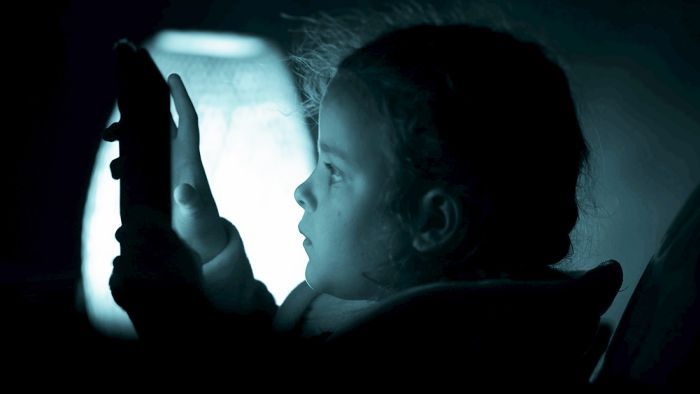
It comes as two new studies show a blowout in the amount of time caregivers are plonking young children in front of laptops, televisions, smart devices and streaming services.
The new research shows as many as three quarters of infants aged under two are watching screens, despite recommendations that they don’t at all, and that having a big brother or sister is a major risk factor in very young children getting far more screen time than they should.
The studies, published today in the JAMA Paediatrics medical journal, show a majority of infants and toddlers are failing to have their screen time “limited appropriately” in line with recommended screen time limits.
But it’s not just Queensland or Australian children experiencing screen time overdoses. A Canadian review of studies covering 89,163 kids across Australia, New Zealand, north America and Europe found the startling statistic that only about 24.7 per cent of infants aged under two do not watch screens.
And it found just 35.6 per cent of children aged two to five have their screen time limited appropriately by their caregivers.
You might like


This means only one in four infants and one in three toddlers in these countries are in front of screens for time periods each day within recommended guidelines.
In another study also published today, University of Queensland researchers found parents with two or more children were having the hardest time limiting screen time.
Associate Professor Leigh Tooth from the UQ School of Public Health said having children in different age categories was a major risk factor for screen time blowouts.
Tooth said UQ’s national study of almost 2,000 mothers and over 4,500 children under 12 found slightly more than half of the families kept to the guidelines when their children were in the same age-based screen time category.
Stay informed, daily
Screen time guidelines are generally based on age. Children’s Health Queensland and the Federal Health Department recommend no screen time at all for children younger than two years old.
The guidelines say one hour per day for those aged two to four years, and two hours per day for kids between five and 12 years of age.
But Tooth said the study found only 23 per cent of families with children in different aged-based screen time categories were adhering to the recommendations.
“We also found toddlers exceeded guidelines by matching the screen time of their older siblings,” Tooth said.
“And, in a sub-sample of children aged two to four years who had siblings in different aged-based screen time categories, many exceeded guidelines by up to 92 per cent.”
Tooth said the guidelines failed to account for the reality of parenting multiple children of different ages.
“While many guidelines now focus on quality over quantity, such as co-viewing and enriching content, difficulties remain for families with several children,” she said.
“We would like to see current screen time guidelines modified to accommodate families with multiple children and more policies and resources with practical tips and strategies for parents.
“Screen time guidelines, like those for physical activity, nutrition and sleep, are an important guide for parents to help children develop a healthy balance across their daily activities and reduce the risk of developing a chronic disease in the future.”
Want to see more stories from InDaily Qld in your Google search results?
- Click here to set InDaily Qld as a preferred source.
- Tick the box next to "InDaily Qld". That's it.



