Flocking clever: Magpies use teamwork to outsmart scientists
A tribe of clever magpies has outsmarted scientists, ruining their elaborate experiment by freeing their mates from GPS tracking devices.
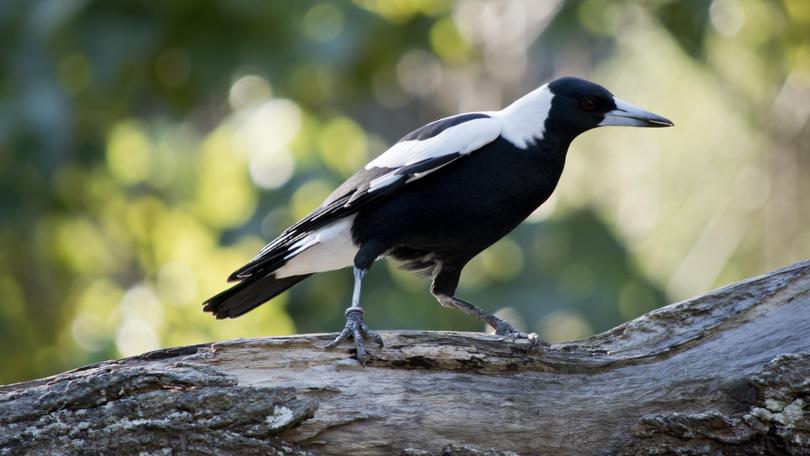
Queensland-based animal ecologist Dominique Potvin is still laughing at how fast the Australian songbirds undid about a year’s worth of work when the magpies teamed up to remove sophisticated harnesses holding GPS trackers.
The upside from this series of extraordinary “rescues” is she may have documented the world’s first case of animals altruistically removing trackers from encumbered companions.
The experiment saw five magpies fitted with harnesses and released to see how the devices would perform in the wild.
Great care was taken to ensure it was robust, well fitting, tamper-proof, and tested before it was deployed.
A single release point – just one millimetre wide – was positioned under the breast so the kitted-out birds couldn’t reach it to free themselves.
You might like


But Dr Potvin and PhD student Joel Crampton weren’t counting on the magpies getting help from their friends.
Soon after the five were released, the University of Sunshine Coast researchers noticed one “chatting” to a magpie that was not in the experiment.
“A magpie that didn’t have a tracker on came up to one of the individuals that did and started pecking at it.
“We were thinking, ‘what’s going on? Are they trying to get it off? And then we were thinking, ‘Oh, it’s really hard to get these things off. There’s no way it’ll be able to do it’.”
Stay informed, daily
Less than 30 minutes later the magpie was freed. Within three days, all five were relieved of their devices.
Potvin and her team personally witnessed two rescues.
“The motions they were doing, it was clear, targeted, like, ‘I’m going to take this giant thing off you’,” she says.
“If they were fooling around with the tracker, at the top, they would never have gotten it off.
“They either had to show tremendous tenacity or problem-solving by doing a range of different behaviours, and snipping at different points, to be able to get it off.”
Potvin says the behaviour was so impressive she decided to do some digging to see if there were any other documented cases of animals taking trackers off each other.
“We found there wasn’t anything in the literature. This was actually a completely new behaviour in a completely new situation, which was kind of cool.”
Mr Crampton, who helped conduct the study as part of his honours research, said the observations should be considered when planning future tracking studies involving highly social species, such as magpies.
The team’s work was recently published in the peer-reviewed journal Australian Field Ornithology.
Want to see more stories from InDaily Qld in your Google search results?
- Click here to set InDaily Qld as a preferred source.
- Tick the box next to "InDaily Qld". That's it.



