Huge piece of space junk set to crash into the moon within days
The moon is about to get walloped by nearly three tonnes of space junk, a punch that will carve out a crater 10 to 20 metres across and send dust flying hundreds of kilometres across its pockmarked surface.
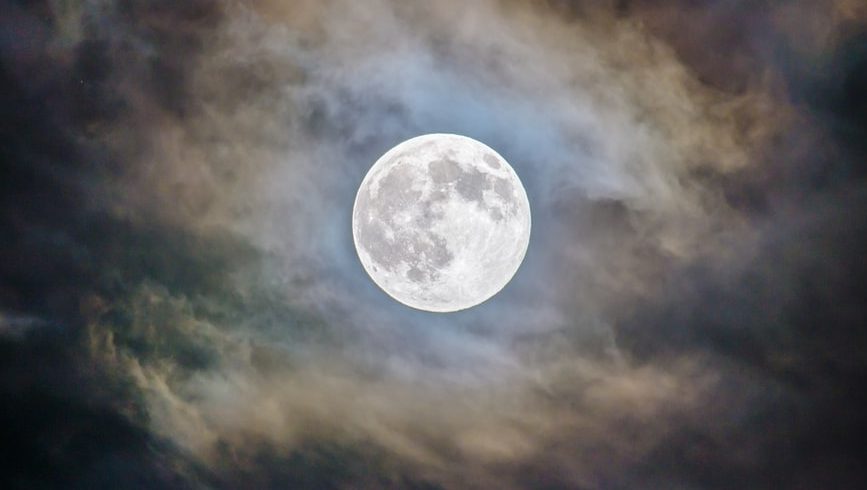
The leftover rocket will smash into the far side of the moon at 9,300 kph on Friday, away from telescopes’ prying eyes. It may take weeks, even months, to confirm the impact through satellite images.
It’s been tumbling haphazardly through space, experts believe, since China launched it nearly a decade ago. But Chinese officials are dubious it’s theirs.
SpaceX originally took the rap for the upcoming lunar litter after asteroid tracker Bill Gray identified the collision course in January. He corrected himself a month later, saying the “mystery” object was not from a SpaceX Falcon rocket in 2015 but more likely the third stage of a Chinese rocket in 2014.


But Chinese ministry officials said that stage had reentered Earth’s atmosphere and burned up.
The US Space Command, which tracks lower space junk, confirmed Tuesday that the Chinese upper stage from the 2014 lunar mission never deorbited, as previously indicated in its database. But it could not confirm the country of origin for the object about to strike the moon.
You might like
Gray, a mathematician and physicist, said he’s confident it’s China’s rocket.
Jonathan McDowell of the Harvard and Smithsonian Centre for Astrophysics supports Gray’s revised assessment, but notes: “The effect will be the same. It’ll leave yet another small crater on the moon.”
The moon already bears countless craters, ranging up to 2,500 kilometres. With little to no real atmosphere, the moon is defenceless against the constant barrage of meteors and asteroids, and the occasional incoming spacecraft, including a few intentionally crashed for science’s sake. With no weather, there’s no erosion and so impact craters last forever.
Tracking deep space mission leftovers like this is hard, according to McDowell. The moon’s gravity can alter an object’s path during flybys, creating uncertainty. And there’s no readily available database, McDowell noted, aside from the ones “cobbled together” by himself, Gray and a couple others.
“We are now in an era where many countries and private companies are putting stuff in deep space, so it’s time to start to keep track of it,” McDowell said. “Right now there’s no one, just a few fans in their spare time.”
Want to see more stories from InDaily Qld in your Google search results?
- Click here to set InDaily Qld as a preferred source.
- Tick the box next to "InDaily Qld". That's it.



