Forget the political razzle dazzle and diddle daddle – voters want leaders who listen
The stunning South Australian election result shows that political leaders who respect voters and their concerns are in the ascendant, writes Dennis Atkins.
Politics is now played in the so-called “post truth” environment but at the end of the day it is still a zero sum game.
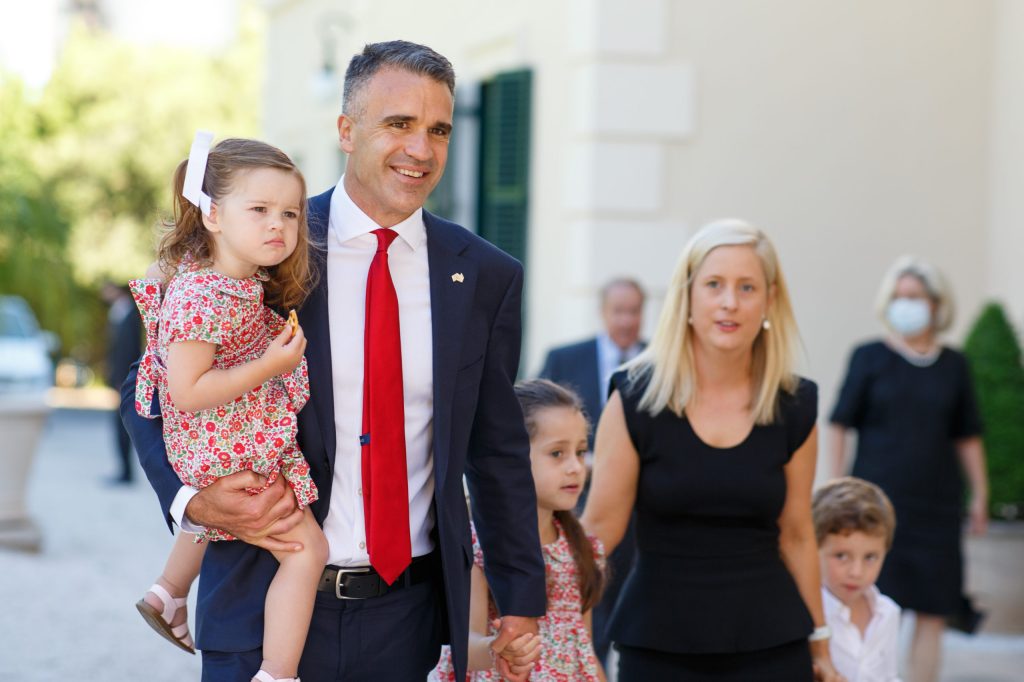
There’s a winner and a loser and in Australia in the past week the biggest winner is undoubtedly South Australian Labor and its leader – now state premier – Peter Malinauskas.
After just one term the Liberal Government of supposed moderate party healer Steven Marshall was swept aside in a profoundly strong, and mostly uniform, statewide swing of 5 to 7 per cent.
Marshall became the first pandemic incumbent to lose power, breaking the spell that saw victories in Darwin, Perth, Brisbane and Hobart. It might be a harbinger of bad electoral juju ahead for anyone in office.
One takeaway from Malinauskas’s win other leaders should note was his gracious acceptance speech (Marshall was also dignified in defeat, it should be noted).
After telling his supporters the Liberal Party was not Labor’s enemy – a fresh acknowledgment in an increasingly partisan political time – the new Premier offered some advice that deserves to be read and studied.
“(The Liberals) may be our adversaries but they are not our enemies, and we thank them for what is a significant night for them too,” he said.
“Steven Marshall’s [concession] call was utterly generous, it was gracious and it was done with the class that we have become incredibly familiar with ….
You might like

“The Liberal Party of Australia is an essential component of our federation, it’s an essential component of our democratic process.
“Sometimes on election night when governments change hands, the successful party can confuse the elation of electoral success with an inflated sense of achievement.
“Naturally the people of South Australian Labor are right to feel elated tonight, but true satisfaction for us comes in realising our ambition, our ideal of delivering a fairer, better society and more opportunity.”
That is classy, on any measure. You get the feeling Malinauskas has an eye for a long and meaningful time in office, aimed at achievement.
His performance on election night and conduct during the campaign sets Malinauskas apart.
He is redolent of a bygone era of Labor state leaders from the 1980s and 90s – Neville Wran, John Cain, John Bannon and Wayne Goss. He is shaping up as that good.
It’s why modern, bigtime political parties – Labor and Liberal – should take notice and learn from Malinauskas and his successful team. They based their approach on listening and consultation, spending their time in opposition digging deep roots into communities.
Internal Labor game playing – the business of the day in other parts of Australia and in other parties – was shunned and even when a former MP who kicked up dust after losing a privileged position, it was handled at arm’s length and with calm resolve. It never raised any interest or alarm in the streets and suburbs of South Australia.
Malinauskas backed Marshall when he thought it was needed – especially during the most worrying days of the pandemic. Unlike the partisan games from the LNP in Queensland – exposed at the election as being completely out of touch with community sentiment – SA Labor demonstrated maturity and people saw it as leadership.
When the election loomed, Malinauskas asked the same people to listen to his party’s message. Because he had given them time and respect, they did. The reward was seen on the weekend.
Stay informed, daily
The new SA Premier is, as already noted, planning to be around for the long haul. If he governs like he campaigned and builds on the connections made with the local communities he will get that chance.
He’s done the poetry, now is time for the prose.
Three things can be noted for the next election that is racing into serious view – the federal contest in about eight weeks.
First, this is a state election and precise links on issues and outcomes cannot be made.
However, grade one geography tells us South Australia is part of Australia. This was not an election on Mars.
The mood is the mood is the mood and the weekend election says the mood is grumpy and looking for change. As Paul Keating probably still says, every now and then voters go outside and punch the first person who comes along.
Welcome to that world, Scott Morrison.
Second, health is an issue that’s white hot post pandemic. Yes, cost of living and the economy are up in lights but any government or opposition wanting to get a positive response from voters – at a federal or state level – will have a head start with substantial, accessible and practical answers to the most basic of questions.
Questions surrounding health have been supercharged after the pandemic, all aspects of which have made people more aware of the need for good public hospital and health policies and the direct connection they have with good economic outcomes.
Can I get to a GP? Can I get into a public hospital? Will my ambulance arrive on time? Will it sit on a hospital ramp? These are issues that cross boundaries of the tiers of government and blaming the states or pointing fingers at the Commonwealth will just make that punch referred to before come more quickly.
At a federal level issues like the national disability insurance scheme and domestic violence are high on the list of priorities in need of attention.
Last, talk about independents has moved to reality. The new SA Parliament could have as many as seven independents – at least four – and all of them are in seats otherwise secure if not safe Liberal districts. Women played a big role in this new wave of independents.
To explain how significant this all is, consider the most stunning result in SA – the safest Liberal seat in the state may well fall to an independent woman who only startled campaigning a little over four months ago.
Liz Habermann is within a whisker of taking out the Liberal’s Sam Telfer with a swing of more than 24 percent (the sitting MP was about 529 votes behind Tuesday morning). This is a very big seat, covering most of the Eyre Peninsula and Habermann had two key planks in her pitch to voters.
She was in the forefront of the drive for voluntary assisted dying and she was a loud voice against what she called the “boys’ club” of modern politics.
“It’s got to the point where it is, dare I say it, a boy’s club and we’re sick of it,” she said. “We’re just not going to stand back anymore and wait for them to diddle daddle on.”
That’s a warning for everyone in politics.
Want to see more stories from InDailyQLD in your Google search results?
- Click here to set InDailyQLD as a preferred source.
- Tick the box next to "InDailyQLD". That's it.