Police union says cops ill-equipped to deal with domestic violence cases
Queensland police feel hamstrung in dealing with domestic violence, which takes up more than a third of their time and puts them and victims at risk, an inquest into the Clarke family deaths has been told.
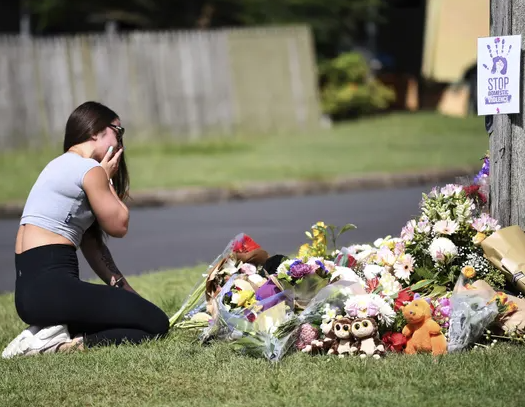
The state average of 40 per cent means that in areas such as Logan, Kirwan and Caboolture officers could spend up to 90 per cent of their time on domestic violence cases, Queensland Police Union president Ian Leavers said.
The statistics mean domestic and family violence is the single most prevalent call for service in policing in the state.
Mr Leavers was testifying at the inquest into the deaths of 31-year-old Hannah Clarke, her children – Aaliyah, six, Laianah, four, and Trey, three – and estranged husband Rowan Baxter, who torched the family in a car on a suburban Brisbane street in 2020.
The inquest aims to consider what could be done differently to avoid a similar tragedy.
Leavers said many frontline police responding to domestic violence calls were junior officers with the least training and experience.
“For our junior police, especially over the Covid times, the training has been limited and I believe they are put at a substantial risk … (and) that certainly puts victims at a substantial risk as well,” he told in the Coroners Court in Brisbane on Tuesday.
You might like


“A lot of police feel like, with the lack of training, they’re actually letting victims and the community down through no fault of their own.
“Training in (domestic violence) cannot be something which is put to the side.”
Leavers said there was a need for face-to-face training because online courses – like a two-hour session officers were required to do on coercive training since January – were often done as quickly as possible between jobs and answering phones.
He said a lack of information sharing between states and New Zealand put officers at more risk, while connectivity black-spots meant technology failures force them to often “go in blind”.
“That can be problematic because domestic violence incidents are very high risk for police because it’s very dynamic, emotions are charged and that is when police are probably most at risk,” he told coroner Jane Bentley.
There can also be mental health, drug and and alcohol issues.
Stay informed, daily
“You combine all those effects, it is quite dangerous for all parties including police.”
The inquest was told a domestic violence call-out could take up to five hours, or longer in small country areas.
And while officers were dealing with those jobs, the rest of the community was not policed, Leavers said.
He recommended a multidisciplinary approach to domestic violence, saying it was not only a police issue and rehabilitation.
He believes domestic violence orders which include a condition for the respondent to take part in behaviour change programs could also help.
“We need to educate, we need to rehabilitate, so people know what a respectful relationship is,” Leavers said.
Streamlining processes for police by getting rid of unnecessary paperwork and using technology was also necessary.
Leavers said police felt hamstrung, but were committed to change to better protect people.
Hannah Clarke was leaving her parents’ home in Camp Hill to take her children to school when Baxter got into the car, poured fuel inside and set it alight in February 2020.
Baxter, 42, then stabbed himself with a knife, dying nearby.
Ms Clarke died later the same day in hospital.
1800 RESPECT (1800 737 732)
Lifeline 13 11 14
Want to see more stories from InDaily Qld in your Google search results?
- Click here to set InDaily Qld as a preferred source.
- Tick the box next to "InDaily Qld". That's it.



