What-ifs and could-have-beens: Where would we be had Morrison been exposed sooner
As they bunker down for what might be an extended period in opposition, the Federal Coalition will look back with bemusement at the former PM’s latest absurdity, writes Michelle Grattan
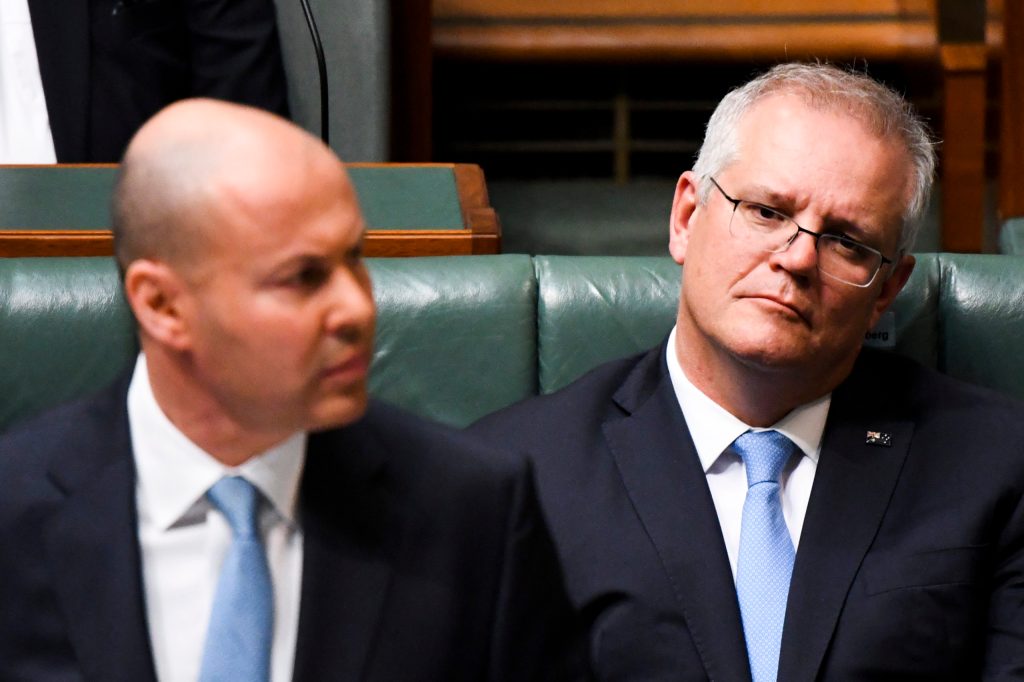
One of the more bizarre things Scott Morrison said in his hour-long, sometimes combative, Wednesday news conference was that he’d had a “wonderful” conversation with Josh Frydenberg on Tuesday.
Morrison contacted Frydenberg after the revelation the former prime minister had himself sworn into the treasury portfolio in May last year and never told the treasurer. On the same day he’d inserted himself in the home affairs ministry, unbeknown to occupant Karen Andrews.
When she learned this week of his action, Andrews exploded and called for Morrison to leave parliament. Frydenberg, now in the investment banking world although retaining a hankering for politics, acted with more restraint.
But for the ex-treasurer and ex-member for Kooyong, the affair must raise the “what if” question.
What if the story of Morrison’s extraordinary power-grab had come out a few months before the election?
At that time some colleagues, fearful for their prospects, had sounded out Frydenberg about a possible move on Morrison. Frydenberg didn’t entertain the idea, staying loyal to Morrison (as he had to PMs Turnbull and Abbott).
It’s just possible the power-grab story might have toppled Morrison, the Liberals under Frydenberg might have contained their losses, and Frydenberg might have held his seat.
You might like
Of course none of that might have happened. But if you were Frydenberg, Tuesday’s conversation would have seemed less than “wonderful”. Morrison, however, portrays the world just as he wants it to be seen.
Scott Morrison stripped of power is not so different from Scott Morrison clothed in the garb of office. On Wednesday there were elements of preacher and salesman. Except no one was buying the messages.
His news conference did nothing to counter the damage from what’s been revealed about his putting himself into five ministries, without announcement and in most cases without the occupants knowing. In many observers’ eyes, it left him worse off.
Meanwhile, Peter Dutton and even Morrison’s close mate Stuart Robert distanced themselves from the former PM’s actions. Teal independent Sophie Scamps said there should be a parliamentary inquiry.
Governor-General David Hurley, caught up in the imbroglio, indicated he’d had “no reason to believe that appointments would not be communicated”.
On the power-grab, Morrison’s explanation amounted to saying that everyone expected he was responsible for everything, so he acted accordingly. Understanding public expectations, “I believed it was necessary […] to have what were effectively emergency powers, to exercise in extreme situations that would be unforeseen”.
There’s irony here. Morrison says he was responding to expectations about responsibility, but a chief criticism of him during the last term was that he dodged responsibility.
The pandemic played strongly to Morrison’s preferred command-and-control style.
Stay informed, daily
“As prime minister, only I could really understand the weight of responsibility that was on my shoulders and on no one else, and as a result I took the decisions that I thought I needed to take.”
A revealing line came in his retort to one persistent journalist. “You’re standing on the shore after the fact. I was steering the ship in the middle of the tempest.”
But a ship is operated by a crew, not just a captain. Why not tell his cabinet colleagues he’d had himself put into multiple ministries?
“I did not want any of my ministers to be going about their daily business any differently”, he said. “I was concerned that these issues could have been misconstrued and misunderstood and undermine the confidence of ministers in the performance of their duties.”
This doesn’t bear scrutiny. If Morrison’s argument for his extraordinary action was so compelling, ministers would presumably have accepted the case. But it was full of holes and illogical. Indeed, he now says “in hindsight” it had been unnecessary to put himself into treasury and home affairs.
While Morrison’s behaviour can be seen as the weirdest of aberrations, looked at from another angle it is just the most extreme example of his default mode of secrecy.
There were cover-ups on everything from his Hawaii holiday to who knew what and when about the Brittany Higgins matter. The cover-ups were accompanied by lies, dissembling, and dodgy investigations.
In those cases, Morrison was trying to hide things from the media and the public. With his special ministerial arrangements, it was ministers, individually and collectively, who were to be kept in the dark (as well as media and voters). Morrison did not just think cabinet colleagues didn’t have a right to know. He apparently thought they could become flaky if they did know.
But while eschewing scrutiny, Morrison also wanted to have the story of his prime ministership told in a way that would put him in the best light.
So he gave extensive co-operation for the book Plagued, written by Simon Benson and Geoff Chambers, journalists from The Australian. Morrison had a long and close relationship with Benson.
He said at his news conference:“That book was written based on interviews that were conducted at the time, “in the middle of the tempest,” which was what made it an “interesting read”.
Plagued broke the initial story of Morrison’s secret arrangements, and then further information quickly came out. In another irony, the book Morrison hoped would put some shine on his legacy became the source of its latest tarnishing.
As for his future, Morrison said: “As a former prime minister, I intend to go on being a quiet Australian in the Shire and in St George doing my job as a local member”.
Want to see more stories from InDaily Qld in your Google search results?
- Click here to set InDaily Qld as a preferred source.
- Tick the box next to "InDaily Qld". That's it.