Landmark deal: Unions team up with small business body to push workplace reforms
The peak body for unions and small business representatives have struck a landmark deal on workplace reform ahead of the federal government’s jobs and skills summit.
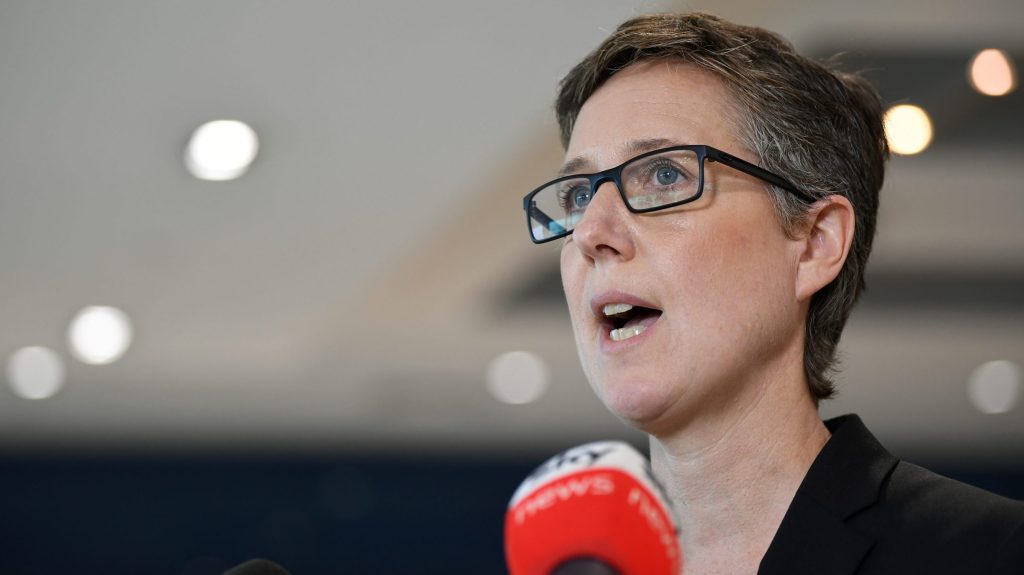
The Australian Council of Trade Unions and Council of Small Businesses Australia (COSBOA) have agreed in principle to work together to simplify and reduce complexities within the current industrial relations system.
This includes a pledge to support new options for collective bargaining, proposed by the ACTU last week, enabling multiple workplaces to work together to secure deals for employees.
But any changes to bargaining arrangements would be opt-in rather than mandated, COSBOA chief Alexi Boyd said.
“We’re not looking at any mandates or whole-sector requirements or anything like that,” she told reporters in Canberra on Monday.
“It’s about finding what’s fit for purpose for a particular business so that … we can help them navigate the system, because right now the system is broken.”
Small businesses had previously been left out of industrial relations discussions, but that must change, Ms Boyd said.
“The system is not built for small business, it’s not built for it now and it’s not built for it in the future,” she said.
The agreement was flagged as a historic step forward in modernising Australia’s industrial relations system by ACTU secretary Sally McManus.
You might like


She said further details would be released after wide consultation with businesses.
“This is an investment of time, effort and goodwill with the small business sector of our economy to help them have a system that works for them,” she said.
“It will be about the union movement investing in getting this right for the small businesses so that they are comfortable with the system.”
Supporting a simpler form of the “better off overall test” in fair work laws is also part of the agreement.
Employment Minister Tony Burke said he was “really excited” by the collaborative approach between the two groups.
“The proposal that has come forward from COSBOA and the ACTU is about bringing the system up to date,” he told reporters.
“I’m watching the conversation closely, I’m very attracted to some of the ideas that are coming forward (but) the government doesn’t have a proposal specifically at this point.”
People working in care sectors, who are predominantly female, are expected to benefit from the proposed collective bargaining arrangements.
Prime Minister Anthony Albanese will reflect on his first 100 days in office during a speech to the National Press Club ahead of the government hosting its marquee jobs and skills summit later in the week.
The Labor government will aim to use industrial relations reforms stemming from the summit to “arm people with every chance to fulfil their potential”, Albanese says.
Stay informed, daily
“Our government is only 100 days into this journey but we are resolved on the destination of a better future,” he will say.
“We are focused on building a fair-wage, strong-growth, high-productivity economy.
“I see it in phases. We’ve been through the pandemic response, we are in the middle of the recovery and reform will be the key to renewal.”
Albanese also lauded his government’s first 100 days, outlining key achievements such as restoring the energy grid, delivering flood support, increasing biosecurity measures, lifting the emissions reduction target, backing a minimum pay rise and moving on paid domestic violence leave.
“We’ve hit the ground running,” Albanese said.
“Central to all of this, fundamental to everything we seek to achieve, is a fairer, stronger, more resilient and more rewarding economy.
“An Australia where working hard means you can pay the bills, support your family, save for the future and achieve your aspirations.”
The prime minister is also hoping for immediate actions coming out of the jobs and skills summit at the end of the week.
The summit follows more than 100 consultations since the government took office and will bring around 140 key stakeholders to Canberra at the end of the week.
Discussions will span boosting economic participation for women and disadvantaged groups, addressing migration, and boosting training in areas of new technology.
“I’m hopeful there will be some immediate actions coming out of the summit that we can work to implement, but Friday isn’t the end of the story,” Albanese said.
“None of us imagine that a two-day summit will entirely fix wages and job security.
But for the first time in a long time, I believe we will be moving to agreement on how to solve these problems rather than arguing over who is to blame for them.”
A new culture of co-operation and a renewed understanding between unions, industry, small businesses and government would contribute to the construction of a fairer and more productive economy, Albanese said.
Want to see more stories from InDaily Qld in your Google search results?
- Click here to set InDaily Qld as a preferred source.
- Tick the box next to "InDaily Qld". That's it.



