Magical thinking is making the challenge of decarbonisation more difficult
We need to do a lot more than just build more renewable power plants if we we want to keep the lights on warns a new report from the Australian Energy Market Operator.
Australia’s decarbonisation efforts run the risk of being thwarted by magical thinking.
This is the idea if you wish for something strongly enough it will happen, regardless of the practicalities and the cost.
The Australian Energy Market Operator – the government agency responsible for keeping the lights on – highlights the problem in a report issued last week, which looks at the state of the electricity market for the decade ahead.
Despite all the billions of dollars now being spent on renewable energy, Australia still faces the prospect of unreliable energy supply within a couple of years.
AEMO’s 2022 Electricity Statement of Opportunities report notes that Australia’s renewable power supply is soaring and likely to meet or exceed 100 per cent of total generation requirements “during certain intervals” as early as 2024-25.
The key phrase is “during certain intervals”. It’s magical thinking to believe that simply having enough renewable energy capacity solves the challenge of decarbonisation.
That’s because it doesn’t solve the problem of reliability.
You might like


For that, the system also needs enough dispatchable power – power than can be turned on and off as needed, such as hydro or gas-fired plants – and enough storage capacity.
It also needs a transmission network that links all these new renewable energy projects to the grid.
That’s where the system is failing. As the AEMO report highlights, there’s not enough investment underway in these essential areas.
“The report reiterates the urgent need to progress generation, storage and transmission developments to maintain a secure, reliable and affordable supply of electricity to homes and businesses,” AEMO CEO Daniel Westerman said.
“Forecast reliability gaps have emerged across National Electricity Market regions due to considerable coal and gas plant closures, along with insufficient new generation capacity commitments needed to offset higher electricity use.”
And even when that investment is being made there’s further clear evidence of magical thinking.
A recent article in The Australian by Simon Bartlett, a former chief operating officer at Queensland’s Powerlink and Ted Woodley, a former managing director of Energy Australia, highlights the issue.
They say the sudden scramble to build around 10,000 km of new transmission lines after decades of minimal new work, “is presenting overwhelming construction challenges and putting unrelenting pressure on prices”.
Stay informed, daily
“Not only have costs soared but scheduled completion dates also have blown out, by years for some projects.”
They estimate the cost of four current projects in New South Wales have jumped by 140 per cent in just the past four years.
“And this is all during the preliminary planning stages, before construction has started,” Bartlett and Woodley write.
“There is no question that more transmission is essential for the transition to renewable energy. But the cost is soaring many times higher than initial estimates and for some proposed projects beyond their economic worth.”
They say it’s time for a rethink and “for a rigorous and far more accurate assessment of costs and benefits, and for a prioritised plan of what can be practically achieved at a worthwhile cost (financial, social and environmental)”
In other words, it’s time for some hard-headedness rather than yet more magical thinking.
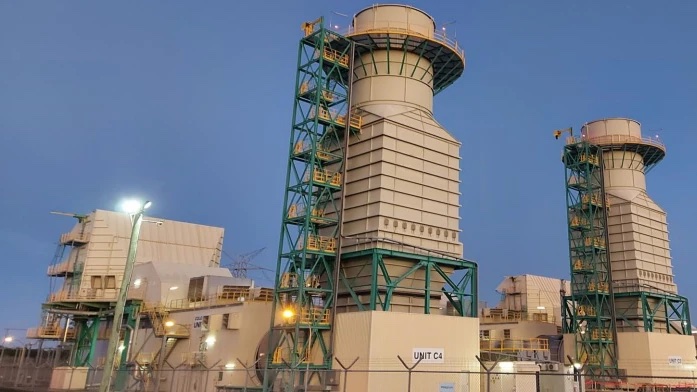
Of which, there is still plenty, as evidenced by the new Albanese Government’s demand that the Snowy Hydro’s new $600 million Kurri Kurri gas-fired power plant in New South Wales use 30 per cent green hydrogen once it begins operating, currently scheduled for December next year.
The Government also wants the plant to be running on 100 per cent hydrogen by 2030. This despite the fact that neither the technology nor green hydrogen supplies currently exist.
This particular demand from the new Government appears to have been sufficiently magical and unrealistic to prompt the recent sudden resignation Snowy Hydro’s CEO Paul Broad.
“While hydrogen is a wonderful opportunity, it is many, many years away from being commercial,” Broad told the ABC.
“To think you can have hydrogen running into Kurri Kurri when there is not hydrogen being produced in Newcastle just doesn’t make any sense”.
It would be magical to think so.
On a footnote, Queensland is better placed than other states in terms of power reliability according to AEMO, but only because its coal-fired power stations are the youngest in the country.
That’s to say our power supply will be more stable than other states but only because we’ll be using more carbon.
Want to see more stories from InDaily Qld in your Google search results?
- Click here to set InDaily Qld as a preferred source.
- Tick the box next to "InDaily Qld". That's it.



