Beyond housing crisis, our next big planning challenge will be retrofitting suburbia
New thinking is needed to meet the challenge of ensuring southeast Queensland’s sprawling suburbs serve a population whose lifestyles are rapidly changing, writes Craig Johnstone.
Brisbane and southeast Queensland generally are in the midst of one of the region’s regular episodes of regeneration.
The character of the CBD is being recast thanks to two huge infrastructure projects – Cross River Rail and the Queen’s Wharf project. Within five or so years, the city will have two new pedestrian and cycle bridges, a clutch of upmarket hotels and shopping areas and not one, but two, major new underground rail stations – all of them accompanied by striking new architecture and design so distinctive it will transform the face Brisbane presents to the world.
And that’s just the centre of town. Woolloongabba, Hamilton, West End and, to a lesser extent, South Brisbane will join this urban transformation with new buildings and community projects of their own.
It would be good to think this drive for reinvention will infect the entire city, so that we could see the inner and middle ring suburbs meet the challenges of Brisbane’s unstoppable growth by means other than what has been tried in the past.
After all, there will be another 1.5 million southeast Queenslanders in less than 20 years’ time. Where and how are they going to live?
Does the region continue to expand out into its fringes, where land is cheap and developers don’t have to stray too far from the stock standard three to four bedroom detached dwelling to keep their businesses going and governments and councils minimise the risk of upsetting existing communities worried about more congestion and social upheaval?
Or does it finally embrace the philosophy of the Southeast Queensland Regional Plan, first drawn up 17 years ago, which champions infill development rather than greenfield projects to combat urban sprawl?
How does Brisbane make sure the city can more readily cater to the changed behaviour brought on by the Covid pandemic – the work from home push, the need for mix-use development in the suburbs, the fact that new technology has combined with a new outlook on work-life balance to rebalance the city’s development in favour of the suburbs rather than the CBD?

These are questions the region’s developers, urban planners and government decision makers are expected to toss around at a major conference in Brisbane next month.
In what it is dubbing a “masterclass” in suburban renewal, the Suburban Futures lobby group has brought together architects, growth experts and state and local government figures to find out what can be done to improve liveability in the suburbs.
You might like


One conference speaker who has asked such questions for many years is June Williamson, department chair and Associated Professor at the City College of New York’s Spitzer School of Architecture.
Williamson’s speciality is how you go about retrofitting suburbs to make them better, a challenge that has caused her to focus on future uses of decommissioned shopping malls in the US.
She has many examples of dead malls (some estimates put about a quarter of America’s 1000 or so giant shopping centres shutting their doors in coming years) that have been revitalised by mix-use development and innovative housing design.
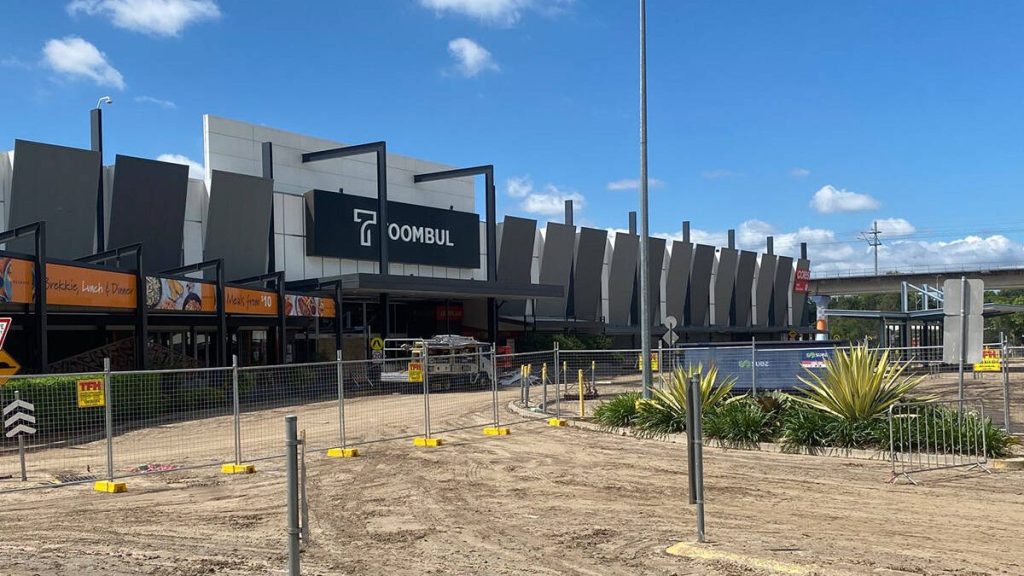
It’s a fascinating development that brings to mind the future of the flood-hit Toombul shopping centre, permanently closed since the devastating February floods.
The Toombul site’s future is unknown but Williamson points to the rejuvenation of similar flood-prone centres in the US as examples of how such places can be transformed.
One of these is the site of the former Meriden Hub Mall in Connecticut, which was developed into a mixed-income housing precinct with a transit centre and parkland. It’s now called Meriden Green.
“In the US northeast a lot of the shopping malls were built on filled wetlands and where the interstate highways passed through,” Williamson told InQueensland.
After persistent floods at the Meriden mall, the decision was made to turn it into an urban renewal project.
“What’s been done there is to demolish the mall. The creek had been underneath it. It was turned into a stormwater park so the whole thing had been regraded to a lower elevation,” Williamson said.
“Usually it’s dry with the creeks meandering through it but when there is a major storm even it fills up like a bathtub.
“They built new housing around what is now a storm water feature and a new train station.”
She says there is no single formula to make projects like Meriden Green happen and the case studies of retrofitting suburbs that Williamson and her collaborator Ellen Dunham-Jones have collected “do really represent a whole range of specific local conditions”.
“The larger narrative is that a lot of the shopping malls were originally built in a formulaic way with national companies who would scout out and find similar sites.”
Williamson said pension funds, cashed up and looking for medium to long term investments, were often responsible for developing the malls.
“There was money available if developers could put forward a proposal with an expected rate of return and this many rooftops etc. So a lot of these were built in a formulaic way wth the same deals with the same department store chains and so forth but then over 30, 40, 50 years they’ve all taken different trajectories.
“The perfectly functional and profitable mall is still chugging along but there are increasingly few of them though because they were overbuilt.
Stay informed, daily
“You could get a rate of return over five to 10 years but back them investors weren’t really concerned about what would happen 20, 30, 40 years down the road.
The result is that each retrofitting story is local and specific. Often there is a private champion. These are usually developers that have deep pockets and might know the market quite well and have relationships that they can work with.

“Or we’ve also seen examples where the public sector has to take the lead because they’ve lost a lot of tax income so they have a big hole in their budget. Maybe they’ve come into part of full ownership of the property or it’s a drag on property values of surrounding areas,” Williamson said.
Often where there’s a strong market there’s maybe an intense need for housing, so the developers may need some entitlements from the public sector – changing zoning and other things like that if they want a mixed use project.”
“But they can take the lead. If they work with the right consultants and designers and they can be creative.”
Williamson insists it is possible to achieve great success out of mixed use projects “rather than just swapping retail for retail”.
That’s where we might see the Meriden Green example where basically you’re not putting new built use there but by creating things like the stormwater park it’s stabilising and protecting surrounding properties,” she said.
That raises the impact of climate change, with developers realising, as Williamson puts it, “the land itself isn’t behaving in the way it did in the past”.
“This is something I think you’re going to run into in Australia. That proposition that the greenfields are just available and cheap? Well, regionally the more land that becomes developed and becomes hardscape it is no longer serving these ecological functions it used to.”
Such function are usually not factored into financial calculations when it comes to deciding if developments stack up.
“Those costs accumulate and all of a sudden you have more flooding, you have more stormwater protection and buffer systems not operating the way they did in the past,” she said.
“Spread and sprawl seems cheaper in the short term but has conveyed out a bigger cost to everyone in the longer term.”
“So that’s the argument for retrofitting and that need for both public and private sector to work together.”
As an advocate, she doesn’t just want to see places retrofitted but ensure they are examples of “raising the bar” in improving support for an ageing population.
“The majority of the population moved to the suburbs during their child rearing years. They’ve got three or four bedrooms and multiple cars but they’re living the majority of their adult lives after their child rearing years.”
“So there is a disconnect between the residential areas and the planning logic of these communities that is not in step with the ageing demographic. That can drive retrofitting, where people want to downsize to an apartment or a townhouse but still live in their community.”
“You shouldn’t need a new purpose built public library or medical cliic or a pre-school. Those can also move into some of those commercial spaces and just repurpose the building.”
Williamson will be the keynote speaker at the Suburban Futures Retrofitting Suburbia conference at Queensland University of Technology on October 5.
Want to see more stories from InDaily Qld in your Google search results?
- Click here to set InDaily Qld as a preferred source.
- Tick the box next to "InDaily Qld". That's it.



