Cold comfort: Report finds sexual harassment rife in Antarctic research stations
Government ministers have expressed shock at claims of a widespread culture of sexual harassment at Australia’s Antarctic stations, with women reporting being propositioned for sex and shown offensive pornography.
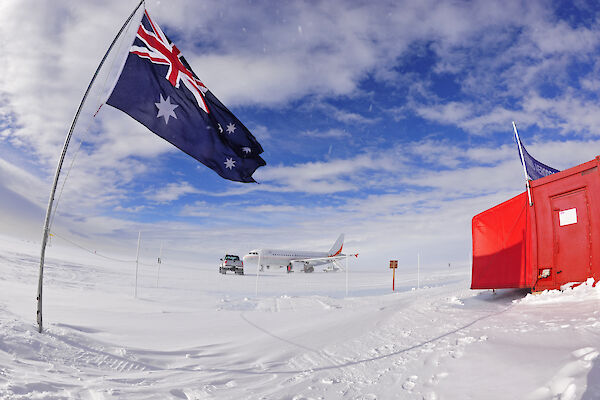
An offical review of the behaviour at the station’s commissioned by the Australian Antarctic Division, also found that some women would hide their periods for fear of missing out on field missions.
The author of the review, by the ANU’s Professor Meredith Nash, told the ABC that it may be unethical for women to continue to be stationed in Antarctica if the government could not guarantee their safety.
A summary of Nash’s report also described a homophobic culture at the research stations.
“Participants observed that women experience a range of harassment including uninvited physical contact or gestures, unwelcome requests for sex, sexual comments, jokes or innuendo, intrusive questions, displays of offensive or pornographic material and sex-based insults or taunts and unwanted invitations” the summary said.
Environment Minister Tanya Plibersek told the ABC she was “gobsmacked” by the report’s findings.
“As a minister, I take a zero-tolerance response to sexual harassment in any workplace I am responsible for,” Plibersek told the ABC.
You might like


“I was actually gobsmacked to read some of the reports here talking about pornographic material up on the walls (because) I really did think that we had eradicated this thing from Australians decades ago.
“I have been very clear with the department. We need to make sure that every person working either at head office or in the Antarctic feels safe and if they make a complaint, they can make that complaint without any fear of victimisation.”
Science Minister Ed Husic said the allegations of sexual harassment were “absolutely concerning”.
“From what I know, Professor spoke to staff who experienced that harassment. And it’s shocking,” he told Radio National.
“It’s upsetting and shocking to see what’s been detailed in the report. It’s not on in any workplace and, certainly, action will be taken.”
Women described changing menstrual products without privacy or adequate sanitation, having to carrying bloody products in the field and altering their hormonal balance with medications to make menstruation less inconvenient.
Stay informed, daily
The study conducted in-depth interviews with 22 AAD employees and held informal conversations with dozens more.
“Whilst women in this study found a range of ways to individually cope, the more concerning issue is that people who menstruate feel compelled to uphold a male-dominated field culture in which menstruation is concealed and controlled to meet masculine cultural norms,” the summary report reads.
AAD director Kim Ellis said he was deeply concerned by the findings, saying “significant progress” had already been made on implementing more than 40 recommendations.
“It doesn’t matter how many people may have experienced this behaviour – we know that under-reporting is almost certainly a factor – the fact anyone at all experiences this treatment is not okay,” he said in a statement.
Women overwhelmingly described Antarctic research stations as “blokey”, with a permeating culture of widespread, low-level sexual harassment.
“Given the under-representation of women … (especially during winter) some women also described the culture as ‘predatory’ and objectifying,” the study reads.
All recommendations have been accepted by the AAD, which maintains three permanently manned stations on the frozen continent.
They include the creation of an equity and inclusion task force and the setting of targets to increase diversity among expeditioners.
-with AAP
Want to see more stories from InDaily Qld in your Google search results?
- Click here to set InDaily Qld as a preferred source.
- Tick the box next to "InDaily Qld". That's it.



