Another summer of discontent: Albo feels pressure over energy prices
The Albanese government has no shortage of advice on what to do about the energy crisis. It doesn’t have a lot of room to move, writes Michelle Grattan.
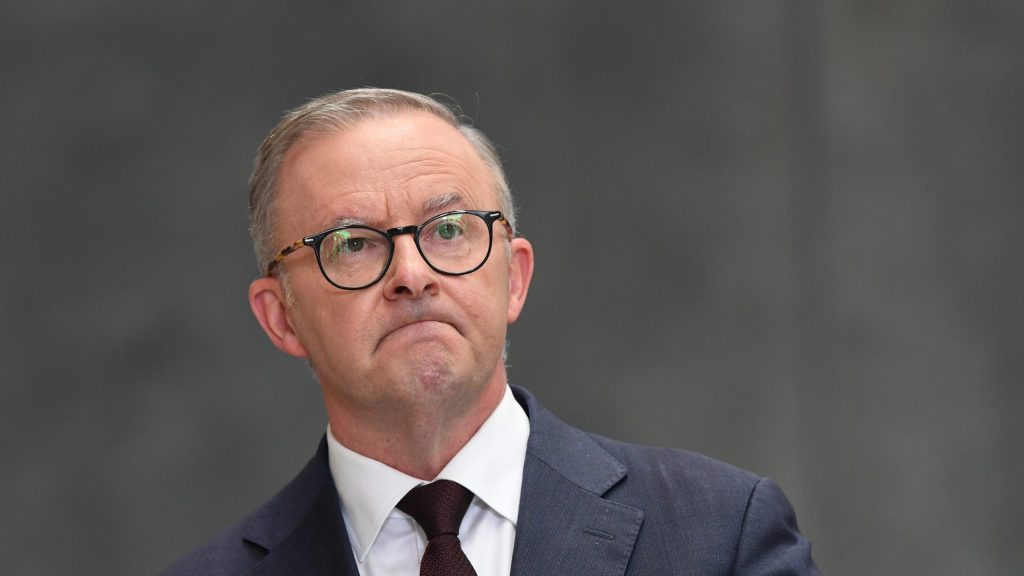
Anthony Albanese leaves late next week for another round of international diplomacy, starting with the East Asia Summit in Cambodia, followed by the G20 in Indonesia, and APEC in Thailand.
But the PM will be notably missing from the COP27 leaders summit in Egypt early next week. The minister for climate change and energy, Chris Bowen, will represent Australia later in the conference.
On the back foot a year ago, Scott Morrison had to scramble politically to twist the Nationals’ arms to support the 2050 net zero emissions target ahead of COP26, before turning up (reluctantly) at the Glasgow meeting.
It did him no good. Australia was seen as a laggard on climate policy, not least because Morrison would not improve the Coalition’s medium-term target.
Whenever he is on the international stage, Albanese draws attention to the big change his government has made in Australia’s climate policy. He reckons he has enough credit in this particular bank to skip COP in favour of more urgent claims on his presence – especially being seen in parliament. Unlike British PM Rishi Sunak, who has been forced by political pressure to reverse his decision to stay at home.
“I can’t be in all places at once,” Albanese said, justifying his absence; he observed that this COP is about implementation, not new commitments. “I have a very busy schedule of parliament, then the international conferences, then back to parliament again. Making sure that our agenda gets through and that includes our agenda on clean energy and taking action on climate change.”
Indeed. And that energy and climate agenda is looking tougher to implement than it seemed before the election.
Anyway, from Albanese’s point of view, missing COP27 has its advantages. Australia’s policy switch will be welcomed, but more generally this will be a difficult meeting. While it is about “implementation”, that’s actually where the rubber hits the road in combating climate change.
You might like


The international energy crisis is causing backsliding, with some European countries forced to rely on fossil fuel to a greater extent than they’d planned.
Also, the conference will see pressure on developed countries for a fund to compensate poorer countries that suffer devastating weather events (such as the floods in Pakistan). Australia’s preference is to confine its assistance to its immediate region, rather than commit more widely.
The Australian government will also have to admit that its ambition to host (with Pacific countries) the 2024 COP (which would be before the next election) was overreach. It is now expected to bid for the 2026 conference.
At home, while the government has put its 43 per cent medium-term emissions reduction target into law, it still has to legislate, and regulate, for changes to the Safeguard Mechanism. These will strengthen the obligations on the big polluters.
The legislation will be introduced in the (very crowded) remaining parliamentary weeks of the year. The proposed changes are already running into resistance from some big emitters.
Most immediately, with the public reeling from the budget’s forecast of massive price increases for electricity and gas, the government knows it needs to come up with a gas policy quickly.
The energy crisis, substantially driven by overseas events, has already blown away any chance of Albanese meeting his election promise of a $275 reduction in household power bills by 2025. Ministers dodge questions about the promise, the fate of which is a warning against over-precise commitments.
But being unable to deliver a price cut is now not the issue – it’s how to head off extraordinary price hikes, by taking action on gas.
Appearing on the ABC on Thursday night, Treasurer Jim Chalmers said there were three paths the government could go down: act on tax, provide subsidies to people or companies, or regulate to bring down prices.
“Our preference is to do something with regulation,” he said, and that was the focus of the work being down. “But we don’t want to rule out subsidies or tax.” His aim is an announcement before Christmas.
Stay informed, daily
Meanwhile Treasury is looking at whether changes should be made to the Petroleum Resource Rent Tax. Despite his strongly stated preference for regulatory action, Chalmers said “I do understand […] that in the community there is an appetite for us to get a better return on our resources”; he would consider whatever Treasury said on the PRRT and “try and involve the Australian public in that conversation”.
Labor before the election put itself in a tight corset on taxation generally. But the government would face minimal voter backlash if it decided to impose a super profits tax, although it would involve breaking a promise.
A survey for the Australia Institute’s Climate of the Nation report, launched on Thursday, found 61 per cent support for a windfall profits tax on the oil and gas industry.
Such a tax would, however, obviously bring a sharp reaction from the industry and nervousness about international contracts.
The current policy debate also goes to gas’s longer-term role. The government recognises it as an essential transition fuel, which means fending off critics of new projects.
Looming state elections in Victoria and NSW are playing into the pressures on the Albanese government.
NSW Liberal Treasurer Matt Kean, who had wanted cost-of-living relief in the budget, later said Bowen needed to “come up with a solution to support homes and business”.
Victoria’s Premier Dan Andrews urged a “domestic reserve” (as exists in Western Australia) “so that our gas is for our businesses and our households first and then the bit that we don’t need, these private companies can sell that to the world”. Some in federal Labor thought Andrews had a hide, given Victoria’s ban on onshore unconventional gas mining.
At the federal level, Industry Minister Ed Husic has again lashed out at the gas companies, declaring “this is not a shortage of supply problem; this is a glut of greed problem”. The Australian Petroleum Production & Exploration Association (APPEA), accused him of demonising the industry.
As the energy issue flared, the government might not have been surprised at opinion polls showing the budget’s poor reception. In Newspoll, 47 per cent thought the budget bad for them, and 29 per cent said it was bad for the economy. But people didn’t think the Coalition would have done any better.
The ANU’s “Economic and other wellbeing in Australia” October survey, out this week, highlighted the impact of general cost-of-living pressures. The survey of nearly 3,500 (completed before the budget) found a steep increase during the year in the proportion of people “who think rising prices are a very big problem.
“In January 2022, over one in three (37.4 per cent) Australians thought that price rises were a very big problem. This increased to 54.6 per cent per cent in August 2022 and then again to 56.9 per cent in October 2022.”
The survey found: “One of the key determinants of life satisfaction in October 2022 is people’s experiences of price increases. Life satisfaction in October 2022 was 10 per cent lower for those who thought that rising prices were a very big problem compared to those who did not.”
Exactly a week after the budget, its inflation forecast was blown up.
On Tuesday the Reserve Bank, increasing the cash rate by 25 basis points, indicated inflation is now expected to peak at 8 per cent, rather than the budget’s 7.75 per cent forecast.
As happened last year, Australians are facing another summer of discontent, this time with escalating living costs replacing Omicron at the top of their worry lists.
Michelle Grattan is a professorial fellow at the University of Canberra and chief political correspondent at The Conversation, where this article first appeared.
Want to see more stories from InDaily Qld in your Google search results?
- Click here to set InDaily Qld as a preferred source.
- Tick the box next to "InDaily Qld". That's it.



