Conservationists give stick to beef over land clearing rates
The Queensland Conservation Council has denied launching an attack on the state’s beef industry after releasing what it has called evidence of widespread deforestation to expand livestock production.
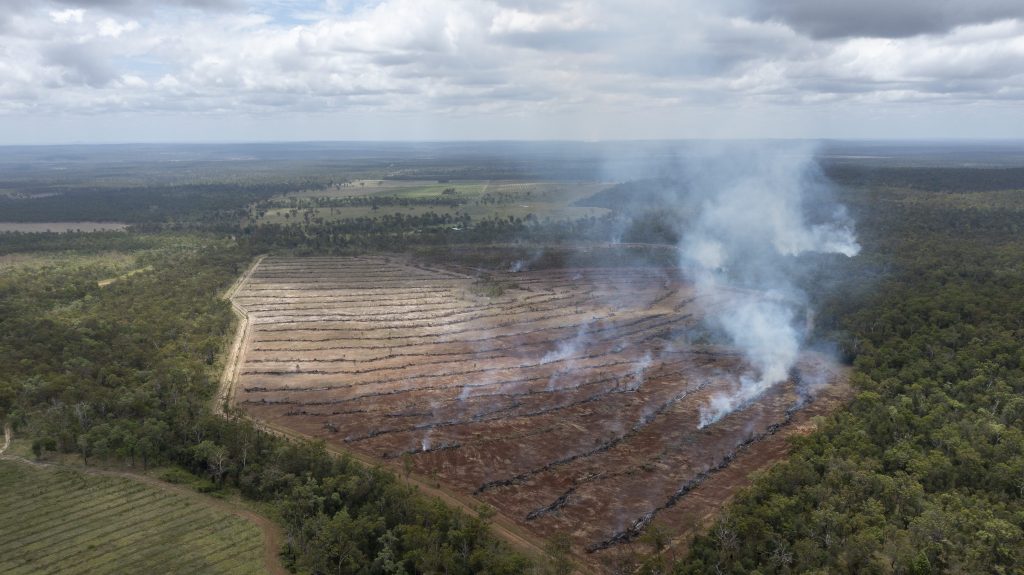
Among details contained in a report – slammed as “blatant lies” by farm organisation AgForce – the conservation group claims 1 million hectares of bushland was cleared primarily for beef production between 2014-2019.
The findings from the report have prompted the QCC to take a swipe at rural landholders and the State Government’s Vegetation Management Act that regulates land clearing.
The report says that over the five-year study period, covering the last years of the one-term Newman LNP government and the first four years of the Palaszczuk Labor administration, beef producers found loopholes in the legislation to expand pasture production at the expense of native forest and threatened ecosystems.
Among the damage, the report’s authors conclude, was the destruction of habitats for 388 nationally threatened species, including koalas, and 14 threatened ecological communities.
The report also claims to have discovered 110 hectares of cleared ‘high value’ regrowth forest.
QCC nature campaigner Natalie Frost said “hundreds of thousands” of hectares of native forest were cleared every year, much of it home to some of Australia’s most iconic endangered species.
You might like


“Much of this clearing is because of gaping loopholes in the state’s Vegetation Management Act, which is long overdue for reform,” she said.
“Unless the government closes these loopholes and invests in incentives for landholders to manage the land in ways that work for nature and their businesses, we’re going to continue to see swathes of Queensland’s forests and bushland bulldozed for beef.”
Agforce chief executive Mike Guerin said the report was littered with lies and ‘cherry-picked’ data to suit a biased agenda.
“It’s just pure lies – I could sit here and pick holes in their data all day,” he said.
“We’ve offered them (QCC) an olive branch to sit down with us and talk through the issues to work through them together, but they refuse to do that. Instead, they’ve opted to attack us in the media.”
Frost told InQueensland it was her organisation’s role to expose wrongdoing against the environment and was holding beef producers to account to protect their sales to export markets where some overseas countries, such as those in the EU, were moving towards banning imports of beef from deforested land.
Stay informed, daily
“The data shows that the overwhelming majority of land cleared is for beef,” Frost said.
“If we can develop a plan and close the loopholes for the beef industry and work with the beef industry to address that then we’re going to be solving the majority of the land clearing issues within Queensland.
“Beef is a very important industry for Queensland. There are many producers who work with the environment constructively and we want to see more of them work in this way and have more producers incentivised to achieve good outcomes for the environment and their businesses, not vilified in international markets.”
The Palaszczuk Government last strengthened the 1999 ‘Veg Act’ as it is commonly called in March 2018, following criticism of the Newman Government for relaxing clearing controls.
The government also reviewed clearing codes as part of the legislation amendments to ensure they were based on the best available science.
Higher-resolution satellite technology was also introduced to track changes more accurately in vegetation, including vegetation changes showing signs of human intervention.
A spokesperson for the Department of Resources said the laws strike a balance between allowing landholders to sustainably manage and grow their farm operations in support of the state’s multi-billion-dollar agricultural industry.
“We will continue to work with industry and the community on the best ways to manage land clearing,” the spokesperson said.
Want to see more stories from InDaily Qld in your Google search results?
- Click here to set InDaily Qld as a preferred source.
- Tick the box next to "InDaily Qld". That's it.



