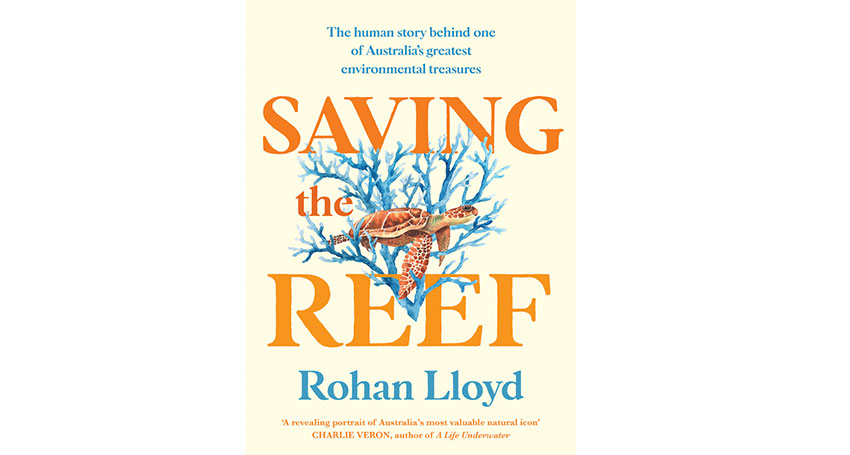
An extract from Rohan Lloyd’s Saving the Reef
In today’s summer reading extract, Rohan Lloyd tells us all about the history of how the conservation movement started, the impact and loss of Indigenous relationships with the reef, and how the continued decline of the reef will affect future generations.
When David Attenborough’s Great Barrier Reef aired on Australian television in April 2016, it inspired a rethink of the Reef’s human story. The first episode focused on the formation of the Reef, animated through digital mapping of the ocean’s flooding of a previously dry landscape some 10,000 to 14,000 years ago. On a screen – powerfully pixelated and programmed – this ablative glacial event was rendered much more visible than through the line graphs and numbers that usually explain the processes of the last glacial maximum. Even so, the drowning of an entire coastline seemed safely placed in the past; it appeared a non-human event, detached from the contemporary realities of rising sea levels.
Attenborough then turned to the Gimuy-walubarra Yidi, traditional owners of Cairns and its surrounds, and their story of Gunyah and the sacred fish. This lore-story, like multiple stories held across the Australian continent by coastal First Nations peoples, tells through dance of the rising of the ocean, and in this case the creation of the Reef. This ‘folk memory’, in Attenborough’s words, ‘coincides with what scientists are now discovering’.
For Attenborough, and many who watched it, this was remarkable. Survival of memory across generations, millennia; the accuracy of cosmology against the hard evidence of science. The dance itself, however, helped audiences to reckon with the drama of the Reef’s creation. It provided a more meaningful and human narrative. While the animated mapping was comfortably seated in the deep past, the Gimuy-walubarra Yidi provided insight into the phenomenal drama of the oceanic rush through Country, and its erasing of some memories and its birthing of potent new ones. We were forced to envision the Barrier Reef’s creation as a lived human experience, as we now contemplate our role in its decline.
At the core of this vignette was a separation – uncomfortable at times, if not a patronising differentiation – of epistemologies. On the one side stood a bank of science, built up over centuries of interrogating Earth’s geological chronicles. On the other, a cultural memory, passed down through rigorous and defined methods of storytelling through millennia. Their alignment is astonishing, but so too is the latter’s existence. The endurance of these memories – and stories associated with the formation of the Reef’s islands and waters common to many coastal First Nations peoples – is profound. Their continuity after settlement even more so.
Much like the rest of Australia’s history, the Reef’s is one of invasion, displacement and dislocation, but also of survival. First Nations Australians were dispossessed of Country; exploited for their labour, both scientific and economic; and forcibly relocated to reserves such as Bwgcolman (Palm Island). The Reef’s islands and catchment were also sites of frontier violence and massacre. Within this story of exclusion, however, there is an important thread in which settler Australia relied on the knowledge and hospitality of Indigenous Australians. In important ways, settler attitudes towards the Reef – how it was used, thought about, studied and discussed – were shaped by the First Nations peoples.
You might like

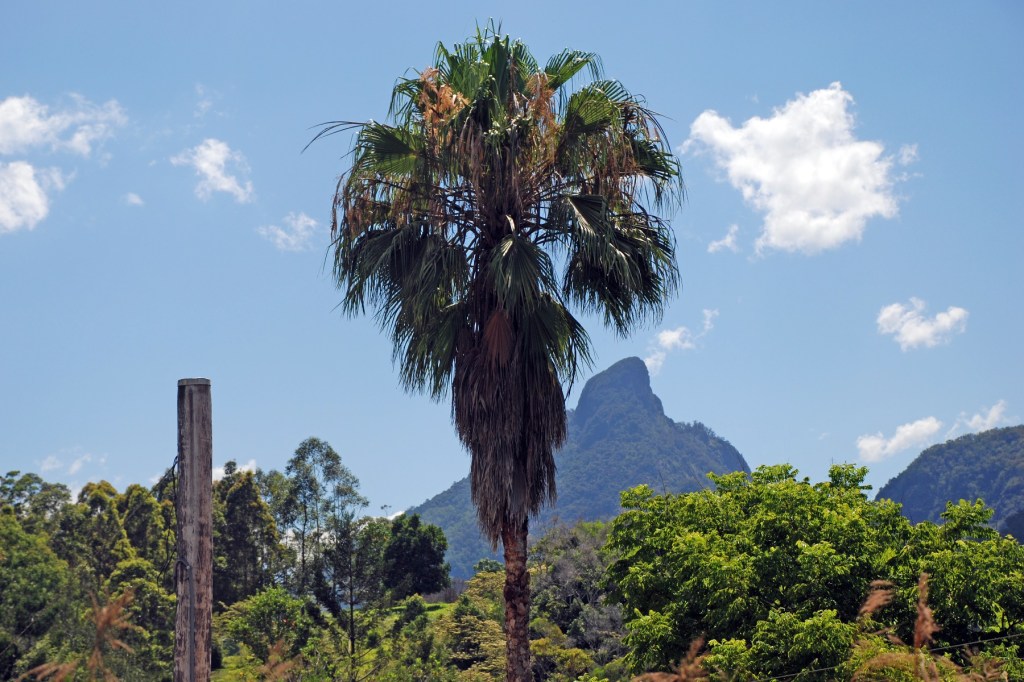
Before white settlement spread along the Reef coast, there was a sense that the Reef was a wild place. It is difficult to generalise about the feelings and emotions of the earliest white Reef explorers, but there was, often, an eeriness in the way they described passing through the Reef. Alone, far from security, they would scan the coastal hills and islands, looking for safe anchorage. They had a sense they were being watched; their presence communicated to others. They could see smoke rising, and Indigenous peoples on beaches. They knew they were in foreign country.
Nonetheless, their charting allowed for fishers and other maritime merchant and transport ships to thread through the Reef, extending Australia’s colonial frontier and the war that followed. The exploitation of Indigenous labour, as well as the massacres of both Indigenous peoples, white fishers and wreck survivors on various Reef islands, prompted the fishery legislation of the late nineteenth century. Reports of shipwreck survivors being slaughtered by coastal First Nations peoples fuelled northern coastal expansion. Settlement along the Reef likely would have come, but violence enacted upon settlers, and the perceived damage to the settler economy, gave the process further impetus.
There were exceptions to this pattern of violence, such as the fascinating stories of Barbara Thompson (wrecked in the Torres Strait in 1844), James Morrill (wrecked off Townsville in 1846) and Narcisse Pelletier (abandoned at fourteen years of age near Lockhart River in 1858). All three found refuge with First Nations peoples, before rejoining settler society. Later, when settlement in northern coastal areas began to develop, some settlers moved to offshore coastal islands. These stories recast and reorientate the narrative, both in today’s time and in the past, of Indigenous Australians being reliant on the sympathy and hospitality of benevolent settlers; rather, white Australians became the dependants. These stories also provide examples of the complex ways in which Indigenous Australians helped settler Australians to view the Reef as a place where human life could thrive.
Even those settlers who helped foster an early fascination in the Reef relied on the labour of Indigenous Australians to survive. When Edmund Banfield and his wife Bertha arrived at Coonanglebah (Dunk Island) in 1897, they were greeted by ‘one of the few survivors of the native population’: a man they referred to as Tom, who lived with his wife, Nelly, his mother-in-law and his son, Jimmy. Life on Coonanglebah (Dunk Island) was dependent on Tom, his family and other Indigenous Australian workers. They cleared land, planted vegetables, tended to Banfield’s bees, transported harvests to and from the mainland, cooked and cleaned, conveyed Banfield around the island, and provided Edmund and Bertha with a seemingly constant supply of food from the sea.
Stay informed, daily
Banfield wrote affectionately of Tom and he figures in a series of stories: he is bitten by a spider, damages his finger poking at a shovel-nosed ray, helps Banfield rear a horse called Christmas, assists him with hauling a shark ashore, and educates him about the island’s wildlife. More tragically, Banfield covers the events that led to the death of Jimmy, and the subsequent mourning. Eventually, Tom himself died. Banfield wrote that his friend was an ‘Australian by the purest lineage of birth “a citizen impossible to replace”’. Tom’s services to Banfield were more than just practical: he offered friendship and philosophical inspiration.
Banfield’s prose, when it comes to discussions of Indigenous Australia, is of its time: condescending and reflective of contemporary racial theories and the idea of Indigenous Australians as a ‘dying’ race. Banfield, so he claimed, was from ‘enlightened England’, while Indigenous Australia clung to ‘cute’ and ‘fantastic’ theories about human relationships with each other and the environment.
However assured Banfield felt of his ideas about nature, and the role of humans within it, upon arrival to his new home, his attitudes sharpened after interactions with Tom and his family. He saw within First Nations people a level of care and attention to the environment, which he hoped white Australia could learn from. He saw that the First Nations peoples accepted environmental limits of production ‘without thought of inciting Nature to produce better or more abundantly’.
Through Tom, Banfield learnt the island’s intricacies – its flora and fauna, caves and crevasses, culture and chronicles. He learnt about the ancient custodial relationships between place and memory, and the law associated with them. Banfield hoped that ‘the public conscience of Australia might have been aroused’ to their ways of understanding nature. Although he exoticised the ethic of Indigenous Australians, he also came to understand, appreciate and respect it, and it is difficult to imagine Banfield defining his environmental perspective, let alone surviving life on Coonanglebah (Dunk Island), without the assistance of local Indigenous knowledge.
Banfield’s writing inspired his readers to visit the Reef, where they themselves became dependent upon the First Nations peoples. Anthropologist Celmara Pocock has laid bare the instrumental role Indigenous Australians played in establishing early Reef tourism. Government reserves like Bwgcolman (Palm Island) and missions such as Yarrabah (south of Cairns), Pocock claims, were curiosities, museums – ‘cultural remnants of another time’. First Nations Australians became enmeshed within the ‘natural’ appeal of the Reef, helping travellers to locate an idyllic ‘Pacific’ on Australia’s coast. Cultural dances continued to form part of the Reef’s tourism landscape, but eventually tourist expectations ensured that the dances conformed to ‘Pacific Islander’ tropes of costume, music and choreography. Indigenous Australians continued to function as part of the tourism experience as cheap labour, but their cultural links to the Reef were replaced by a vision of the Pacific that followed settler interpretations.
The labour of Indigenous Australians and their knowledge were also used by early scientific expeditions. Like the Banfields, early Reef scientists were reliant upon the affordability of Indigenous Australians’ labour for carrying out major research operations. Throughout the entirety of the 1928–29 expedition to the Low Isles, Indigenous Australian workers from Yarrabah Mission were employed as chefs, boat hands, launderers, labourers, maintenance staff and cleaners. The expedition’s research output continued to be published into the 1960s, and, until the establishment of the Australian Institute of Marine Science (AIMS) and the GBRMPA in the 1970s, it provided the majority of Australian coral reef science’s contribution to global reef studies. It seems, especially by our contemporary standards of authorship or contribution, that those Indigenous Australian workers – Andy and Grace Dabah, Claude and Minnie Connolly, Harry Mossman, and Paul Sexton – should receive greater acknowledgement of their role in this expedition. At the very least, the importance of Indigenous peoples’ labour and input into early Reef science should be more firmly understood.
Increasingly, cultural heritage, particularly that of the Reef’s traditional owners, informs the management of the Reef. Contemporary Reef scientists and managers are required to engage with traditional owners in developing their research initiatives and implementing their regimes. Contemporary tourism is also informed by Indigenous heritage. While there are many hotels and resorts that are relics of previous attempts to ‘Pacificise’ the Reef’s islands, contemporary tourism initiatives are generally more conscious of the importance of Indigenous links. In many ways, these understandings are motivated by the failures of the past. It was not until the 1990s that the values of First Nations people were considered in the management of the Reef; prior to that they were ignored as irrelevant.
However, the deep past also informs this work. Attenborough’s linking of ancient oral traditions to scientifically derived chronologies of change helps build a sense of cultural continuity that informs the rights of First Nations peoples to greater control and management over Country. This is important but difficult work. Settler Australia’s understanding and perception of the Reef came at the expense of longer cultural links. Recognising how contemporary Reef values have been informed, and those values that have been lost, is vital to how we understand the Reef today.
What we know about the Reef, how we think about it and how we come to that knowledge will be decisive in how we comprehend and navigate future issues.
Want to see more stories from InDailyQLD in your Google search results?
- Click here to set InDailyQLD as a preferred source.
- Tick the box next to "InDailyQLD". That's it.