Clive takes the gong from a big field after a year that provided so much
From Clive Palmer to EML and Star, the year provided some major achievements for the business sector, but none matched Clive.
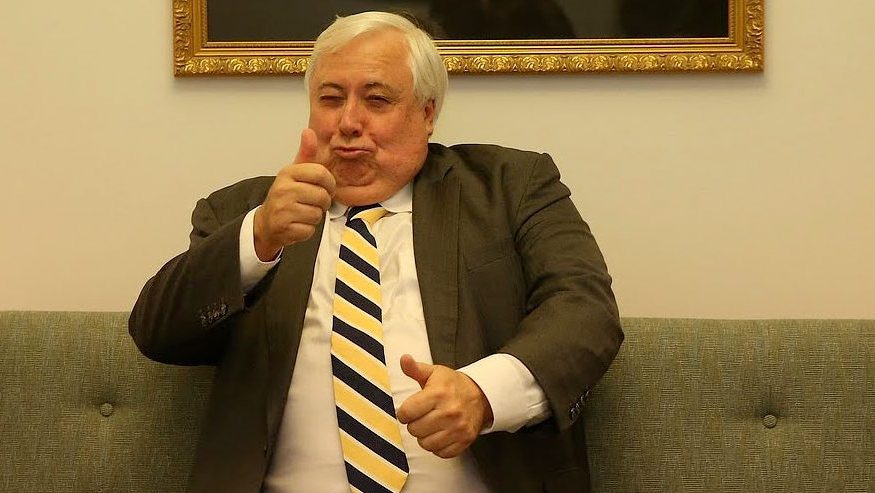
Business person of the year: Clive Palmer. Judges were impressed by how watchable he had been this year. Never stopped giving, the judges said, pointing to his Land Court defeat and his power station being called in by the State Government after he tried to get it through Barcaldine council as a granny flat. On top of this was his $100 million gift to the media through election advertising spending which got one seat in Parliament, but kept the Murdoch family in beer money for the year.
Judges’ eyebrows were raised by the apparent deal to sell the Yabulu refinery for a claimed $2 billion.
Survivor of the year: Skroo Turner. Having survived swine flu and then Covid, judges believe that Skroo and Flight Centre would set up a shop the day after Armegeddon. They believed there was at least one more global collapse of the travel sector left in Skroo.
Dreamer of the year: Energy Minister Mick de Brenni. Judges were initially split between various hydrogen schemes and the State Government’s decision to base an entire energy plan on two pumped hydro projects that may not happen and were likely to have massive cost blowouts was a winning combination. They were also impressed by a plan with such a long tail that none of the current MPs were likely to be held accountable.
Biggest stuff up: A tie between EML and Star Entertainment. The judges were impressed by the self-immolation demonstrated by both companies.
You might like
Biggest disappointment: Ellume. Its greatest achievement in cracking the US market ended up sending it into administration.
Best oh dear moment: Swyftx getting caught up in the domino-like effect of the FTX crypto debacle which led to big job losses at the Brisbane company.
Biggest “I told you so’’ moment: Crypto. Judges didn’t even have to vote.
Biggest contribution to fighting climate change: Clive Palmer. Judges were impressed that a billionaire could be dragged through the Land Court by a bunch of kids and lose, thus putting a question mark over every new coal project in the state.
Stay informed, daily
Biggest success: Terracom and its 300 per cent share price gain which proved that even thermal coal could have its day.
Best brand destruction: Optus won on a points decision from the Federal Liberal Party (What? It’s a business) closely followed by Qantas. Optus eventually won because of its success in destroying its brand through the communication of a major hacking event through the media, thus sending thousands of customers into meltdown.
Billionaire worth watching: Gina Rinehart. From Queensland gas company Senex to the Kidman cattle properties and new economy minerals she is in everything except netball and Great Keppel. Apparently, it’s not Puerto Banus Mk2, after all.
Biggest fall: Gerard Bradley – the one time Under Treasurer now facing ASIC court action, along with 10 others, over his role as a director of Star.
Biggest call: Heritage Mining and its bid to get at the 7 tonnes of gold it thinks is trapped in the tailings at Mt Morgan. Judges were impressed by the company’s confidence after multiple failures by others and its ability to get money from the State Government.
Biggest miss: Judges were impressed by the coal industry’s complete misreading of the political climate and the lack of any knowledge that the Government would come after the billions they were hoarding as prices for coal went through the roof and kept going.
Most watchable: A toss-up between the battle of the billionaires for AACo and Tritium’s emergence as the producer of “bowsers” for electric vehicles. Judges said all that was missing was a takeover bid for Tritium.
Project to watch: Queens Wharf. Will it open next year? What about Destination Brisbane’s partners? Will they still be there?
Industry to watch: Tourism. Should have been taken out the back of the shed and quietly sedated a year ago but it’s still there. Maybe 2023 will be the one.
Want to see more stories from InDaily Qld in your Google search results?
- Click here to set InDaily Qld as a preferred source.
- Tick the box next to "InDaily Qld". That's it.