Thousands of dead livestock part of enormous Gulf flood cleanup
An estimated 50,000 head of cattle have died in far northwest Queensland as the cleanup from major flooding begins.
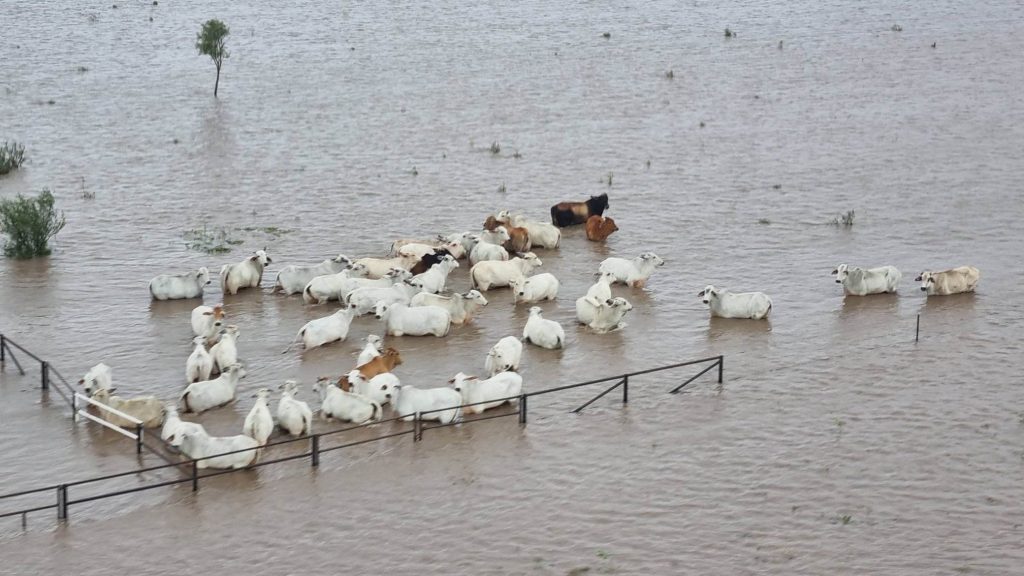
Communities were left unable to return to their homes in two flooded areas of the Gulf of Carpentaria after late monsoon rains created a vast inland sea earlier this month.
Federal and state ministers have since visited the Gulf and conducted damage assessments with the figure estimated in the hundreds of millions of dollars.
Katter’s Australian Party MPs Bob and Robbie Katter joined Queensland Agriculture Minister Mark Furner, and federal Minister for Agriculture and Emergency Management Senator Murray Watt.
Federal Income support mechanisms were rolled out under the Australian Government Disaster Recovery Payment, with people eligible for up to 13 weeks of income support.
But the damage goes much further than structural and livelihoods with estimates of more than 50,000 cattle lost.

“For most graziers, it will take up to seven years at least, for them to return to where they were before the floods,” Kennedy MP Bob Katter said.
“We get floods everywhere in the cattle industry, we get droughts, we get a lot of things.
“But if the government can help us through these tough times, we can continue to deliver 20,000 – 30,000 jobs (throughout the industry) in Australia.”
Burketown Mayor Ernie Camp said authorities continued to monitor properties to identify when it was safe to return.
The focus for local government now would be disaster resilience funding and community safety moving forward, he said.
“You’ll never flood-proof the Gulf, but you can make it more resilient. Some of these roads need to be 1.5 metres higher,” Camp said.
Stay informed, daily
“In town the water has certainly fallen away, water would have been up to your chest at most of the causeways around town. But it only takes one storm and it starts all over again.
“For now, we appreciate the government’s announcements. We just ask for on-the-ground assistance to process the payments and funding.”
Rainfall is yet to subside in the region with five to 50 millimetre weekly totals recorded across the Gulf and northern tropics, the Bureau of Meteorology said.
Totals of more than 50mm were registered in parts of Cape York Peninsula and the tropics, with the highest weekly total recorded at Kowanyama Airport in the western Cape York Peninsula (120.6mm).
Want to see more stories from InDaily Qld in your Google search results?
- Click here to set InDaily Qld as a preferred source.
- Tick the box next to "InDaily Qld". That's it.