Pocket rocket: Why fate of the Great Barrier Reef could rest with this tiny crab
A small crab native to Queensland has been identified as having a huge appetite for crown-of-thorns starfish, a discovery that holds hope for protecting large coral areas of the Great Barrier Reef.
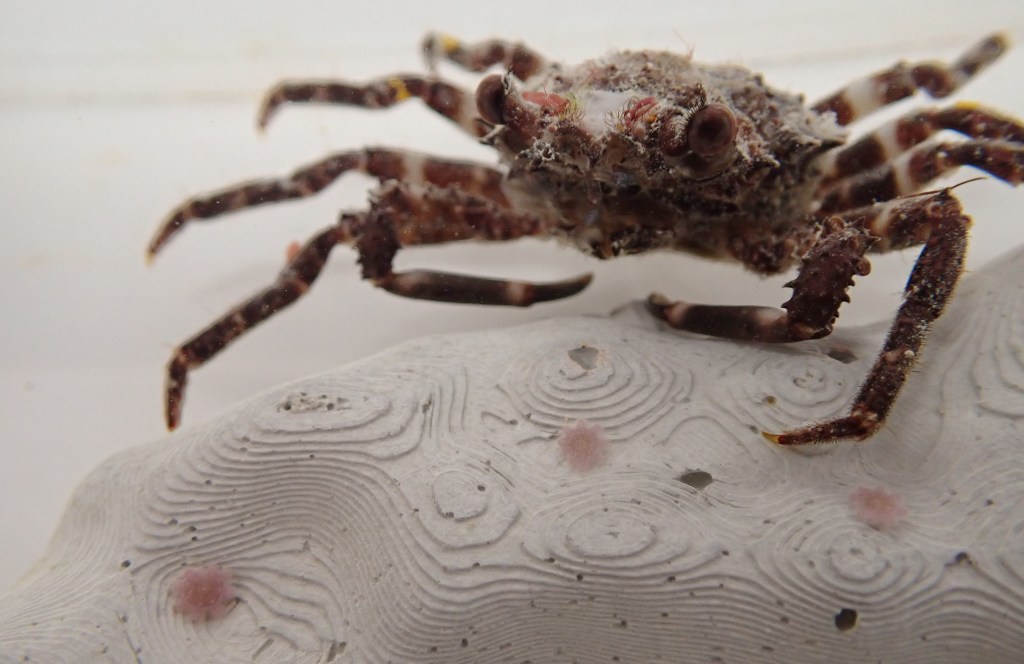
University of Queensland scientists say the red decorator crab – or Schizophrys aspera – could be our best weapon yet in the fight to stop the coral-eating pest.
It turns out that red decorator crabs have a voracious appetite for the juvenile starfish, when their lack of fully formed toxic defensive barbs leave them vulnerable to predators.
PhD candidate Amelia Desbiens from UQ’s School of Biological Sciences tested more than 100 species of crabs, shrimps, worms, snails, and small fish and found one species was a standout at eating juvenile crown-of-thorns starfish (COTS).
“The red decorator crab-was by far the most consistent predator consuming COTS in 89 per cent of the feeding trials,” Desbiens said.
“We were surprised by its voracity – each red decorator crab devoured more than five COTS per day while most other species barely ate a single one.
You might like


“It’s one of the best predators of COTS we’ve seen and could be a natural buffer against future outbreaks on the reef.”
Coral rubble or dead coral is the preferred home of juvenile crown-of-thorns starfish, which due to warming ocean waters has proliferated in big numbers, feasting on the area’s vibrant coral and leaving large tracts of the reef lifeless and bleached of colour.
But many areas of the reek still remain unaffected, leading researchers to look for potential natural predators that may have been literally eating into the pest’s growing numbers and flying beneath the radar.
Desbiens said it had been suspected that the presence of specific predators could explain why some reefs escape COTS outbreaks.
Stay informed, daily
“One of the problems is that predators and their rates of predation on COTS aren’t well understood,” she said.
“Few animals successfully eat adult COTS but they are vulnerable when young because they are small and lack toxic spines to defend themselves.
“This makes it the perfect time for predators to strike and it is an opportunity for researchers and managers to understand a natural process that could reduce COTS numbers.
“COTS are mass-reproducers and can develop into large populations so it’s vital we find a way to deal with outbreaks quickly.”
Senior author Dr Kenny Wolfe said research into the role the red decorator crab played in helping to protect coral reefs would continue.
“We’d like to conduct broader surveys on the Great Barrier Reef across areas with and without outbreaks to evaluate whether the presence of this crab can help predict the chance of COTS gaining a foothold,” Wolfe said.
“This preliminary study sets us on the right path to resolving the role naturally existing predators could play in controlling COTS outbreaks.”
The research is published in Coral Reefs and was supported by the Great Barrier Reef Foundation’s COTS Control and Innovation Program.
Want to see more stories from InDaily Qld in your Google search results?
- Click here to set InDaily Qld as a preferred source.
- Tick the box next to "InDaily Qld". That's it.



