Palaszczuk eyes path to treaty after $300m walk through the history books
Queensland’s colonial past will be examined by a Truth-telling inquiry as historic laws to help shape future treaty negotiations pass the state’s parliament.
The inquiry is part of a path to a treaty between the state and indigenous people that has been budgeted at $300 million over three years but may take longer.
The Liberal National opposition and the Greens gave broad support for the Path to Treaty bill during debate at a rare regional parliamentary sitting in the far north city of Cairns this week.
However, the bill’s passage was not entirely smooth, as non-government MPs highlighted a lack of consultation on the new laws and a failure to communicate how a treaty would interact with the federal voice to parliament.
The Katter Australia Party (KAP) also aired serious concern that a focus on treaty would mean less attention paid to issues immediately facing Aboriginal and Torres Strait Islander people.
The five-member Truth-telling and Healing Inquiry and a First Nations Treaty Institute to help shape future negotiation processes are the centrepieces of the legislation that passed to applause late on Wednesday.
You might like


A lack of knowledge about the new laws “came through loud and clear” at public forums held during the consultation phase, Liberal National MP Stephen Bennett said.
“The federal voice to parliament was very topical and on a lot of people’s minds,” he told parliament.
“The confusion about how Queensland’s treaty will interact with the federal Voice to Parliament, the lack of clear communication around these elements and the lack of consultation has resulted in many communities not knowing about the treaty unless explicitly involved in the process.”
Developing clear information that outlines the Path to Treaty process and it’s relationship to the voice was among a parliamentary committee’s recommendations.
Stay informed, daily
The department will work with the Interim Truth and Treaty body and other partners to develop material that addresses the recommendation, Minister for Aboriginal and Torres Strait Islander Partnerships Craig Crawford said.
“The parliamentary consultation was purely to test if the mechanisms of this bill achieve the next steps in the process, it was certainly not any form of treaty negotiation,” he said on Wednesday.
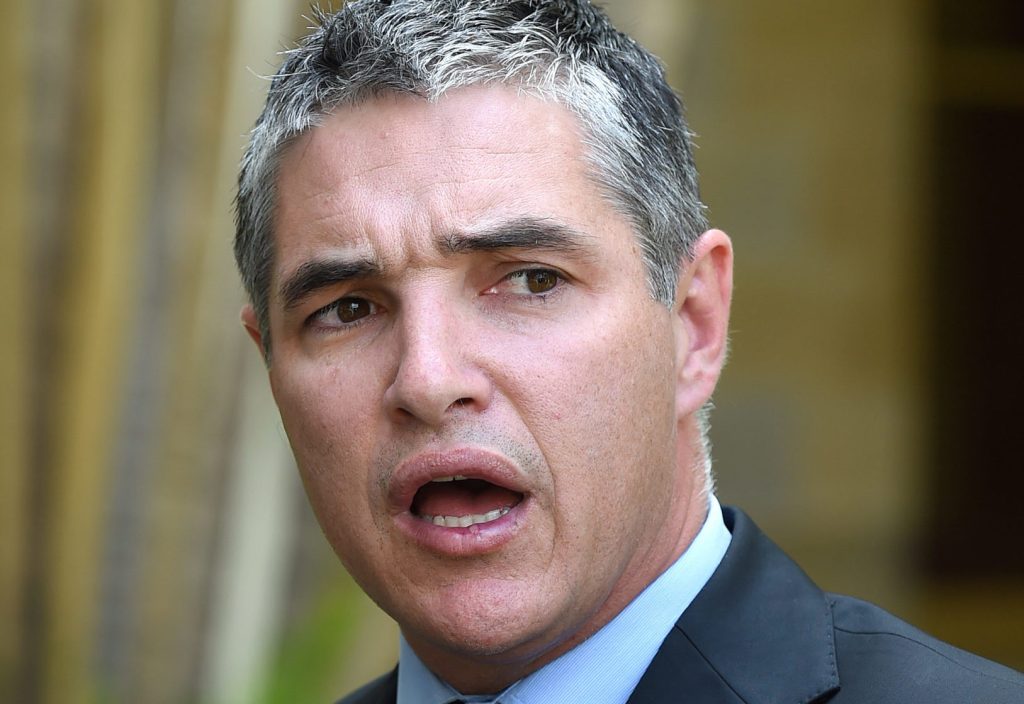
KAP leader Robbie Katter had one of the harshest critiques as he questioned the state’s resolve to improve the lives of Aboriginal and Torres Strait Islander people while focusing on the treaty process.
“We’re in a situation where people are going to expect life is going to improve, our conditions are going to improve, things are going to get easier because the government’s now listening,” he told parliament on Wednesday.
“I know I’m still going to be back here in a couple of years time, talking about exactly the same things, trying to get outcomes for these people who are crying out for help.”
Greens MP Amy MacMahon commented on the apparent hypocrisy of the government’s move to earlier pass youth crime laws likely to disproportionately affect Aboriginal and Torres Strait Islander children.
“Almost all of the First Nations people who made submissions on the bill commented on the hypocrisy of the government in introducing this bill in the same week that it introduced harsh bail laws for children which will only see more First Nations children locked up,” she told parliament.
Ongoing over-representation in the prison population as well as shorter life expectancies and a higher likelihood to experience poverty is “not good enough”, Ms MacMahon said.
Labor MP and Aboriginal Gubbi Gubbi man Lance McCallum channelled Yothu Yindi while outlining his hope for a more equitable future.
“Now two rivers run their course, separated for so long, I’m dreaming of a brighter day, when the waters will be one,” he quoted from the 1991 song Treaty.
“Treaty can turn that dream into reality. It can turn hope into belief.”
Want to see more stories from InDaily Qld in your Google search results?
- Click here to set InDaily Qld as a preferred source.
- Tick the box next to "InDaily Qld". That's it.



