Health, housing, jobs and education: Four key policy areas for the Voice revealed
The Indigenous voice to parliament will be asked to give advice on four main policy areas if a referendum to be held later this year is successful, the federal government has revealed.
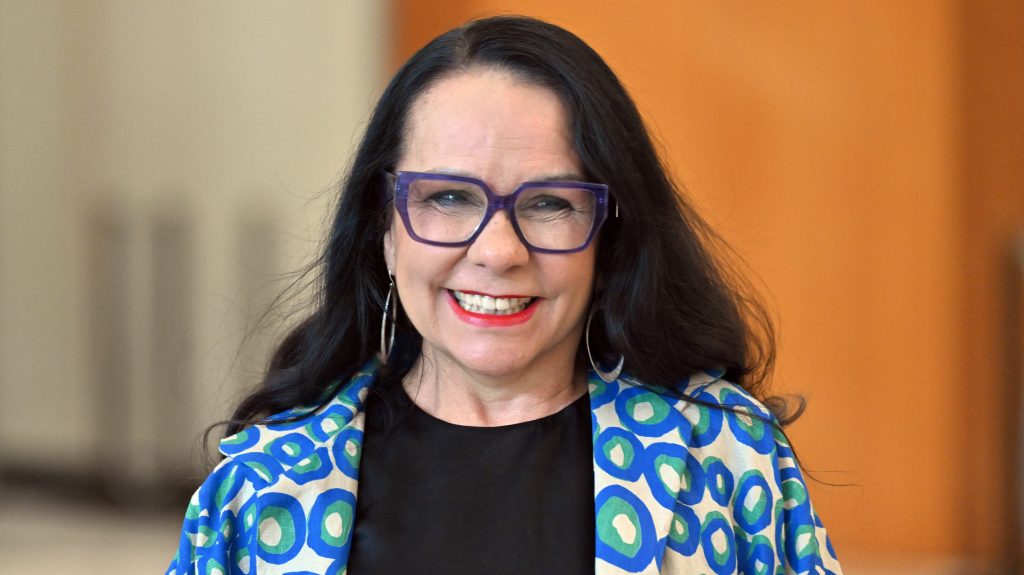
The priorities are health, education, jobs and housing, Minister for Indigenous Australians Linda Burney will say when she gives a speech at National Press Club in Canberra on Wednesday.
“From day one – the voice will have a full in-tray,” she will say, adding the government will make requests of the voice.
“I will ask the voice to consider four main priority areas: health, education, jobs and housing.
“The voice will be tasked with taking the long-view.”
Ms Burney will say the voice will be focused on making the future better for the next generation and unlike government won’t be distracted by election cycles.
“I will be asking the voice for their input to solve these most pressing issues,” she will say.
“It’s not going to be a passive advisory body.
“I want it to be active and engaged.”
You might like


Ms Burney, a Wiradjuri woman, said Indigenous children are 55 times more likely to die from rheumatic heart disease than non-Indigenous people.
“These deaths are completely preventable with access to medical care, proper housing and running water,” she said.
And on referendum day later this year Ms Burney wants voters to think about people like her friend Michael Riley.
Mr Riley grew up in Dubbo in the 1960s and lived on the Talbragar Aboriginal Reserve, one of the many missions or reserves around the country where Aboriginal people were forced to reside in often overcrowded conditions, with little or no access to healthcare or basic services.
He contracted rheumatic fever, a serious but preventable illness that if left untreated can lead to rheumatic heart disease and death.
Mr Riley became a renowned photographer but died aged 44.
“I visited him every day in hospital,” Ms Burney said.
“I watched him go blind in one eye.
“His Aboriginality condemned him to an early death – a preventable death.”
While several recent polls have found support for a ‘yes’ vote is slipping, Ms Burney said Australia needs new perspectives to solve old challenges.
Stay informed, daily
“For too long governments have made polices for Indigenous Australians, not with Indigenous Australians,” she said.
“We need the voice to change that.
“Because the voice will be a mechanism for government and parliament to listen.
“It will be like a resource of local knowledge and solutions that can help us make better policies.”
To illustrate how the voice would work and how better policy can be developed, Ms Burney used the example of the Indigenous-led birthing on country movement.
“Aboriginal community-controlled health organisations have pioneered a more effective way of caring for mums and babies, one that embraces tradition and language so mothers feel safe accessing medical services early and often,” she said.
“And by respecting and elevating the role of the extended family Birthing on Country sets mums and babies up for a healthy beginning.
“It works, achieving a 50 per cent reduction in pre-term births.”
Ms Burney said it’s time for the constitution to recognise Indigenous Australians who have coexisted on this continent for more than 65,000 years.
“When will we finally resolve this unfinished business?” she said.
“We are so close.
“Our destination is on the horizon.”
Ms Burney appealed to Australians to carefully consider how they will vote in the referendum due to be held in the final quarter of this year.
“And I hope more than anything that the answer is ‘yes’,” she said.
The referendum’s success depends on majority support across the country and in four of six Australian states.
Want to see more stories from InDaily Qld in your Google search results?
- Click here to set InDaily Qld as a preferred source.
- Tick the box next to "InDaily Qld". That's it.



