Risks or dreams: These will be your options when nation gets to see Voice choice today
Indigenous voice to parliament ‘yes’ campaigners have enlisted the star power of Australian sporting legends to make their case to voters.
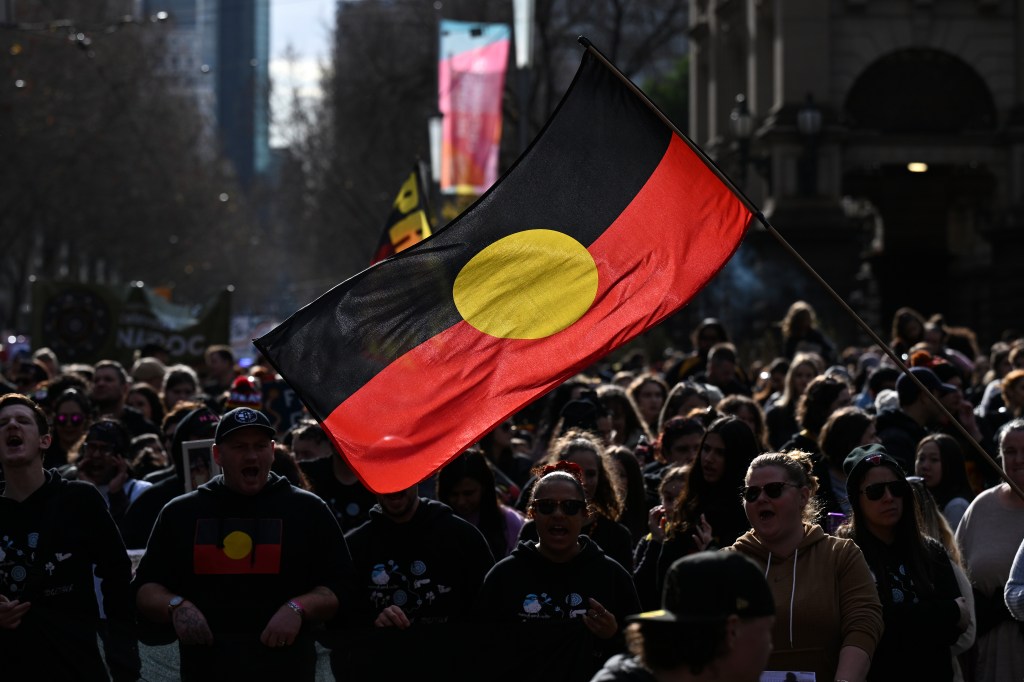
Both the ‘yes’ and ‘no’ camps have revealed the arguments they will make in an effort to win voters to their respective sides in the coming referendum.
The Australian Electoral Commission published online on Tuesday the formal ‘yes’ and ‘no’ cases for the proposed constitutional change.
It comes as Prime Minister Anthony Albanese said it was unfortunate there had been a lack of bipartisan support on the voice in the lead-up to the referendum.
Asking people to vote for a “better future for Aboriginal and Torres Strait Islander people and all Australians”, the ‘yes’ case has the endorsement of Indigenous stars including former tennis world No.1 Evonne Goolagong Cawley, the NRL’s Johnathan Thurston and AFL great Eddie Betts.
Thurston said Indigenous young people “deserve the chance to be their best”.
“I work closely with schoolkids in the Yarrabah community in Queensland,” he wrote.
“I’ve seen the obstacles they face. Nobody understands that better than their local community.
“Giving them a say will mean more of our kids reach their potential. That’s what the voice is about.”
You might like


Ms Goolagong said voting ‘yes’ was a chance to “help the next generation chase their dreams”.
“Let’s grab this moment with both hands,” she wrote.
The ‘yes’ case emphasises the practical outcomes it claims the voice will help achieve, in addition to the primacy of parliament.
“The Voice will give advice on key issues facing Aboriginal and Torres Strait Islander people, from better infant health to improving services in remote areas,” it said.
“Parliament and government will still be responsible for all laws, programs and funding.”
Mr Albanese told Sydney radio station 2SM on Tuesday the idea for the voice did not come from one political party or the other, and it would result in better outcomes for Indigenous people.
“This should be a bipartisan issue. I think it’s unfortunate that that’s not the case, but we’ll continue to put the case for unity, for hope and making a positive difference,” he said.
“If we want to do something better, we need to listen, and that is what the voice is about, and it’s about recognising Indigenous Australians in our constitution, simple as that.”
The ‘no’ case claims the voice proposal goes beyond recognition, and poses the “biggest change to our constitution in our history”.
“It is legally risky, with unknown consequences. It would be divisive and permanent,” it said.
Stay informed, daily
“If you don’t know, vote no.”
Quoting a number of former judges, the main arguments laid out describe the voice as a risk, lacking detail, divisive, and being impractical for Indigenous Australians.
“This voice has not been road tested” and there is no comparable constitutional body anywhere in the world, it said.
“A centralised voice risks overlooking the needs of regional and remote communities.”
Voice opponents claim the proposed advisory body presents a “real risk” to Australia’s system of government.
“The High Court would ultimately determine its powers, not the parliament,” it said.
“It risks legal challenges, delays and dysfunctional government.”
The vote will be held between October and December.
Liberal MP Julian Leeser, who quit the party’s front bench due to his support for the voice, said there were people in the ‘no’ camp who were distracting from key arguments.
“Many of the arguments that we hear in the ‘no’ case today are echoes of arguments that we’ve heard other times in our history,” he told ABC Radio.
“Some of the arguments echo arguments against Federation over 120 years ago.”
NT senator Malarndirri McCarthy said she was confident the pamphlets would persuade more people to vote ‘yes’.
“They will be able to see for themselves just how simple this gesture is in terms of First Nations people calling on Australians to support an advisory group or committee in the constitution,” she told Nine’s Today program.
Want to see more stories from InDaily Qld in your Google search results?
- Click here to set InDaily Qld as a preferred source.
- Tick the box next to "InDaily Qld". That's it.



