Anorexia, alcoholism and the Salvation Army
For Bridget Shirley, a sense of community and connection was what it took to pull her from a decade-long spiral of mental health issues and substance abuse.
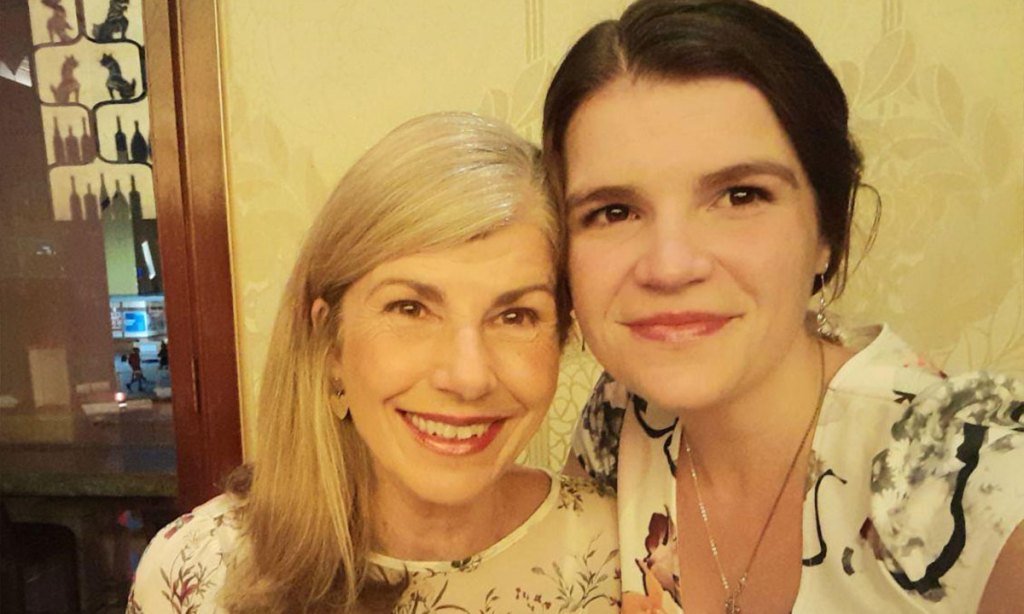
Anorexia nervosa is an eating disorder characterised by unrelenting self-starvation and life-threatening weight loss.
Despite our dominant cultural understanding of anorexia as a reaction to body image issues caused by unrealistic media standards, it has been recorded in societies and time periods where thinness is not the cultural ideal. Experts suggest that the causes of anorexia are multifactorial and complex, including neurobiological, genetic, and environmental factors in addition to cultural messaging.
Anorexia is a misfortune that seldom comes alone, associated with a range of comorbid conditions including substance abuse. Though not all individuals suffering from an eating disorder use substances, research suggests that up to 50% of patients with an eating disorder will abuse alcohol or illicit substances, compared to just 9% of the general population.
Moreover, according to the National Center on Addiction and Substance Abuse at Columbia University, individuals with eating disorders are up to five times likelier to abuse alcohol or illicit drugs, and those who abuse alcohol or illicit drugs are up to 11 times likelier to have eating disorders.
One such example is the case of Bridget Shirley.
Bridget grew up in Brisbane, the youngest child of two. “My early childhood was amazing,” she said. “All I remember was lots of craft, lots of art, lots of music, singing, that sort of stuff.”
She was an engaged and gifted student, placed in an acceleration class at St. Peters Lutheran College. This was a pilot program compressing the learnings of years 6, 7 and 8 into a concentrated two year curriculum. During this time she suffered from both burnout and bullying.
“[I] ended up in grade 9 realising that I was working really hard to fit in with my peers when I could go back to my normal grade and probably work hard still, but not as hard, and maybe get less bullied, which would be great,” she recalled. “So I ended up graduating at the same time as all my other age level peers, which was good.”
Her education was further disrupted when she developed severe anorexia nervosa at age 14 and was hospitalised in the Child Youth Mental Health Ward at the Queensland Children’s Hospital.
Anorexia commonly begins in adolescence, when individuals are experiencing great change, vulnerability and stress.
“Some women will be very, very thin and very underweight and look in the mirror and see themselves as morbidly obese or see fat in places of their body that it doesn’t exist. I was very blessed not to have that issue. I could see how thin I was and I could see my bones and I didn’t like the way that I looked, but for me, it was more of a control issue,” said Bridget.
“I felt like everything around me was outside of my control. My parents were getting a divorce. I think I’ve always been a sensitive kid and my self-worth was really low and I really devalued myself and I felt like being thin and pretty would be the way to do it, but after I’d lost what might be considered a healthy amount of weight, I got addicted to the control side of things and being able to control what I put in or out of my mouth.”
“Anorexia can be very deadly and very long-term and hard to recover from,” she mused. “It’s very much a mental disease. I understand why the care for them is placed into mental health wards and psychiatric facilities, and I didn’t really see how I was going to get better. I had no desire to get better.
You might like

“That was a year in a ward with nasogastric tubes, being fed at night whilst also trying to eat a meal plan and gradually putting on weight. It’s one of those things that’s crazy to look back on because it is so all-encompassing.”
Bridget recalls a “lightbulb moment” in her treatment when she was visited by a youth group leader from the church her brother attended.
“This lady I’d never met just sat down across from me and said, ‘I just want to share something with you.’ I was 14 years old, bad attitude, malnourished, stuck in hospital, hated everything and everyone, and she said, ‘God loves you and He thinks you’re perfect,’ and I just fell apart, collapsed into tears.
I don’t know. It sat with me and then shortly after that, I don’t know how many days or weeks, it sort of blurs. I just woke up one morning and all of a sudden it made sense to me. I was like, I am the only reason I’m still here. I started eating all of my meals, taking overnight feeds and put on weight steadily. It’s kind of like that, you look back on it, you’re like, there is no way I recovered from that on my own. There’s just no feasible way.”
There were many stumbling blocks Bridget encountered returning to a ‘normal life’ after being released.
“I was hospitalised for pretty much the entire year. So grade 10, I didn’t really get any formal education, and then getting back at the end of grade 10 and not having any clue what was going on, going into grade 11,” she said. “In my family – it was not something that anybody had ever said to me – but we didn’t ask for help at all. So I just sort of pretended I didn’t care and didn’t really go to school much at all. Which is sad because up until grade 9, I worked pretty hard to have a pretty good academic record and then just sort of threw it all away in the years that mattered.”
She completed grade 12 but did not receive an OP. “I thought the best thing I could do with completing a private school education was to move to Byron Bay and busk for a living and work in backpackers’ hostels for accommodation for an indefinite amount of time,” she shared ruefully. “Great idea.”
Bridget had an extensive musical background, performing in private choirs since before the age of five, and playing the cello and the harp, which remains her instrument of choice.
“It was not necessarily the most productive thing to be doing with my young adult life, but I certainly loved it,” she said. “And I got a lot better at the harp. The general public will tell you what they think of your ability to make music when you’re doing it.
During this period Bridget partook in what she described as a “lot of partying”, smoking marijuana and exploring the Byron nightlife.
“And with that came a lot of danger and a lot of risks. I unfortunately had a few really horrible experiences that just made Byron not the place I was ever going to be anymore,” she shared, “And instead of really dealing with any of that was like, I guess I’ve got to leave.”
She returned to Brisbane and began an apprenticeship as a chef.
“I really enjoyed that,” she recalls. “But I didn’t really have a chance to deal with the aftermath of any of the stuff that had happened in Byron. And I started getting night terrors and started drinking to put myself to sleep so I could get up to go to my next shift. And that became really bad. I started shaking a lot during the day. And I ended up having to quit because I was going to cut a finger off or something.”
Suffering from what she later realised to be PTSD, Bridget ended up couch surfing and sleeping rough before eventually turning to her mother for help.
“I just rocked up one day and said, I need help. And it took me a long time to get that out,” she said. “Mum made a call to my child psychiatrist from when I’d had anorexia and he got me into New Farm Clinic where I remained for about a year on a very large amount of prescription medication.”
Afterwards Bridget moved north to live with her grandmother and received qualifications in aged care.
“I really enjoyed the notion of maybe getting into music therapy as well for mentally degenerative disorders in the elderly. And old people love the harp so that was a bit of fun.”
However the social isolation she felt compounded her heavy drinking and she ended up in hospital after contracting pancreatitis.
Stay informed, daily
“That all just continued to snowball and I couldn’t work anymore and my mental health had gone completely south again,” she said. “I ended up in a different psychiatric facility called Caloundra Private Clinic up the north coast. And I was sure that I was there for mental health reasons. And they knew that I had some mental health issues, but they were pretty sure that the next place I needed to go was a rehab.”
Bridget was admitted to Mirikai Addiction Treatment Centre in Burleigh Heads on her 21st birthday.
“At this point, I still had no comprehension that drinking was my issue. I thought that I had complete control over it,” she said, “So I went there for a couple of weeks and then left and came back out into the big bad world to start at the party all over again.”
“That went on for a few years. Here, there, everywhere, living in Brisbane, living with friends, living with not friends, living in relationships. I was in an indigenous women’s shelter. I was in Anglicare and Toowong and Bent Street. I lived in Margate for a bit. I forgot that until recently. I used to busk right under the statue of the Bee Gees.”
“Over the years, I’d worked part time in admin, a lot of hospo. Did some staging for funeral homes for White Lady Funerals. I did a lot of really strange little gigs here and there. But nothing really ever stuck. Just drank a lot, worked a bit, and just got more and more into addiction.”
In 2022, at the age of 27, Bridget hit what she called “the lowest point” of her health, being placed in a medically induced coma for 10 days as her organs shut down. She began a cycle of attending rehabs and relapsing until she was admitted to the Brisbane Recovery Services Centre Moonyah, run by the Salvation Army on February 24 2023.
“It was the start of a new chapter. It was exactly what I needed at exactly the time that I needed it,” she said. “I went in there with no comprehension of any way in which to get better. And I was desperate. I really wanted things to be different this time. But I didn’t know how on earth that was going to happen. I knew enough was enough. But anybody who’s been through the cycle of addiction, will tell you, they don’t want to drink or use for years before they manage to finally kick it. The number of times I wanted to stop. And I had been so sick and told myself, never again.”
“I wasn’t ready. There was something missing. And I think going into a place that was run by the Salvos, now in hindsight, was so important.”
Bridget had never attempted sobriety through spiritual or religious methods, not even the slighted sanitised version proselytised by Alcoholics Anonymous’ 12-step program.
“I’ve always wondered about it and been like, how can they possibly be that strong of faith? How can I not question it? How did they get so much peace out of it? But previously in life, I think I would have ridiculed it or tried to logic my way out of why that’s a stupid thing to believe in. But I just looked at them and I thought, wouldn’t it be amazing to have what they have, to have that faith? And everyone was really generous with talking to me about their faith and encouraging me to come to things like Bible study.”
“And for me, a big part of now having my spirituality and my faith and my relationship with God being such a large part of my life is largely due to the 12 Steps. It’s part of the program. You have to find a spiritual connection.You have to hand your will and your life over to the care of God as you understand Him.
“And you have– well, you don’t have to, but it’s very advised that every morning you wake up and you start by handing your day over to God and saying, use me in the ways that you see best. I just want to do what you have planned because I’ve tried doing it my own way and that clearly doesn’t work. I tried every single possible way of doing it my way and none of that worked. It just ended up almost killing me every single time.”
Bridget’s love of music helped anchor her in her new spiritual awakening.
“I feel like a bit of a fraud when I try to do a prayer that sounds great out loud,” she said. “Whenever I try to come up with my own words, it sounds clumsy even in my own head. But worship music, that’s when I really feel it. I get the visceral goosebumps or actual bodily sensations that I always thought only crazy people talked about.”
“I didn’t have a huge sudden spiritual realisation or awakening as some people do. Mine was just really gentle and gradual and very gently humbling, which to me used to be an oxymoron. But it’s now a very large part of my life. I don’t know how I’d be alive without it.”
In her recovery, Bridget has become involved in volunteering at Brisbane Streetlevel Mission, a homeless drop in centre run by The Salvation Army.
“For a lot of addicts and alcoholics who are venturing back out into the world, social interaction when not under the influence of drugs or alcohol is extremely strange. And sometimes it’s easier to do those things when you have a role to play or a task to do. You feel like you know where you stand in something that might be socially very overwhelming and it might cause a huge amount of anxiety,” she said.
“But being told, hey, here do this gives them a way in which to start to socialise again without any mind-altering substances in your system, which for me even was really weird. But if you gave me a job, I could do it. The opposite of addiction is connection. And without finding that connection, I don’t think long-term sobriety is possible for anybody.”
Bridget is currently studying community services, having finished a Cert III and hoping go onto a diploma in the future.
“I’ve pretty much been not living for the last 15 years, which is half of my life so far,” she said. “I’m not necessarily looking forward to turning 30 this year, but I’m looking forward to another year older. That’s a miracle and a blessing. And I don’t know, I think everything from here on out is something to look forward to.”
The Red Shield Appeal funds help The Salvation Army deliver vital community programs and social services. You can donate here now.
Want to see more stories from InDaily Qld in your Google search results?
- Click here to set InDaily Qld as a preferred source.
- Tick the box next to "InDaily Qld". That's it.