Some lusty blows landed, but still no solution to all those migrants at the top end of town
It’s a tactic any Opposition Leader knows only two well – taking aim at the big boys in a pre-election speech. But Peter Dutton’s budget reply added in a few new big targets, writes Michelle Grattan
When he was opposition leader, Bill Shorten faced Coalition criticism for attacking “the top end of town”, a phrase he used in his 2019 budget reply.
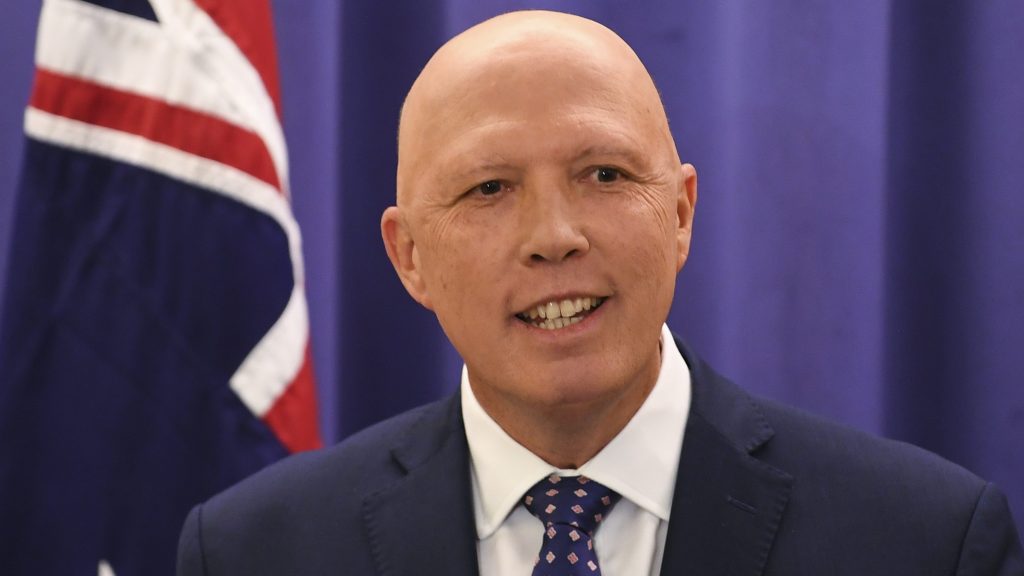
Now Peter Dutton is finding the line “billions of dollars for billionaires” has a useful ring about it, as he resorts to populism, with a distinct anti-big business slant in his denunciation of this week’s budget.
In his budget reply on Thursday night, Dutton tapped into the electorally emotive issues of housing and immigration, with the new measures he put forward. It was a logical path to take.
The housing crisis is deep, with many young and not-so-young Australians unable to get into the market because of the cost and shortage of properties. There is a separate but related crisis in the rental market.
There are too many people for too few homes. The government has a raft of policies to try to deal with this, but it won’t meet its own target of 1.2 million new homes over five years.
The crisis has turned the public’s eyes onto immigration, which soared post-pandemic.
Immigration is always a sensitive issue and Labor tries to accuse Dutton of “dog whistling”.
This doesn’t wash – because the government itself recognised the level of immigration has become a major problem. It is taking steps to get the numbers down to a more manageable intake, especially by capping overseas student enrolments, with a link to investment in student accommodation. Dutton would go further on immigration numbers.
You might like


It is not a question of whether we should have a debate about immigration. It is a matter of what changes should be made to its components, especially to ensure adverse or unintended consequences are avoided.
Australia draws immense benefits from migration and whatever is done, we need to continue to get the people with the skills we require. And, as a rich nation, we also need to meet our humanitarian obligations.
Dutton in his budget reply proposed cutting the permanent migration program from 185,000 to 140,000 for two years, with modest rises after that to 160,000. He said there’d be visas for those needed in construction. But what about other skills?
The Dutton pitch on immigration will likely go down well with many voters. But there are more details the opposition will have to provide in coming days, as the experts dissect his proposal. And would Dutton’s plan, which also involves restrictions on foreign buyers, in fact free up the more than 100,000 extra homes over five years that he promises?
Regardless of that, his plan to slash the refugee intake by thousands is not where Australia should be going.
Immediately after the budget, the Coalition homed in on two measures – the $300 energy relief, because it wasn’t means tested, and the promised tax breaks for green hydrogen and critical minerals processing.
The fact the $300 goes to everybody received some community blowback, and the opposition chimed in. Dutton told an interviewer: “I don’t understand why you and I, on high incomes, need to get that assistance. Frankly, I think the money would be better provided by way of support to those more in need.”
The government argues there is no existing mechanism to means test. More importantly, however, if many fewer people received the relief, its impact on reducing inflation – a key objective of the government – would be much reduced.
In his budget reply, Dutton reconfirmed that, despite its criticism, the Coalition won’t oppose the universal energy relief. It’s a very different matter with the tax breaks for green energy projects.
In a major swipe at some of the big miners, Dutton told the ABC earlier this week: “I just think people like Clive Palmer and people like Twiggy Forrest and others at the moment are great business people – they know how to milk a pretty weak government, and I think that’s what they’re doing at the moment.”
Stay informed, daily
He said in his budget reply: “Magic pudding spending and a $13.7 billion on corporate welfare for billionaires doesn’t help the economy, or make your life easier”.
He said the Coalition “will not spend $13.7 billion on corporate welfare for green hydrogen and critical minerals. These projects should stand up on their own without the need for taxpayer’s money.”
Admittedly, the opposition faced a dilemma in relation to these tax breaks. It is critical of the government’s Future Made in Australia interventionist industry policy and the proposed tax breaks are at the heart of that policy.
On the other hand, to go in so hard against them, signalling it will fight the legislation, will come at a political cost that potentially could be substantial. Some would see this as crazy brave, given the likely popularity of the measure in Western Australia – the state where Dutton needs to regain some of the clutch of seats Labor won in 2022.
Dutton has already found himself at odds with the federal opposition’s counterparts in WA.
WA Opposition Leader Shane Love (a National) said this week the production tax incentive for critical minerals “has been long called for by the opposition and the resources sector”.
“This incentive has the potential to provide much-needed relief to get our critical minerals industry back into the game.” Love’s complaint was it wouldn’t start until 2027.
WA Liberal Leader Libby Mettam also backed the critical minerals move. “It’s something that I will raise with my federal colleagues,” she said. “We will always stand up for Western Australia.”
It’s not surprising the WA Liberals and Nationals are speaking out. Those in WA politics are always first and foremost flag carriers for their state’s interests. And there is a state election in the west early next year.
WA federal Liberal backbencher Rick Wilson, with nickel jobs under threat in his O’Connor electorate, was also supportive of the subsidy.
The other problem for Dutton is the strategic importance of critical minerals. The Americans will welcome Australia encouraging processing – although the subsidies will be in competition with their own – because of the grip the Chinese have on the critical minerals supply chain.
Once again, heat will come on Dutton for not saying in his budget reply what he would do on central issues such as tax.
For an opposition to hold back key policies can be a sound strategy. But only if, when eventually produced, those policies measure up.
Dutton’s earlier intention to release the nuclear policy before the budget, and his subsequent failure to do so for unexplained reasons, has generated a real doubt. Is this opposition up to the policy rigour that it needs to have to be credible at the election?
Michelle Grattan is Professorial Fellow at the University of Canberra. This article was originally published by The Conversation and is republished here under Creative Commons Licence.
Want to see more stories from InDaily Qld in your Google search results?
- Click here to set InDaily Qld as a preferred source.
- Tick the box next to "InDaily Qld". That's it.