Can this nanotech device help defeat lung cancer?
Scientists at University of Queensland have unveiled a device that detects early stage lung cancer using only a simple blood test.
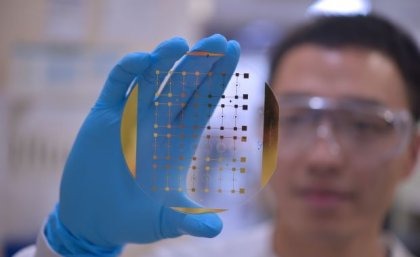
Responsible for almost one in five cancer deaths in Australia, lung cancer has the highest rate of cancer mortality among both men and women, claiming the lives of roughly 9000 people each year.
“Despite its prevalence, the initial detection and screening process for the disease can be drawn out and expensive, involving scans, imaging tests and biopsy procedures,” said Dr Richard Lobb, one of the researchers from UQ’s Australian Institute for Bioengineering and Nanotechnology (AIBN) responsible for the new diagnostic device.
“The technology we’ve developed is non-invasive and can detect very small lung cancer nodules to hopefully catch the disease in the first stage,” he said.


The nanodevice was designed in the lab of Australian Research Council Laureate and AIBN senior group leader Professor Matt Trau, with AIBN scholars Xueming Niu, Dr Alain Wuethrich and Dr Zhen Zhang contributing to research alongside Dr Lobb and Quan Zhou.
You might like
The device analyses a patient’s blood sample, searching for a particular biomarker – the sugars that coat the tiny messenger particles known as extracellular vesicles (EVs).
“These sugar molecules, or glycans, serve as excellent biomarkers because the sugar code on a cancer cell is different to a normal cell,” Dr Lobb said. “A drop of blood can be all that’s needed to alert clinicians to the presence of small lung cancer nodules and allow intervention while the disease is in its early stages.”
A promising clinical study involving 40 patients found the technology successfully differentiated patients with early-stage malignant lung nodules from those with benign lung nodules.
“The results show the potential to use EV glycans to diagnose other diseases non-invasively,”said Quan Zhou. “This device, and a simple blood test, could help clinicians step in before more intensive scanning or treatments or drug regimes are needed.”
The more easily and earlier a cancer can be detected, the better a prospective patient’s prognosis. A research paper detailing the project thus far has been published in Advanced Science.
Want to see more stories from InDaily Qld in your Google search results?
- Click here to set InDaily Qld as a preferred source.
- Tick the box next to "InDaily Qld". That's it.



