Hammer blow: Treasurer plays it fast and loose when it comes to interest rates
Treasurer Jim Chalmers mightn’t have expected his weekend comment – made ahead of expected low growth figures later this week – that interest rate rises were “smashing” the Australian economy to set off the reaction it has. After all, it’s been something of a Chalmers mantra.
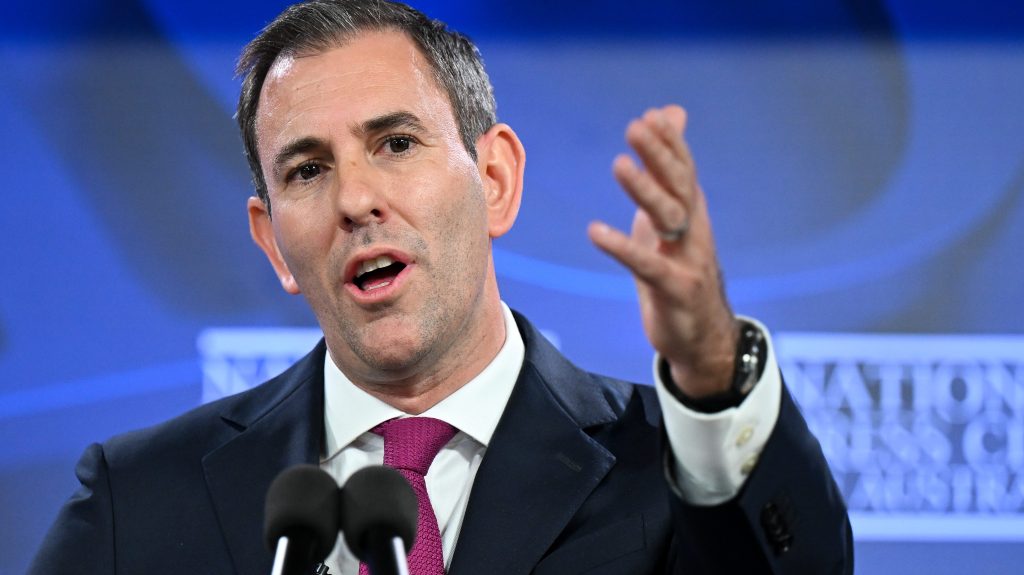
In June he said rate rises were “hammering the economy”. On another occasion that month he said higher rates were “hammering consumption”. At the start of July, he said discretionary spending had been “absolutely hammered by higher interest rates”.
“The Treasurer’s comments were nothing new,” Prime Minister Anthony Albanese said, fending off questions at a Monday Perth news conference.
But new or not, the comment is touching an extremely sensitive, exposed nerve, again highlighting the divergent positions of the Reserve Bank and the government.
The bank is determined that inflation, which was an annual 3.8% in the June quarter (3.5% for the month of July), must be brought down to the target range of 2–3% as soon as practicable while also preserving employment. For the government, reducing inflation is a high priority but it is increasingly worried about an economy that’s crawling along the ground.
Chalmers tries to step carefully to avoid directly criticising the bank, but the differences are obvious, and his message is being sent through a loudhailer.
You might like
On Monday he doubled down on his “smashing” assessment, while “cherishing” the independence of the Reserve Bank. “We’ve got different responsibilities. Where our interests align and where our objectives align is on getting on top of this inflation challenge in our economy which doesn’t smash people who are already doing it tough enough,” he said.
“I think it’s self-evident the interest rate rises already in the system are putting people under pressure and slowing our economy. And I think the Australian people, frankly, expect me to tell it like it is.”
The sluggishness of the economy is set to be starkly obvious when the latest GDP figures are released on Wednesday.
Forecasters are predicting growth for the June quarter of 0.1 or 0.2 of a percentage point. That’s bad enough – if the figure were negative, the government would fall into a serious panic.
Stay informed, daily
Recent indications from the US Federal Reserve that American rates are set to fall imminently in normal circumstances would raise hopes Australian rates would soon follow.
But Reserve Bank deputy governor Andrew Hauser dashed that prospect when he spoke to The Conversation’s podcast last week.
Just returned from a meeting of central bankers in the United States, Hauser flagged that at this stage the Reserve Bank was not shifting from governor Michele Bullock’s indication that, based on present knowledge, the bank would not be dropping rates any time soon. Indeed, at its last meeting the Reserve even discussed raising rates.
“Sadly, at the moment Australian inflation is a bit stickier than it has been in the US,” Hauser said. “We’re not yet as confident, as [Fed head Jay Powell] is in the US, that inflation in Australia is back on a sustainable path back to target. And therefore we have to hold rates where they are for the time being.”
While cost of living – a witches’ brew of inflation and interest rates – and other issues see Labor now 50:50 with the Coalition on a two-party basis in this week’s Newspoll, the figures show the public has little faith inflation would be better if there were a Dutton government.
People were asked whether inflation would be higher, lower or the same if Peter Dutton and the Coalition were in power rather than the Albanese government. Only 24% said it would be lower; 41% said it would be the same and 18% thought it would be higher.
For most voters, there seems to be nowhere to turn to get out of the present economic impasse.
Want to see more stories from InDaily Qld in your Google search results?
- Click here to set InDaily Qld as a preferred source.
- Tick the box next to "InDaily Qld". That's it.