How a group of Aussie scientists used a plague to stop the rodents smelling a rat
It’s such a perfect piece of scientific trickery, says researcher Peter Banks, that even the mice don’t smell a rat.
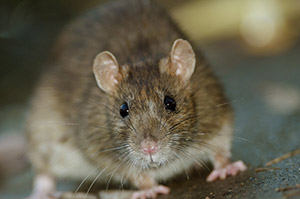
And that was entirely the point of the University of Sydney Sensory Conservation Team’s work, which has used “olfactory misinformation” to camouflage wheat seeds and protect them from hungry rodents.
It’s a breakthrough that could have profound implications for crop pest control and beyond.
On Wednesday night, the scientists were presented with the prestigious 2024 Eureka Prize for Environmental Research.
“The idea of using a smell an animal uses to find food as a deterrent is just crazy,” Professor Banks said.
“You’d think a deterrent would be something an animal is scared of. To use the smell of the food that they’re seeking to actually stop them finding that food … it was difficult for people to believe this could work.”
Amid the 2020-21 mouse plague, the team trialled the use of wheatgerm oil to camouflage wheat grain at a NSW farm by spreading the odour across paddock surfaces, so the mice couldn’t pinpoint the location of the seeds.
“It was super exciting, even after the first week,” Prof Banks said.
You might like


“We didn’t expect there to be a 70 per cent reduction in damage.
“We also put it out before the farmer sowed, that produced the best result. The idea is that you can train the predators that the smell is not rewarding.”
The technique evolved from an idea 15 years ago, while Prof Banks was searching for a project for an honours student.
“That’s when we first thought we could look at the option of spreading the odours of prey around to stop predators,” he said.
“We saw mice were peeing everywhere and we thought maybe they do that to stop predators being able to work out exactly where they are.”
That idea eventually led to the first field demonstration using olfactory disinformation, showing rats could be stopped from finding birds’ nests if the odour of the nests was widely spread.
“We took that to New Zealand and did it with shorebirds and their introduced predators, hedgehogs, cats and stoats,” Prof Banks said.
“And then we did work on the mice, showing we could stop mice finding seeds, then we did the work on wallabies showing we could stop them finding seedlings, and now we’re trying to stop foxes finding turtles.”
Stay informed, daily
The conservation biology expert says the technique’s success is an important lesson in the power of information.
“We’re all information foragers, trying to understand and navigate our worlds,” he said.
“Humans have weaponised information against each other forever and we’re doing it really well. Now we’re doing it to animals that cause problems but in a way it’s actually for them, so we don’t have to use lethal weapons.”
Olfactory disinformation might be used in any scenario where animals find food by smell because it’s about messing with the exact information used for survival.
It’s not something easily overcome.
Prof Banks, Dr Catherine Price, Prof Clare McArthur and Dr Malcolm Possell are working with the CSIRO and Grain Research and Development Corporation to scale up the research.
“The farmers want to know how much do I use and when do I use it and that’s the next step,” Prof Banks said.
He noted mice were formidable adversaries and it was “very satisfying” to outsmart an animal so clever and highly geared for survival.
“I have a lot of admiration and respect for them,” he said.
“Everything’s trying to eat you. You’ve got to try and eat, you’ve got to try to reproduce. You’re living on borrowed time. We’ve got no idea in our comfortable world.”
Winners of the Australian Museum Eureka Awards were announced at a black-tie event in Sydney.
Cash prizes totalling $180,000 were awarded across 19 categories, celebrating outstanding achievements in research and innovation, leadership, science engagement and school science.
Want to see more stories from InDaily Qld in your Google search results?
- Click here to set InDaily Qld as a preferred source.
- Tick the box next to "InDaily Qld". That's it.



