Get kids in the kitchen
To raise adventurous, self-sufficient and health-conscious eaters, get cooking with your kids.
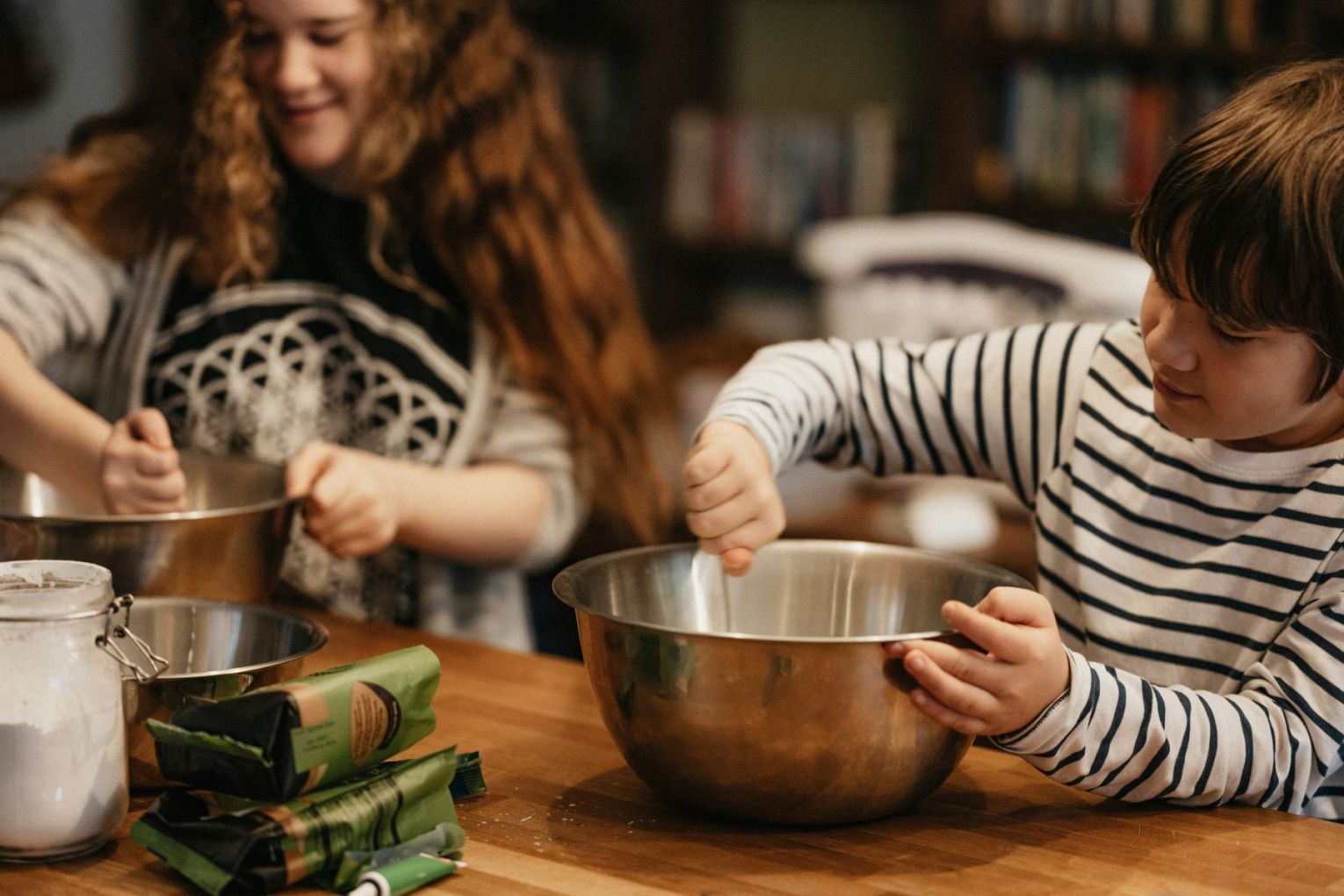
It may sound too simple, but those are just a few of the benefits when kids learn to cook. Cooking builds life skills, promotes healthy eating, boosts confidence and strengthens family bonds — all while making mealtime fun.
“It helps to think of it as less of a chore and more of an opportunity to be together as a family,” said Jessica Battilana, staff editor at King Arthur Baking Company, which offers adult and children’s cooking classes.
The food doesn’t need to be fancy, and it doesn’t all have to be homemade.
“The investment parents make early on to encourage their kids to participate in mealtime will pay dividends later, when they’re able to handle kitchen tasks independently,” Battilana said.
Whether your child loves to cook or has never held a knife, it’s not too late to start building these skills.
Some of the rewards:
A sense of accomplishment
If the COVID pandemic taught us anything, it was the importance of knowing how to cook.
During the lockdown, Becca Cooper Leebove, a mum of two began teaching her children how to do simple tasks in the kitchen. Just 3 and 8 at the time, they began by dumping ingredients into a stand mixer, rolling out dough, or icing a cake.
You might like


Five years later, their skills continue to grow.
“My ultimate goal has always been family time – something to do together that’s engaging, but also important to get them off their phones or iPads,” Leebove said.
“They also love to brag when it’s done and we all eat their masterpiece together.”
They clean up after cooking and know how to set the table. Now that Leebove’s son is a teenager, he helps chop veggies and sauté meat.
Confidence and real-world skills (like math)
“It can feel special to kids to be included in an adult activity,” said Cristi Donoso, a speech therapist and encourages her clients to cook with their kids in age-appropriate ways. She’s also the mother to a 5-year-old, who has been baking with her since toddlerhood.
“There’s a lot of real-world learning involved,” Donoso said: math concepts, language skills and self-control.
Kids learn by reading and following a step-by-step recipe. It takes concentration and other executive functioning skills. They also learn how to be safe in a kitchen, requiring self-control.
Exposure and sensory experience with food help kids become well-rounded eaters, she said.
“Your food experience isn’t just about sitting down to eat. It’s about making a list, going to the store, and feeling the fruit,” Donoso said.
An adventurous palate
Eric Brown, along with his wife, Elizabeth Brown, run a business that offers cooking classes for kids, often through day camps, birthday parties or as a school-break activity.
Stay informed, daily
“One thing I see a lot is that they’re willing to experiment,” Brown said, and knowing what’s in the food helps kids get over any squeamishness. Or perhaps the common aversion to veggies.
Younger kids might start by making pizza dough from scratch or decorating cupcakes. Older kids have participated in full-cake icing competitions.
“As the programs progress, I hear less of ‘Eww, I won’t touch that’ and more of ‘What is that? I’ll try it,'” said Brown, who has four kids of his own.
Paving the way for healthy eating
Studies have shown a positive correlation between healthy eating and home cooking, which can be a good alternative to ultraprocessed foods.
Jennifer Schittino, a working mum of two young children, wants to help them shape healthier habits for the future.
“It’s both healthier and cheaper to cook from scratch.” she said.
She also wants her children to “understand the fundamentals so they can make healthy and nutritious meals on a limited budget”.
Her kids know how to use knives and rolling pins, as well as hand-crank pasta, separate an egg, cut an avocado and toss pizza.
Parents might learn about cooking too
Even if you’re not a skilled home cook, don’t be intimidated by teaching kids to be one.
Start simple. Make a list of 10 things that kids can learn to master, Battilana suggests. It might include scrambled eggs, a quesadilla with guacamole, or pasta with steamed veggies.
“Practice making those 10 things often so you get good at them, can shop for them easily, and make them without a recipe,” she said.
Cooking and shopping for fresh foods become a lot less intimidating the more you do it.
“I think kids are far more capable in the kitchen than we give them credit for,” Battilana said.
“They may be slower, messier, but they’re capable of a lot, and usually pretty eager to try new foods – especially if they’ve had a hand in making them.”
Tracee M. Herbaugh writes frequently about lifestyle topics for The Associated Press.
Want to see more stories from InDaily Qld in your Google search results?
- Click here to set InDaily Qld as a preferred source.
- Tick the box next to "InDaily Qld". That's it.


