Coalition insists nuclear plan won’t blow up economy
The federal opposition has slammed government analysis that suggests its nuclear energy calculations are based on a shrinking economy in five states, including Queensland.
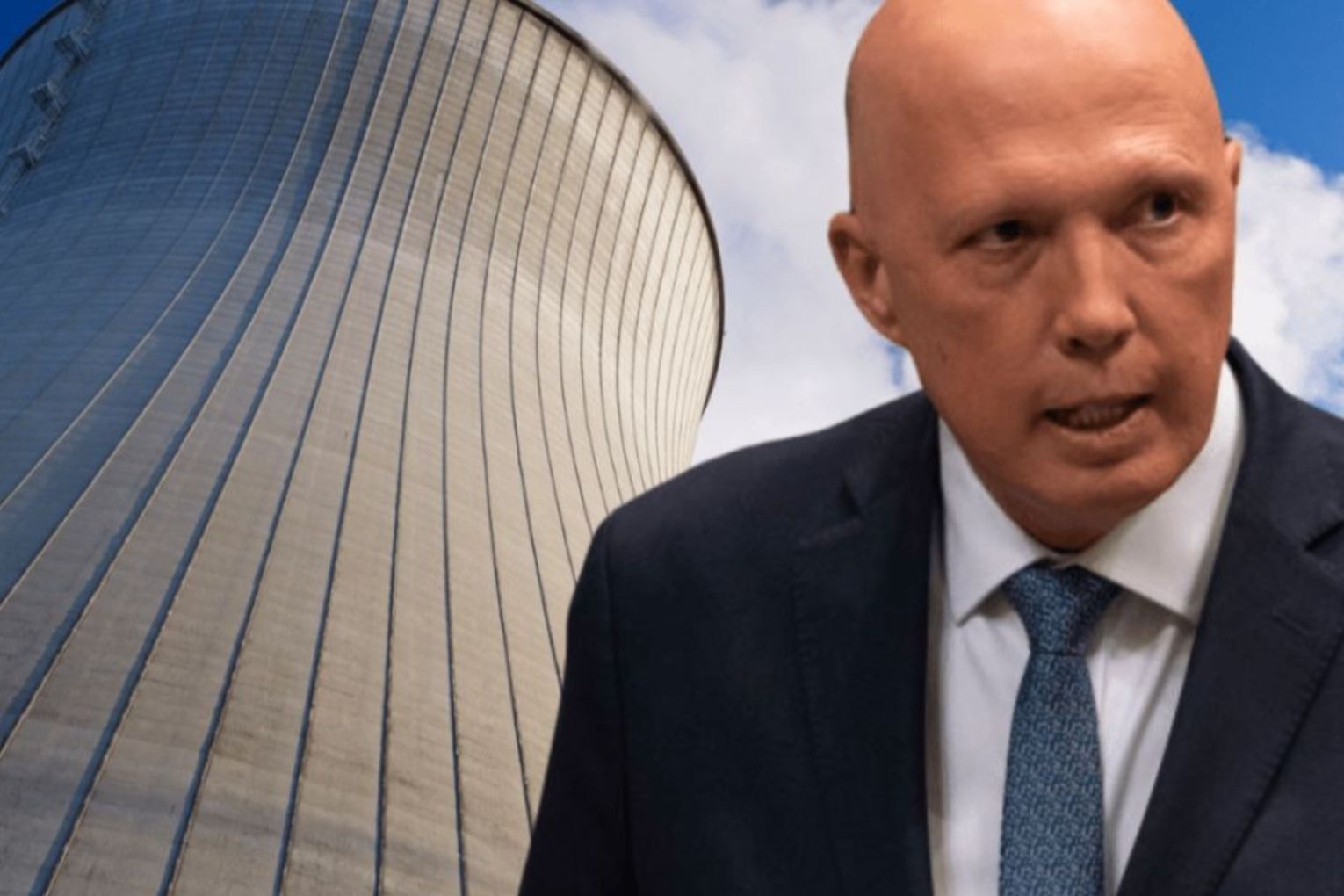
The opposition has dismissed a warning that its nuclear energy plan will shrink the Queensland economy by up to five per cent, following a similar red flag for NSW.
“Whichever way you want to look at it, this is a lower-cost pathway for electricity and Labor can make up all the nonsense they like. They’re desperate,” shadow treasurer Angus Taylor told ABC radio on Monday.
The opposition’s energy spokesman Ted O’Brien in a recent YouTube video described Treasurer Jim Chalmers as “crazy brave” for arguing Australia would be better off if the economy was “forced” to consume all-renewables electricity.
Under the nuclear plan, ageing coal-fired power stations would be replaced with up to 14 gigawatts of “reliable, zero-emissions nuclear energy” and supported by renewable generation, gas plants and energy storage.
The alternative to Labor’s plan for an electricity grid dominated by clean, affordable renewable energy by 2030 is a key plank in electioneering as politicians gear up for a federal election that must be held by May.
You might like


“What everyone’s seeing the polling in these communities is overwhelming support for a transition of these coal-fired power stations to nuclear power plants,” Nationals Leader David Littleproud said.
Treasurer Jim Chalmers rejected the nuclear option as “economic madness” he said would leave households worse off by pushing up power prices and slowing growth.
The coalition’s nuclear energy scheme assumes more than $872 billion in lost output to Queensland by 2050, according to federal government analysis.
This is attributed to an assumption of slower economic growth and heavy industries such as aluminium smelters closing, with large industrial power loads almost halving around 2030 and never recovering.
Stay informed, daily
Government analysis also found Opposition Leader Peter Dutton’s plan to build nuclear reactors assumes $1.4 trillion in cumulative lost output in NSW between now and 2051.
The latest GenCost report calculated the most affordable option was new renewable generation and big batteries, supported by gas and pumped hydro and with a growing role in the national grid for consumer-owned energy assets.
Prepared by CSIRO and the Australian Energy Market Operator (AEMO), the report provides an annual update on costs out to 2050.
The coalition has rejected the modelling as flawed, instead favouring the calculations it commissioned from consultancy Frontier Economics to build its economic case for nuclear power.
Using AEMO’s “progressive change” scenario for the nation’s energy mix, Frontier found including nuclear energy would reduce costs from $437 billion to $331 billion – or slash costs by 44 per cent compared to the “step change” scenario.
However, the low growth “progressive change” scenario assumes 1.89 per cent GDP growth per year on average to 2050.
When comparing the two scenarios, Gross State Product across the area covered by national electricity market is cumulatively $4 trillion less under the “progressive change” than under the “step change” scenario, according to government analysis.
AEMO’s “step change” scenario, which involves a higher rate of GDP growth and an energy transition consistent with Australia’s commitment to limiting global warming to 2C, assumes more energy is needed.
Want to see more stories from InDaily Qld in your Google search results?
- Click here to set InDaily Qld as a preferred source.
- Tick the box next to "InDaily Qld". That's it.


