PM kicks off roundtable with call for lasting reform
After weeks of build-up, more than two dozen of Australia’s top minds have gathered in Canberra for a roundtable to chart the nation’s economic future.
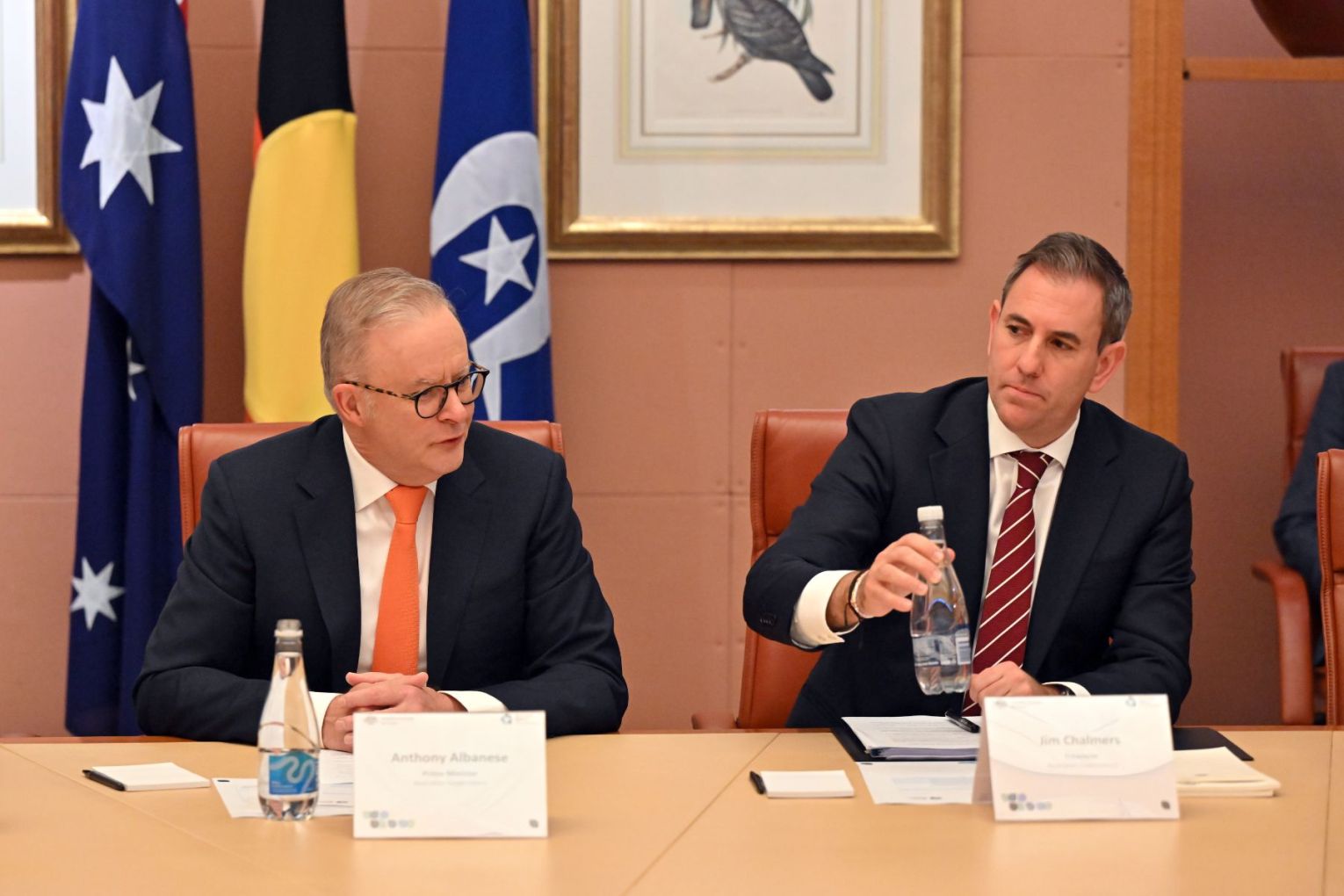
Prime Minister Anthony Albanese has promised the government’s economic roundtable will deliver long-lasting change through consensus, as he opened the three-day summit in Canberra.
After weeks of build-up, a procession of the nation’s leading economists, employers, unionists and civil society representatives squeezed into Labor’s cabinet room at Parliament House on Tuesday.
The input of the 30-odd participants will shape the government’s agenda for the next three years and address pressing economic issues, Albanese said.
“Political change, whether it’s in the economy, social policy or the environment, is likely to be more successful and more entrenched and more lasting when people come with us on that journey, and that’s why this engagement is important as well,” he said.
“I would be shocked if everyone in this room agreed with each other.
“In fact, we might as well not have it if that was the case, because then you wouldn’t, by definition, have a contest of ideas, which is what we’re interested in.”
| Sponsored |
You might like


Treasurer Jim Chalmers has already been bombarded with proposals ranging from winding back property investor tax breaks to environmental law reform and cutting red tape.
But he has insisted all invited parties bring specific ideas and be willing to find common ground.
“Three days to inform three budgets – and beyond,” Chalmers said in his opening remarks.
“If there are solutions to the big challenges we face, I’m confident all the people in this room can help us find them.”
The roundtable is aimed at lifting living standards primarily by boosting productivity, which has stagnated in Australia and other western countries.
“Productivity is like a secret sauce,” AMP chief economist Shane Oliver told AAP.
“If you can get strong productivity, you can have strong profits, you can have strong wages growth and still keep inflation low.”
Stay informed, daily
The first day of the roundtable is concerned with building resilience.
Following the treasurer and prime minister’s opening addresses, Reserve Bank governor Michele Bullock delivered a presentation outlining Australia’s declining productivity performance.
Productivity reform will feature more prominently on the second day, before budget sustainability and tax reform close out the roundtable on Thursday.
While the four leading business groups and shadow treasurer Ted O’Brien are attending the roundtable, opposition employment spokesman Tim Wilson criticised the government for not inviting the mining lobby or putting industrial relations on the agenda.
“It feels like this roundtable is set up not to talk about the core issues,” he told Sky News.
Former Productivity Commission chair Michael Brennan said while Australians needed to be realistic about reform, he was optimistic about the possible outcomes.
“The strictures that the government has put around contributions – that they be specific, budget neutral and focused on the national interest rather than the vested interest – have all improved the quality of the debate,” the e61 Institute CEO told AAP.
Despite the broad consensus that productivity needs to improve, a quarter of 1000 Australians surveyed by pollster Ipsos were unsure about what the term meant and less than one in five thought they would personally benefit from productivity growth.
The commission’s chair, Danielle Wood, said it was upsetting that productivity growth was seen as a negative by some Australians.
“Think about someone in 1960 versus someone today. We have living standards that are three times higher … we live longer, we also work fewer hours a week,” she told the National Press Club on Monday.
“What we want is the Australian in 2070 to get those same dividends, because growth continues from here on.”
-with AAP
Want to see more stories from InDaily Qld in your Google search results?
- Click here to set InDaily Qld as a preferred source.
- Tick the box next to "InDaily Qld". That's it.


